You often seek to understand, you observe society ignite or hold back, and suddenly you wonder why some causes break through, why others stagnate, why animal protection haunts so many minds. You see the founding date, December 10, International Day for Animal Rights, each year a thrill runs through you. The air changes, it takes on a density. It's not just noise, it's not merely a wave on social media, it's a gentle revolt. Some figures emerge, eight out of ten households in France, in 2025, say they are touched by the animal question, the feeling quickly transforms into a need to act. The issue is glaring, should we change the law, shake up habits, give more, or less, space to the animal?
The meaning and origin of the International Day for Animal Rights
You move forward, you want to know if this celebration appears on the calendar as a trend or if a deep history still carries it today.
The historical foundations of the date December 10
December 10 is inspired by a significant precedent, the Universal Declaration of Human Rights in Paris, in 1948. This date escapes no one, the echo travels the world. Associations seize the opportunity, especially in the 1990s, and decide that dignity does not stop at the human species. You browse the slogans, you read the columns, the same discourse, compassion, sensitivity, refusal of rivalry.
You feel that moment when the animal cause explodes in public space, don't you? Producing change does not happen discreetly. Suddenly, animal welfare is no longer just a matter of tender hearts but of political debate, of collective morality. Europe embraces the idea, Great Britain stirs, France questions, and what about you?
The current objectives of the Day and the main themes addressed
The International Day for Animal Rights shakes up routine, it pushes beyond simple demands. Archaic practices, invisible abuse, captivity — everything erupts in public space, in the media, even in family discussions. The goal is not to alert for the sake of alerting, but to open up the field of possibilities. You witness debates on bullfighting, the issue of cages, the recognition of animals as sentient beings. Associations, PETA, CIWF, L214, orchestrate shock campaigns. It is no longer enough to strike; it is necessary to convince, explain, engage public opinion. Universities are getting involved, schools too, even social networks overflow with discreet or spectacular mobilizations.
| Theme | Example of campaign | Stated objective | Expected impact |
|---|---|---|---|
| Fundamental rights | Recognition of animal sensitivity in France law 2015 | Morally and legally valued | Protection under the law |
| Ethics | Stop to slaughterhouses L214 | Shock of consciences | Decrease in animal consumption |
| Welfare | End of intensive farming | Respect for basic needs | Concrete improvement of living conditions |
| Legislation | Votes on anti-animal slaughter laws Brazil, Spain | Strict regulation | Real sanctions and control |
You perceive how the animal question slips into the intimacy of discussions. More and more citizens are raising their eyes, questioning, debating out loud. A gentle tension settles in, just the sound of a quiet revolution.
The main rights claimed in favor of animals
The question haunts you, animal rights, but which ones, since when, on what is the mobilization based?
The Universal Declaration of Animal Rights
UNESCO published in 1978 a text that shakes certainties, the Universal Declaration of Animal Rights. You come across unprecedented rules, prohibition of abuse, recognition of animals as moral subjects before the law. The text clearly states the requirements for food, care, freedom of movement, protection against all avoidable suffering. This framework does not yet have the force of international law, yet it permeates all serious discussions about animal dignity. Influential thinkers, Peter Singer, Jane Goodall, take a stand, they nourish global ethical reflection.
The advances and flaws of national and international legislation
The reality of law varies, politics wavers, society scrutinizes the margins. France, European Union, United States, Asia, the gaps are striking. In France, the animal, recognized as a sentient living being since the 2015 law, holds a new status, but the application of the text remains fragile. Many EU states are tightening legislation, yet abuses persist. Austria prohibits the sale of animals without traceability, China develops fur farming, Brazil prohibits slaughter without stunning. The feeling that everything is progressing but nothing aligns completely.
| Country or region | Legal status | Specific regulations | Known limits |
|---|---|---|---|
| France | Sentient living being | Law 2015, sanctions for abuse | Unequal controls, public ignorance |
| European Union | Recognition of sensitivity | Farming standards, progressive bans | Inequalities, difficult legislation to harmonize |
| United States | Variable protection by state | Federal law on transport, regulated lab tests | Weak controls, industrial farming |
| Asia | Very variable recognition | Reduced legislation for dogs and cats, little for farm animals | Trade in exotic species, insufficient control |
Citizens knock on the door of justice, push the lines, demand concrete advances. Scandals arise, the media seizes them, each victory suggests a new step. You perceive a constant tension, a call for relentless reform.
Actions and mobilizations around December 10, International Day for Animal Rights
Over the years, mobilization has grown, between silent collections and media explosions, how does this collective movement manifest?
The key campaigns and events of December 10
Mobilizations crescendo shake public space on December 10. In Paris, Lyon, Berlin, Montreal, crowds march, associations distribute informational materials, engage with the public. Animal foundations, PETA, CIWF, Foundation 30 Million Friends, multiply banners, happenings, conferences. Television gets involved, sometimes shocking reports, social networks ignite the web. You see these influencers, these middle schoolers, these high schoolers being invited to express themselves. The pace accelerates, suddenly the animal question shakes the news agenda. The suffering that usually kills seems to explode in public space, and mobilization breaks out of the usual circle, capturing unexpected profiles.
Personal and collective initiatives to act
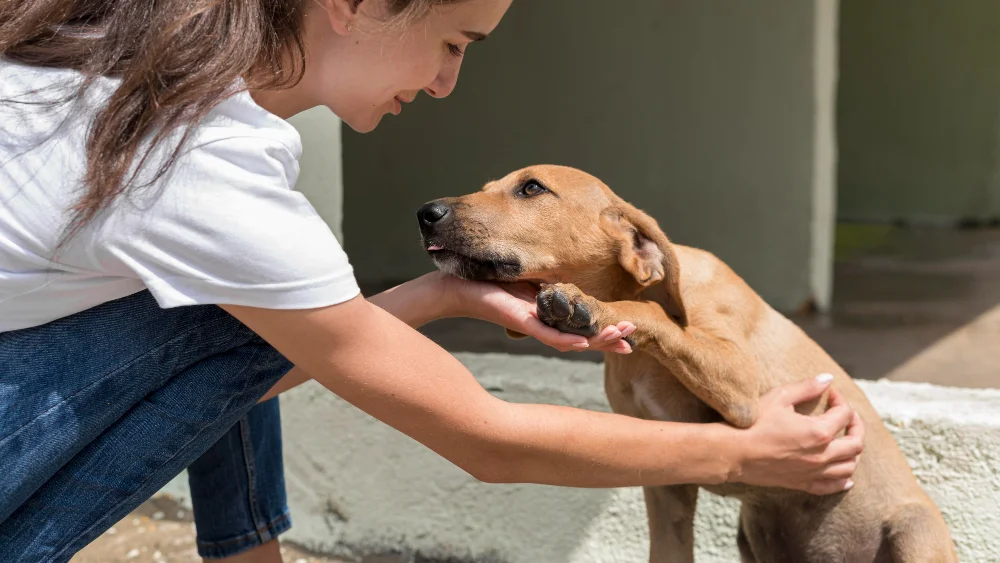
Signing, talking, sharing, giving, this is what forges the collective dynamic. You sign on your smartphone the petition to abolish fur, you debate with loved ones about taking a child to the circus, you collect food, you help a shelter.
The municipal shelter in Grenoble opens its doors in winter, the day transforms for some into a first step. Maria, a volunteer at the SPA in Marseille, shares,
You really feel that society is shifting, there is no age, no social boundary, just a revolt against unnecessary suffering, some come to walk a dog for an hour, others commit for life, everyone feels useful
. Forms of engagement are diversifying, sometimes minimal, sometimes total, all count. The essential invites itself, you change a consumption reflex, you relay a message, you collect for the neighborhood, always a seed of change.
- Signing a petition, even discreetly, stimulates the debate
- Participating in a food collection proves that solidarity is also lived for those who do not have a voice
- Talking about animal welfare in your intimate sphere sometimes triggers the most unexpected click
- Supporting a local reform, even limited, influences national law in the medium term
The current stakes and debates on animal rights
Has the fight not already triumphed? Do obstacles not lurk in routine? In 2025, does the situation finally clarify?
The controversies over the place of animals in society
The place of the animal shakes the dinner table, fractures societal debates. Should we ban meat, slaughter, Chinese fur, or protect ancestral agricultural practices? Agricultural lobbies raise their voices, scientists remind us that some medical experiments are still unavoidable. Amnesty International publishes an investigation into ritual slaughter, the large distribution reacts, professors slip the subject into lessons. Society wavers between pragmatism and moral demand, animal welfare is no longer limited to marginal spheres. The great gap imposes itself, incoherence and hope share the ground.
The perspectives for the evolution of animal rights and status
December 10, International Day for Animal Rights, slips into the corridors of legislators and shakes up habits. Public studies recorded by the Ministry of Agriculture in 2025 show an intensification of controls, the generalization of cameras in European slaughterhouses accelerates, Belgium advances to make the animal a subject of law. Food innovations multiply, alternatives to meat emerge, animal suffering slowly recedes. Unprecedented alliances are formed, legislators, scientists, citizens, industrialists, all this little world dialogues, sometimes opposes, often listens. The debate gains media attention, it grows, it expands to society. Do you feel the tremor? Each one carries within them the possible revolution.