Why does this December 10 attract so much attention every year, everywhere in the world? No one ignores it; this day asserts itself as a vibrant reminder that nothing is won sustainably in terms of human rights. You hear the conversations, you catch the doubts, and yet.December 10, International Human Rights Day transcends the commemorative ritual, it activates collective memory, it confronts each individual with their own conscience. It's hard to remain indifferent, isn't it?
The historical anchoring of International Human Rights Day, a legacy that still shakes
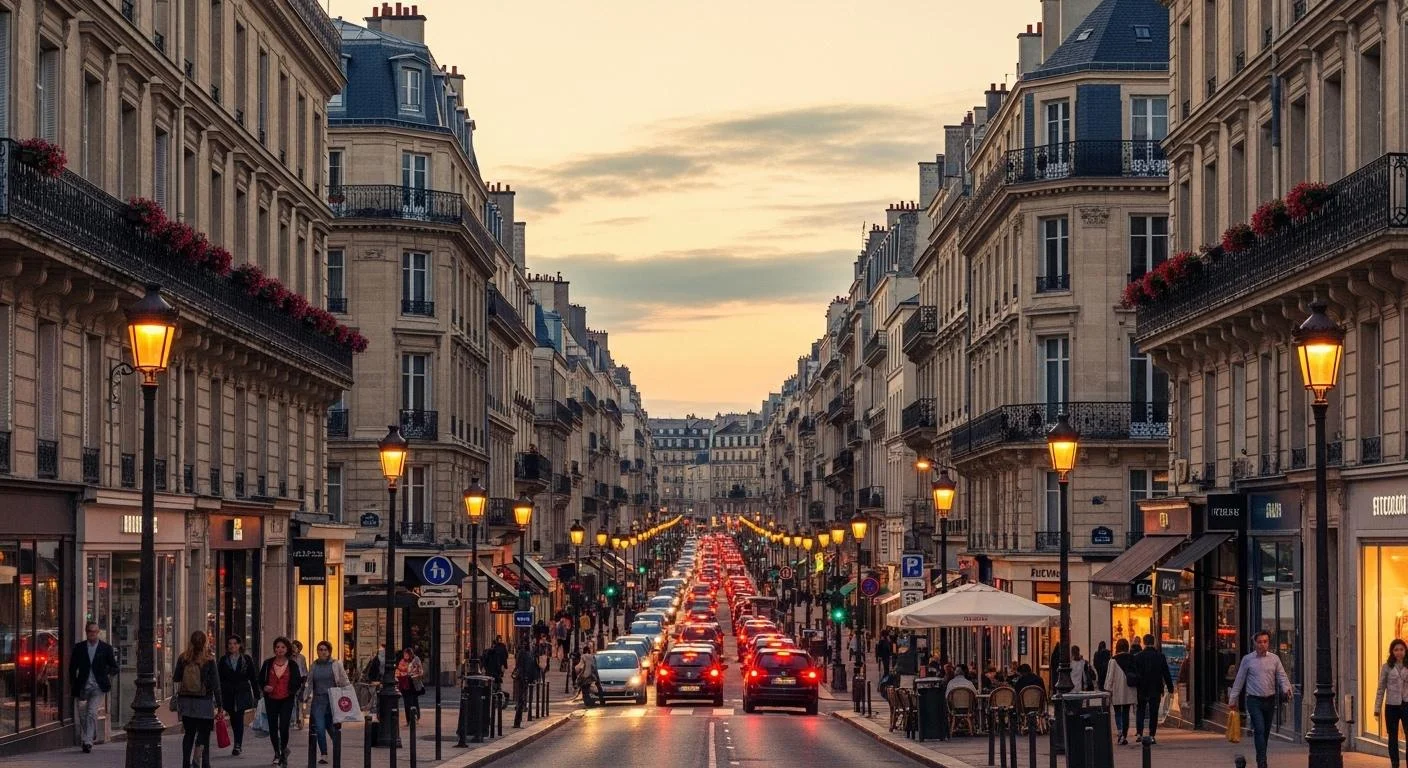
Let's take a moment to revisit the sources. Between the lights of Parisian salons and the biting cold of 1948, debates ignite at the Palais de Chaillot. No room for levity; urgency prevails.Eleanor Roosevelt leads this impossible mission with raw energy, surrounded by destinies shattered by war. René Cassin clings to concepts, chisels the words, every word matters. On December 10, 1948, the United Nations inscribes the Universal Declaration of Human Rights in its history. Why does it still weigh so much? You see the ambition; it transcends paper and resonates 77 years later.Thirty articles, as many promises to guarantee dignity, freedom, equality. This is not a text for display cases; you feel it in the rigor of the debates, in the solemnity of the commitment. Nothing dampens the impact, and nothing erases the universal scope of these articles that furrow brows in the face of barbarism.
A creation between tragedies and aspirations, contemporary history in the background
History rarely indulges in levity, and the birth of the Universal Declaration is rooted in the thickness of World War II. Nuremberg left scars; reconstruction brings forth the essential recognition of human dignity.Mass crimes, camps, forced migrations shape the will to lay the foundations of a decent world. Do you measure the legacy of those years? They decide, in a persistent hesitation, to sanctify the value of each individual, regardless of their beliefs, origins, or ideas. The UN wants to raise this universal flag; it is not trivial. Why does December 10 stand out on the calendar? This day becomes the inaugural beacon, the thread of Ariadne of fundamental rights. International Human Rights Day draws its identity from this wounded humanity, this brutal awakening to the unbearable.
The founding principles, visible foundations of International Human Rights Day today
Without detour, these rights invite themselves into all debates.
| Fundamental Right | Field of Application | Current Illustration |
|---|---|---|
| Right to Life | Protection against arbitrary executions, right to live in safety | Mobilization against the death penalty in 110 states in 2025 |
| Freedom of Expression and Conscience | Freedom of thought, religion, press | Strengthened media pluralism, open debates in 160 countries |
| Equality Before the Law | Absence of discrimination, equitable access to justice | Struggles to evolve discriminatory laws in all European states |
| Right to Education | Guaranteed access to primary and secondary education | School enrollment rate of 91 percent according to UNESCO for 2025 |
| Prohibition of Torture | Blocking inhumane and degrading treatment | Sanctions applied in 23 states according to the UN |
Behind the simplicity of the text, it is the entire global daily life that is woven. Nothing is entirely satisfactory; everything remains open. December 10, International Human Rights Day invites debate, encourages revisiting what was thought to be acquired. The struggles shift; you hear them; they change form: digital freedom, data protection, online discrimination, the impact of artificial intelligence on privacy rights. Have we really made progress?
The challenges that shake human rights in 2025
Where is the debate today? Some highlight the recent fragility of acquired rights. December 10, International Human Rights Day shifts its spotlight: digital rights, mass surveillance, the role of artificial intelligence, uncontrolled migrations. The lines are moving. What can be said when activists pay a high price for their commitment? NGOs globalize, structure themselves, face collective fatigue, continue to denounce, document, support. A burning current event: women in Afghanistan oppose the school ban, the debate on voting rights shakes the United States. Do you feel the permanence of indignation, but also fatigue? Each time, International Human Rights Day resurfaces, reminding us that vigilance is necessary.
Actions ignited by December 10, International Human Rights Day, an energy that runs across the planet
Events unfold everywhere, without geographical limits. The United Nations orchestrates forums, connected conferences, candlelight vigils. International and local associations, from Amnesty International to Reporters Without Borders, organize campaigns in the streets, at schools, in parliaments. The calendar of December 10 is displayed even in schools: debates, spontaneous theater pieces, creative workshops. Social networks take over, guaranteed virality. You observe before your eyes the energy that circulates, that explodes in different formats.
- Global meetings led by the UN and relayed by thousands of organizations.
- Civic and educational engagement, debates and workshops even in school benches.
- Program of 50 UNESCO workshops simultaneously across five continents for 2025
Current events hammer it home; no space remains inactive on December 10, International Human Rights Day traces its trajectory both online and in institutional ceremonies.
The silent and crucial role of the media and education?
It's not talked about enough: behind every mobilization, there is a rising power of opinion leaders. Newsrooms prepare in-depth analyses, headlines remain, images circulate. What happens when a hashtag collides with traditional narratives?
| Media | Scope | Example 2025 |
|---|---|---|
| Print Media | Reference, decoding trends | Feature signed by Le Monde, partnership with the United Nations |
| Social Networks | Viral power, connection with younger generations | Campaign #OneJustWorld, over 20 million views recorded on December 10, 2025 |
| Educational Initiatives | Transformative tool, strong pedagogical support | Tolerance workshops deployed in 67 countries according to UNESCO |
The issue lies there, in the relay between generations, in the legitimacy granted by the press, in the renewed commitment by schools. Nothing escapes the excitement of this day. Education, yes, which forms and protects, arms against the return of silence and stigmatization.
Iconic figures and places, sources of collective pride around human rights
The narrative of human rights is embodied in striking journeys. Nelson Mandela stands out for his resistance, patience, and unprecedented openness to reconciliation. Eleanor Roosevelt, for her part, senses the invisible, connects the broken destinies of 1948. Both leave an indelible mark on the sense of struggle. Just mentioning Malala Yousafzai reminds us of the price paid in the resistance to access education, the youth that refuses to give up. Other figures, sometimes unknown, tirelessly build: they show that history is never written alone.
Commitment is built slowly, it is nurtured, it is embodied in ordinary and extraordinary lives.
The high places of freedoms, geographies of procedure and memory?
Action also takes place in space. Geneva stands out as the sanctuary of discussions, of difficult but productive compromise. Strasbourg remains, with its Council of Europe, the jurisdictional capital of European universalism. The European Court of Human Rights arbitrates, protects, imposes itself, sometimes under pressure. These institutions embody possible recourse, justice that transcends borders. Where else to sign improbable agreements, if not in these symbolic strongholds of human rights defense? Do you grasp the irreplaceable nature of these places, their power to shine a light on abuses?
Sometimes, it only takes an ordinary scene to understand the intensity of the struggle. Émilie, engaged in Brussels, shakes hands with her little brother at the exit of a moving debate about the fate of refugee women.
“This struggle deserves all our investment.”
The room holds its breath; the assembly applauds. There you have it, the full force of a shared conviction that circulates.
Stop for a moment, just long enough for a piercing question. The upcoming December 10, what will you choose to do? Will you remain a spectator of this long chain of defenders, or will you decide to take the baton?