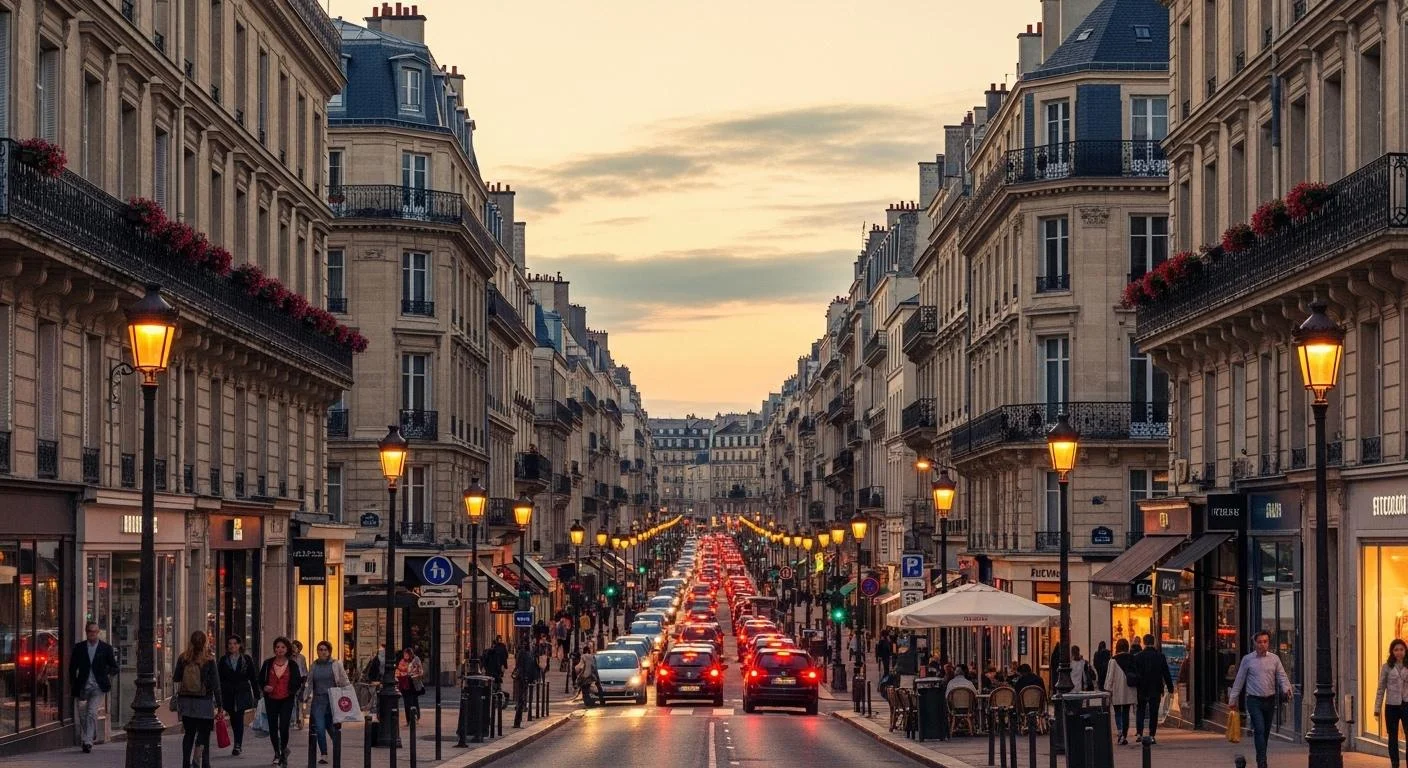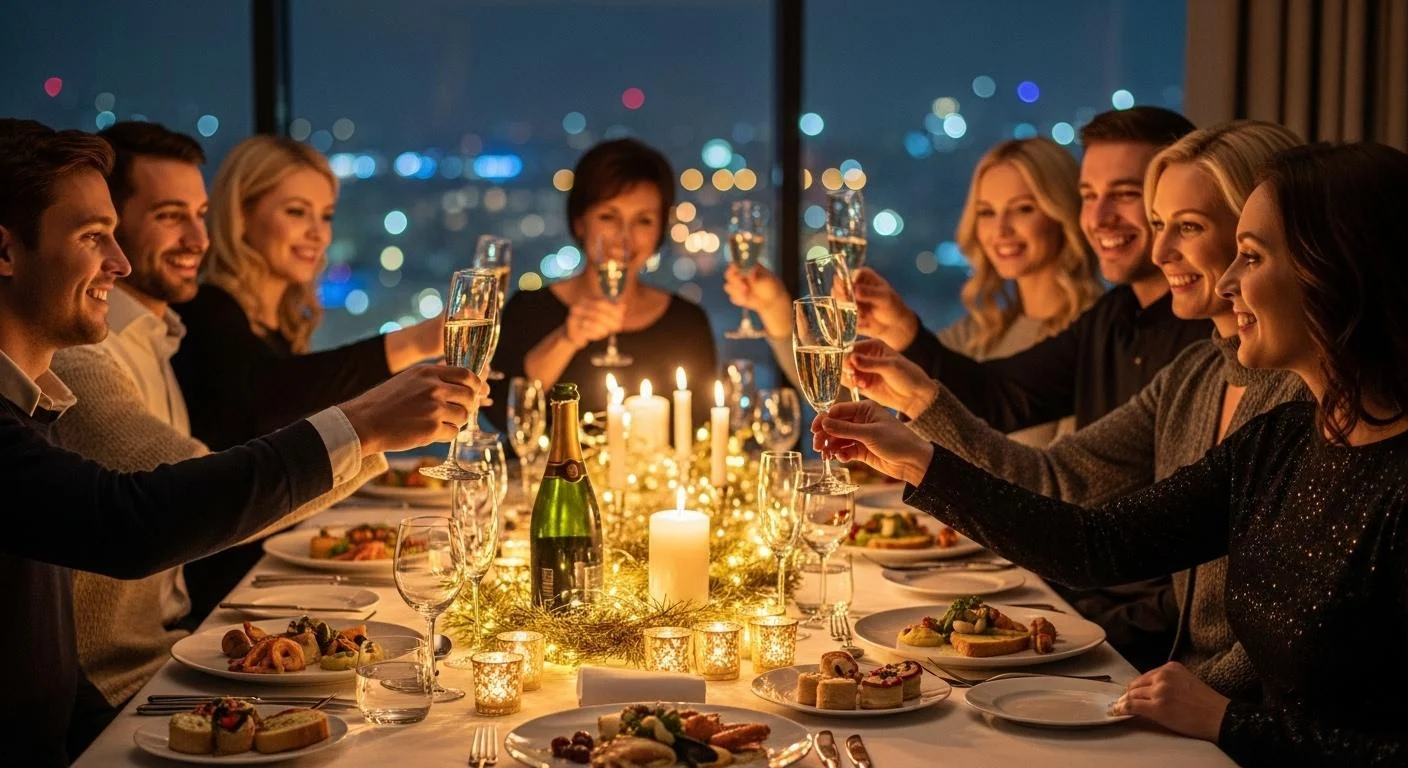
Humanity awaits this moment, this last day of the year where everything changes, the whole world shares the same anticipation, the same excitement under artificial lights. Why does this December 31 structure our collective memory, our habits, our festive accents so much? This appointment embodies much more than a succession of fireworks or a simple pretext to celebrate. It gives meaning to the year's closure, connects each of our stories to a larger common story, even more visible since 2025, an era where physical borders blur but rituals persist.
The last day of the Gregorian calendar, a universally accessible landmark?
Throughout the year, you turn pages and weeks, and there, the very end of the calendar takes you to a symbolic finish line. December 31 marks the conclusion of the Gregorian calendar, applied for four centuries by a large majority of the planet. What force do we find in this climax? It is a synchronized turning point for all institutions: the administrative world closes its accounts, leaders deliver their messages, society aligns without really questioning the meaning of this choice. One night is enough, everything converges to draw a line and reopen a cycle, however immaterial it may be.
Why this date and not another, why does everyone agree on this transition from the last to the first day? The history of the Gregorian calendar propels you to the 16th century, with Pope Gregory XIII correcting an increasingly inaccurate Julian calendar. This choice, dictated by the desire to harmonize Christian festivities and the solar rhythm, crystallizes an ambition: to mature a temporal unity. With New Year's Eve, the Church inscribes a religious celebration to structure society around a new milestone. It is hard to believe that all of this would have had the same collective intensity if everyone had kept their own calendar reference; this curious cohesion of human nature, you touch it every year.
The shifting origins of the last night of the year, which ancient calendars still persist in human memory?
If you traverse the timeline, this current December 31 does not impose itself immediately. The Romans once greeted Mars in March, medieval Europe sometimes bet on Christmas, other societies preferred September or April, depending on agricultural cycles or the gaze cast upon the stars. When Julius Caesar imposes his Julian calendar, January 1 reappears in Latin regions, but winter persists elsewhere for a long time as a simple return of light.
| Civilization | Start of the Year | End of the Year | Transition Month |
|---|---|---|---|
| Ancient Rome | March 1 | February 28 | March |
| Catholic Medieval Europe | Christmas | December 24 | December |
| Gregorian Calendar | January 1 | December 31 | January-December |
| Imperial China | Lunar New Year | New Year's Eve | variable according to the moon |
| Persian Empire | Nowruz (March) | Nowruz Eve | March |
This table propels you into the thousand nuances of the beginning and end of an annual cycle, almost poetic, nothing imposes itself, everything circulates, everything adapts. Yet, the universal date of December 31 ultimately inscribes itself, making global synchronization truly possible. You just need to listen to the buzz of recaps, feel all those gazes directed at the hands of the clock, to understand that this reference now belongs to the whole, not just to one religion or continent.
World New Year's Eve Day, a truly shared celebration or a simple collective illusion?
We think we know everything, we retain many images, but since when has New Year's Eve been the rhythm of your evenings and those of the planet's inhabitants? Over the centuries, the evening continues to evolve, starting from pagan rites to ward off darkness, to the establishment of a celebration fixed by the Church, with Saint Sylvester as a tutelary figure. It is only in the 19th century that the custom explodes, thanks to the expansion of Europe, then globalizes with the advent of television, digital technology, and transportation facilities.
On all continents, cultures shape their own passage dance, no official canon imposes itself, yet almost everyone shares this reflex of the great evening.
The traditions and customs of December 31, a cultural patchwork displaying its facade homogeneity?
Want an instant? Think of France, with its tables overloaded with refined dishes, foie gras invited into every home, champagne sparkling, Spain crunching its twelve grapes in rhythm, Scotland relying on the first person crossing the threshold to open the year with the first-footing, Argentinians setting fire to the barbecue, and one is surprised to feel mysterious connections.
How to explain that the last night of the year activates so many superstitions, so many recurring gestures, so many community winks? In Russia, diving into the snow or icy baths becomes a requirement, the diversity of traditions creates a puzzle where each piece tells a unique story, yet paradoxically inscribed in a vast global movement. Sydney sets the tone with an extravagant fireworks display, then Asia, Europe, and America follow, each in turn, but everything converges, everything responds. The magic of that night is also this domino effect from East to West, a planetary synchronization without an official discourse, without reminders, just a desire to be together, even differently.
- Emblematic dishes gather and differentiate at the same time, from French foie gras to Dutch donuts.
- The collective emotion feeds on a sense of global belonging while cherishing the local.
- Fireworks unite the crowds, faces raised, dreams renewed for the new year.
The shows and rituals of the great evening, announcements and shared memories?
At every New Year's Eve, cities showcase their finest adornments, Paris, New York, Rio, Moscow, Sydney, nothing equals the union of millions of gazes fixed on the night. Times Square becomes a sea of glitter, the Eiffel Tower offers itself to the cameras of the world, all screens capture this thrill. Impossible to miss these figures: in 2025, over 2 billion viewers followed the New York countdown from a distance, enough to astonish even the most skeptical!
Last-minute political announcements sometimes punctuate the celebration, resignations or wishes that take advantage of the collective breath. That night, no one wants to miss the chance to attach a word to this momentum, to leave a lasting mark in the memory of the date, regardless of the country. The emotion heightens the energy, the night seems short, the wait long, the hope intact.
« I feel a kind of vertigo, says Isabelle, 52, a hostess in Bordeaux. My loved ones toast, laugh, fatigue dissolves and I cling to this idea: the world lives the same minute, yet each family invents a different ritual, this contrast moves me. An evening where everything seems possible, even for those who never believe in it. »
The flavors and symbols of the passage, gastronomy as a mirror of hope?
A meal never resembles that of the day before, nor that of the day after, December 31 changes everything, illuminates the table. Whether we like it or not, seafood is invited, foie gras imposes its scent, smoked salmon appears everywhere, scallops never miss the call. Champagne punctuates every toast.
Few dishes resist the call of this night: the yule log holds out in France. Italy throws its lentils into the pot to ensure prosperity and abundance, the Netherlands bets on oliebollen, sweet and golden. Spain swallows twelve grapes. Further north, herring is invited, a wink to fortune. Pastries, sweets, even chili, everything takes on meaning that night, or everything is invented.
Do the beliefs of New Year's Eve still support our desires for collective escape?
A night without superstition would it have the same scent? Pockets welcome clovers or coins, Greeks smash a pomegranate on the threshold. The night overflows with small rituals: kissing at midnight, slipping a wish under the pillow, throwing an old plate, burning a wish.
We seek meaning, happiness at the precise minute, rarely do we multiply so many hopes in a few hours. Many persist, others fade, but the resilience of symbols still fascinates crowds in 2025. A firework chases away bad spirits, a promise takes root in the smoke, and the next year opens, vibrant, indistinct.
The great stories and anecdotes of the last day of the year, memory of time or chance of the calendar?
December 31 gathers a part of suspense, accident, events engraved in golden letters in the collective timeline. We celebrate, then we remember that pages of world history have turned that day. Emperor Commodus, a central figure in Rome, falls on December 31, 192, a date that changes a political succession and forever marks ancient Rome. Henri Matisse is born on the last day of the year, in 1869, adding an artistic brilliance to the date.
The personalities of New Year's Eve, biographical coincidences and collective memory?
This boundary between two years attracts births as well as departures. We find Mamadou Bagayoko, Ivorian footballer born on the day of the transition, Kelvin Herrera, baseball player, Darwin Cerén, Salvadoran footballer, Mohammed Rabiu from Ghana, each carries within them the weight of the symbol, even without wanting to.
A special evening to blow out candles, slip a name into history, catch a last handful of memories before the unknown. These figures, sometimes forgotten, suddenly find resonance under the spotlight of universal midnight, the press and archives, curious, forget none.
Silence eventually wins the celebration, the promise of renewal draws in the light that fades, the question remains open: what will you remember from this universal ball, from this evening where one feels that everything begins again, even without asking?