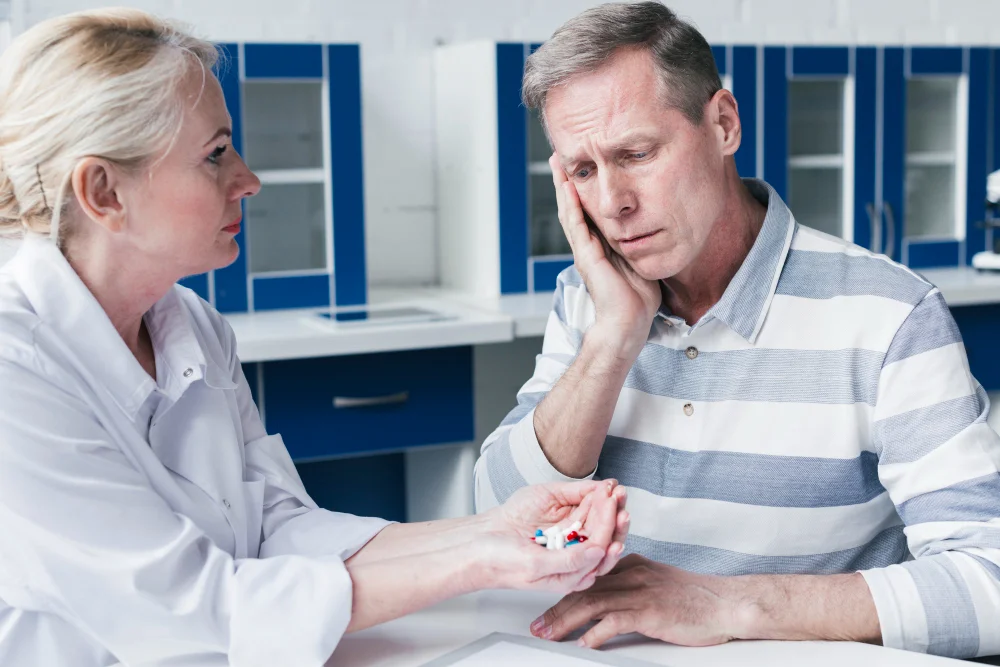
You push open the door of the neurology department in Lyon, on December 6, the brisk winter air still seeps into the hallway, the bustle disrupts routines. For years, this appointment has been established, we no longer wait for it, we live it: December 6, French Day of Huntington's Disease. What does it look like, exactly? You cross knowing glances, a mix of fear and desire to confront. Fear is not hidden, the necessity to speak is not either, so the words come out, sometimes too loud, sometimes barely a whisper. This day, yes, brings the invisible to the forefront, for a few hours.
The context and significance of the dedicated day on December 6
What is the true meaning of this national day? We won't redo the debate; France simply wants to bring Huntington out of oblivion. On December 6, we dare to be frank, we prefer lucidity to false pretenses. Living with Huntington means facing genetics, walking with your head held high in the hospital corridors, fighting against fate. In numbers, it’s +18,000 families under the threat of the gene, 6,000 affected individuals already exhibit these unconscious gestures, these insidious losses of control. The gaze changes from the moment Huntington is mentioned. In couples, in households, in minds, everything shifts. Who benefits from this December 6? Perhaps everyone. To the families who restore meaning, to the medical teams, to friends who finally understand what it’s all about.
Huntington's Disease, a generational transmission without justice?
The mutation is transmitted, without mercy, from parent to child. Risk: one in two in the offspring. Do you feel this weight? Genetics strikes without sounding the alarm. In Europe too, the trend is shifting: one in 10,000 reaches this milestone between 35 and 50 years old, abruptly, without warning. One would never say that France needs another day to talk about illness, yet the necessity takes precedence. No one wants to remain in silence, for that is where social injustice settles. December 6, national day of Huntington's Disease, offers a way out, a new lucidity.
The foundations of the French day on December 6, a committed agenda?
This appointment does not come out of nowhere: the Huntington Association France mobilizes, creates, stirs, dares to bring together all those who refuse to be isolated. Campaigns, debates, information in halls or in the streets, caregivers demand resources, families organize. It’s about informing, educating, even encouraging, yes, medical and paramedical teams to train. Awareness does not exhaust: we support families, we challenge elected officials, scientists advance in the quest for a therapy that reverses fate. This collective breath, this challenge thrown into the shadows, on December 6, circulates, it unites. Hope gains ground, in hospitals as well as at the turn of a municipal conference.
Initiatives in France during the day of December 6
Paris, Lyon, Nantes, Bordeaux, it lights up everywhere, a common slogan at the doors of care centers, town halls, small rural hospitals. This plurality is astonishing. Posters multiply. There are as many ways to encounter the disease as there are patients or caregivers. The strength lies in the breadth of initiatives. Conferences, sharing, training.
In Lyon, a neurologist leads a workshop, a father reads “Huntington” aloud. He looks at his son, lowers his head, then smiles: “He finally understands my silence.” The room stops, everyone listens – silence, lived experience, intensity.
| Date | City | Type of event | Target audience |
|---|---|---|---|
| December 6, 2025 | Lyon | Conference and round table | Patients, families, caregivers |
| December 6, 2025 | Toulouse | Information workshop | General public, caregivers |
| December 6, 2025 | Paris | Screening session and conference | At-risk individuals, healthcare professionals |
| December 5-7, 2025 | Nancy | Open house days at the hospital | Patients, young adults, families |
The collective energy vibrates through conference rooms and hospital corridors. Families express themselves, caregivers listen, caregivers share, patients dare. It is no longer the affair of a small isolated group. It breathes. It sometimes astonishes. Emotion takes up all the space, intellect serves only to put the right words to disrupted lives.
The mobilization of families, professionals, and the public in question?
In Nantes, an example: the room does not empty, parents and children sit side by side, puppets tell the disease to the little ones, without coldness, without detour. The public understands that the neighbor's gesture, the tremor of the arm, has meaning. A smile slips in, it is not always expected. Mutual aid between families, caregivers, and volunteers weaves a tangible, concrete, human network.
- Visible solidarity everywhere, not just on December 6, French Day of Huntington's Disease
- Peer experience sharing
- Welcome psychological support in case of relapse, in case of bereavement
- Strengthened link with young adults and relatives
Words are freed, those affected cling to this listening. After a strong moment, some leave changed, merciful, determined to break isolation. The snowball effect shakes the fixed vision of the disease. France invents a new way to express vulnerability, without shame, without embellishment.
Advances in diagnosis and research: where do we stand in France
The journey begins with a simple consultation, a hesitation in the voice, a suspicion evoked without certainty. The general practitioner takes the situation seriously, the conversation begins, then the relay passes to a specialized structure. We enter another logic: expertise, resources, humanity too.
Genetic diagnosis, the steps, transparency?
From the Rare Disease Reference Center, the steps follow one another, without haste but with rigor. Support returns at every moment.
| Step | Location/Centre | Support |
|---|---|---|
| Contact for suspicion | General practitioner or neurologist | Evaluation interview, orientation |
| Consultation at Huntington reference center | Specialized hospitals in Paris, Lyon, Lille, Marseille | Genetic counseling, neurological assessment |
| Conducting the genetic test | Authorized laboratory | Personalized explanation, collection of consent |
| Announcement and follow-up of diagnosis | Hospital centers | Psychological support, family support plans |
Psychological support is not negotiable; it is imposed on everyone. Families cry, doctors inform, networks activate: psychologists, social workers, specialized counselors. The wait for results sometimes resembles a crossing of the desert; the announcement falls, life changes. Everyone moves at their own pace; no one forces another to go faster or to speak louder. Words circulate, fragile, indispensable.
Perspectives and clinical trials in France: the glimmer at the end of the tunnel?
Science advances, without miracle promises but with fierce determination. Innovative protocols emerge in genetic editing, in biotherapies. More than eight trials are underway, coordination between INSERM, AFM-Téléthon, and university hospitals; French research seeks to break fate. Yes, treatments now target the heart of the problem. Anti-sense RNA tests open a horizon. Hope grows at every conference, the international community unites, research accelerates over the past three years. The goal? Slow down, preserve, hope for remission. Patients feel the breath of novelty, relatives allow themselves to dream beyond the diagnosis.
The future, less dark? Perhaps. A therapy that reverses the trajectory would not only change the patient's life but would shake the entire family, social, medical, and educational environment. Collective resilience shines. France gives nothing up; Huntington's disease no longer settles without a fight.
Resources and support for patients and relatives
In the face of the storm, three pillars structure the French network. The Huntington Association France operates on several fronts: information, advocacy, research facilitation, support for dialogue between stakeholders. The expert centers established in Paris, Lyon, Lille, Strasbourg, and Marseille mark the territory, relay existing provisions. Local structures, often run by volunteers, hold the social helm, support caregivers, accompany families.
Organizations and support, how to navigate?
Are you looking for a listening ear, a quick solution, an administrative advice? Everything is connected. The National Union of Huntington Associations anchors action in the regions, offers groups, respite actions, an open dialogue for young caregivers. The Neurosphinx network articulates all information on the site maladiesraresinfo.org. The chain of mutual aid moves forward, robust, supportive, never resigned.
Tools and documents, what uses?
Nothing is more frustrating than going around in circles in front of a mountain of papers, so readily available aids become essential:
| Resource | Type of aid | Access |
|---|---|---|
| AHF information sheets | Legal information, practical advice | AHF website, free download |
| Rare Diseases Info Services telephone platforms | Listening, orientation, support | Toll-free number, 0800 40 40 43 |
| Regional support groups | Experience sharing, moral support | Registration via local associations |
Asking for help does not equate to failure; it is a sign of strength. Guides, help desks, and forums lay the groundwork for a less burdensome daily life. We refer to them before major crises, we exchange before exhaustion.
Is it simple? Never. But December 6, French Day of Huntington's Disease, breaks a routine, creates a new space to tell stories, receive, exist. Families dare, professionals insist. Research progresses, yes, networks overflow with resources, taboos fall. And you? Will you be part of the next edition? If the desire arises, it all starts with a different look, sometimes simply a handshake, and everything else follows, slowly, surely.