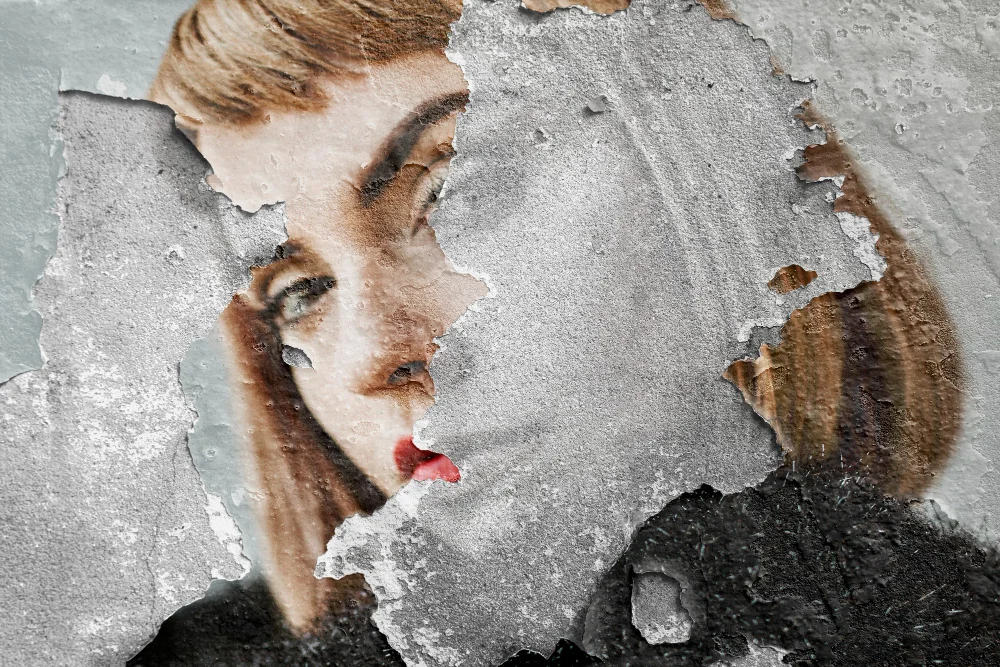
On January 29, World Blackout Day establishes a discreet yet disruptive planetary appointment. A page crossed out with ink, a word that reinvents itself, constraint transforms into creative freedom, then suddenly everything comes to life. Those who dislike silence are interested in this date, and the curious recognize themselves in it. Responding to the call of this initiative is to affirm that creativity, freedom of expression, and civic engagement weave together, sometimes subtly, sometimes with great noise.
The meaning and origin of January 29, World Blackout Day
Sometimes, one shivers while reading a text crossed by large black strokes. Russian literature, diplomatic archives, memories of past repressions... The history of blackout is invented through crises, but is it just a story of deprivation? Censored writing, initially a tool of control, has gradually risen on the walls of artistic workshops. Curious paradox, don’t you think? Censorship inspires, constraint fertilizes muffled revolt. Boris Pasternak, Anna Akhmatova, reread them, you will see, lack makes sense.
The 1950s saw Picasso cutting out newspapers, Tristan Tzara writing with scraps of recovered phrases, American artists creating blackout poetry by letting shreds of novels speak solo. More recently, Austin Kleon has made a name for himself on social media, and his "Newspaper Blackout" has united thousands of readers around this strange way of appropriating text. Do you still believe that crossing out means prohibiting? No, it means reinventing. The act of reversing the logic of erasure excites the creativity of entire generations of authors, readers, and teachers. Yes, World Blackout Day tells this reversed story, a story where censorship gives birth to the freest public expression. Amazing trajectory, you will agree.
The birth of World Blackout Day, key dates, and the values in question
In 2018, Parisian teachers and the association Le Caviardage Créatif took the initiative. It all began in a high school, discreetly, but already, institutions were watching. Very quickly, the support of the Ministry of Education followed. The Canopé network spread the idea across several academies, and by 2019, more than sixty institutions were involved. It started as a pedagogical bet but quickly took on another dimension. Quebec took up the torch, Belgium, Switzerland too; even Brazil adopted the cause.
The organizers set three principles that hold the course: creativity, freedom of expression, and pedagogical value. Museums partner, the BNF dedicates a special selection on its site, competitions bloom everywhere. This wave provokes unexpected enthusiasm. Yes, World Blackout Day exists more strongly than expected, well anchored in all environments.
| Date | Initiator | Main objective |
|---|---|---|
| 2018 | Teachers and the association Le Caviardage Créatif | Pedagogy and fight against censorship |
| 2019 | Canopé network | School and artistic activities |
| 2020–2022 | Media libraries, high schools, international artists | Creativity, public expression, inclusion |
| 2024–2025 | International organizations Unesco, FIPF | Global outreach, civic engagement |
The explosion of participation and ideas around blackout stems from collective momentum, and each society adapts this gesture to its own history. Moving from censorship to a reinvented freedom is neither anecdotal nor so simple. The art of changing everything is truly learned only in the classroom or in a large square, with texts and markers. One then glimpses the political stakes of an artistic gesture. Censored sheets accumulate on the walls of Montreal, Lyon, everywhere the street seizes the symbol.
The forms of expression of blackout today in creation and education
Do you feel this tension between pedagogical gesture and free creation? It all begins in a classroom, in front of adolescents armed with markers. Each one applies themselves, crosses out, colors, then discusses the new text obtained. Teachers revive word games, blackout poetry bursts forth; yes, whimsical words destabilize school habits.
The artistic and educational techniques used in schools and workshops
In practice, nothing solemn, but real concentration. In front of the middle school students, the rule is simple but resistant. A newspaper page, a felt-tip pen, an instruction: keep what intrigues, mask the rest. The works stand out, and sometimes the teacher is amazed. College social networks amplify the phenomenon from January, creativity explodes in images, performance overflows from the classroom.
One then identifies a series of digital workshops, happenings, up to ephemeral performances in front of libraries, the Academy asks: how did this ordinary text become so poetic? On January 29, World Blackout Day overflows with original productions, hashtags propel collages well beyond the school circle. Sticking, erasing, diverting: this art has no borders. Some researchers make the blackout of scientific articles a true manifesto, revealing inconsistencies or absurdities, and everyone enjoys it half-heartedly.
Cultural and international differences: how does blackout vary by country?
The current edition reaches 22 countries according to Unesco. In Quebec, Francophone publishers and teachers rely on blackout to celebrate linguistic diversity, and Belgian media showcase the censored pages of schools. In Geneva, everything internationalizes, multilingual texts invade public spaces. Italians focus on newspaper headlines, the British BBC is fascinated by blackout poetry from primary school onwards.
Universality is that, but the form changes. In the United States, Brazil, and Senegal, each citizen chooses their method. Sometimes, a simple sentence in Japanese covered provokes emotion in front of a French media library. The differences reveal cultural concerns, the medium does not matter, only the approach federates. You might pass by an improbable collage, and you will stop. Who had that idea?
The social and educational stakes in 2025, between creation and limits
If some adopt blackout at full speed, others hesitate. The school takes it up, sometimes timidly. Workshops gather volunteers, there are still gray areas, as every freedom comes with debate.
The pedagogical and creative interests of the practice of blackout
In middle school, blackout promotes attention, memorization, and creativity. Teachers lend a helping hand, students seize the schema, they deconstruct, recombine. The ministry in France has supported actions since 2021, the Digital Resource Bank spreads the method. What becomes interesting is the personal turning point of each production: the student discovers that a formatted text can harbor an unexpected poem.
- Development of critical thinking in adolescents
- Strengthening creative confidence through experimentation
- Awareness of freedom of expression without dogmatic discourse
On the artists' side, this satirical gesture disrupts frameworks. Regardless of the original material, the result astonishes, disturbs, even amuses, it sometimes disrupts conventions. Blackout moves out of the school domain to join citizen workshops. This leaves no one indifferent.
The controversies and debates, can censorship be diverted for good?
Some circles cry out for ambiguity. Would censorship be trivialized? Debates flow on forums, some academics criticize. Some teachers find themselves in the hot seat for having exploited overly sensitive texts. The National Union of Publishers warns about the alteration of written heritage, a real societal issue. In Brussels, a very political exhibition tarnishes the consensus, the debate has created tensions in the educational and political community.
Do you hear it, the anecdote of that student who dares, at the back of the class, to reveal her poem on a history page? The teacher describes the scene: "A shy girl read her own words, and the entire class moved. Since then, she shines in the theater club. It’s this power of erasure that sometimes makes all the difference."
Blackout challenges everyone: accept ambivalence, make emotion spring forth where it is least expected. World Blackout Day disrupts order, that is undoubtedly its greatest success.
Ways to engage on January 29, during World Blackout Day
This collective appointment is aimed at both the curious and the initiated. Schools, libraries, and artists orchestrate a parade of workshops, blackout poetry contests, and public performances – often improvised.
The collective events of January 29, how are the workshops and meetings organized?
In 2025, the diversity of initiatives is impressive. Institutions multiply activities, in person or remotely. Media libraries showcase productions, invite the public to manipulate blackened sheets, revised texts. Participatory readings start in associations, each contribution adds a nuance to the whole. And what if everything went online? From now on, social networks connect enthusiasts, thousands of contents circulate on Instagram, Twitter, or YouTube.
Research centers and national libraries get involved, offer unprecedented resources, build collaborative spaces. All ages, all styles, all inspirations form a shifting, elusive landscape. You are part of the movement even without knowing it, the mere fact of being interested changes the game.
Resources to get started and find inspiration, where to begin?
Who hesitates in front of the blank page? Media libraries lend reference manuals, Austin Kleon's "Newspaper Blackout," the guide "Hidden Poetry, Revealed Words" by Sophie Auster find their audience. Some teachers publish video tutorials on YouTube, Marie Chouinard's channel remains essential for those who love to practice. Specialized sites list best practices, the Eduscol platform lists everything that stimulates the desire to invent. We also appreciate shares via hashtags #Journeemondialeducaviardage and #BlackoutPoetry2025. Discuss, observe, test, World Blackout Day rests on this spirit of permanent exchange.
Ultimately, the strength of this practice is not measured by the number of crossed-out words, but by the number of illuminated gazes. What will you do on January 29, which sheet will you choose, who will be able to read what you have allowed to appear?