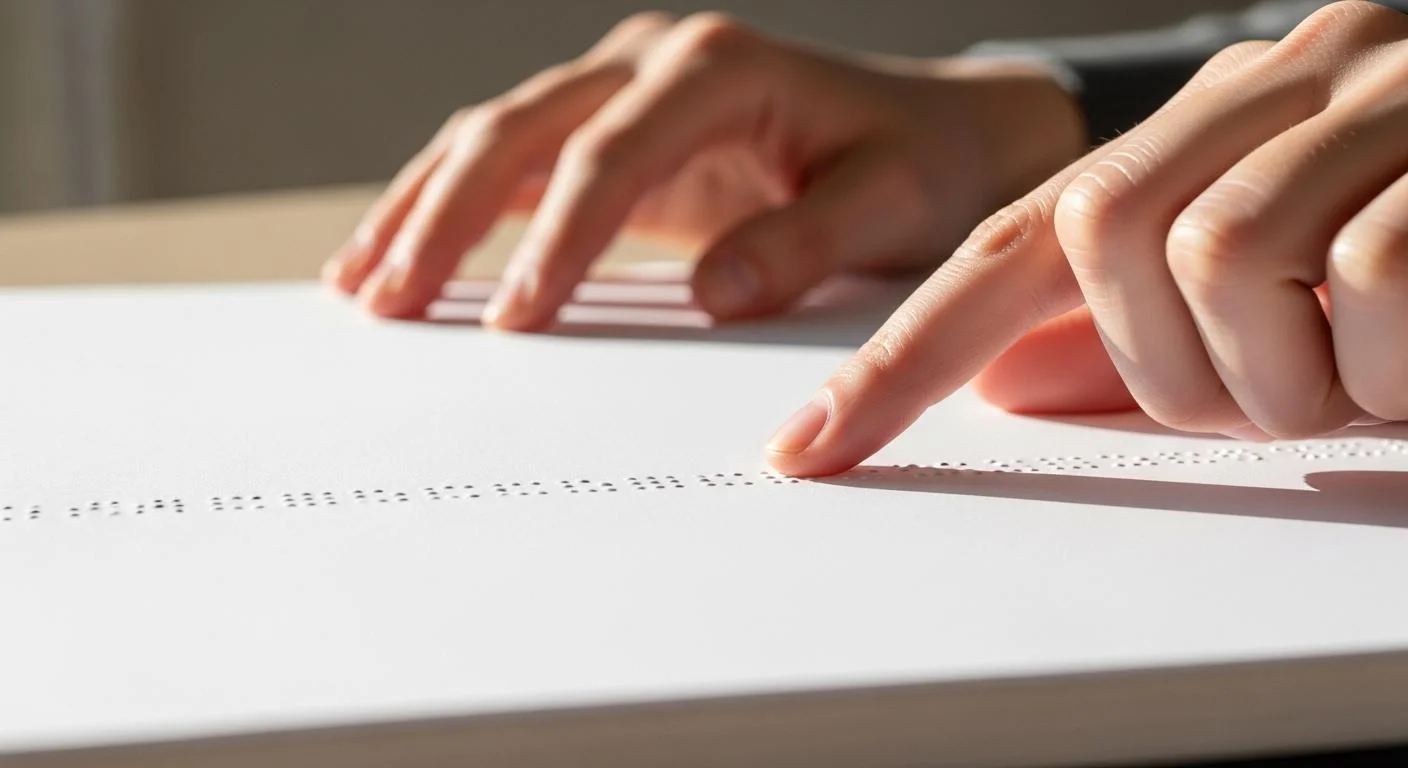
January 4 is not just a date on a two-century-old agenda. This World Braille Day advances inclusion far more than some political speeches. Access to information, the real kind that changes lives, still and always goes through this tactile writing system. Here, there is no privilege, just a right, recognized but so often undermined. You see World Braille Day on January 4 growing, gaining momentum, and, deep down, you understand: inclusion does not wait, it acts.
The meaning of World Braille Day, understanding January 4 and its universal impact
January 4 is tied to the story of a boy from Coupvray, struck by blindness after a workshop accident, you know him, Louis Braille. At 15, he developed a tactile code of six dots, not a laboratory feat, no, a radical shift in literacy. In 1824, a whole world of writings, previously forbidden, opens up, writing is renewed. Louis was born on January 4, 1809, nothing trivial about this choice that the United Nations finally officialized in 2019.
Are you surprised? So many European libraries still sleep under dust, linked to braille, living or silent proof of this evolution. From now on, the law, the metro, public signs: braille seeps everywhere, slowly, yes, but surely. Before you skip this info from January 4, ask yourself: how does society truly honor this discreet code that disrupts inclusion?
The origins of January 4, the birth of a symbol
Louis Braille, that name resonates, still echoes. At 15, he revolutionizes his time, stacks the six dots, and with one gesture, transforms the fate of the blind. The trace has never disappeared. The choice of January 4 is no coincidence; it seals a tribute, a respect, a memory entrusted to all. The UN finally sets this milestone, global, universal, Braille Day takes root. In 2025, you see the commemoration expanding, more than 75 states participating. And you, where do you stand?
The international importance of organizations, collective pressure
World Braille Day spills out of its hexagonal cocoon. The UN propels the issue onto the international stage, UNESCO passes the ball back into the educational system. The Americas, Asia, Africa, everyone is getting involved. France, India, Senegal: each country vibrates braille in its own way.
WHO has counted: nearly 285 million people live with visual impairment worldwide. Their daily life? Sometimes still silence in the face of information.
World Braille Day transforms absence into a shared fight. Are you frowning? Ask yourself, does the mobilization of states legitimize a global urgency?
| Country or organization | Major initiative | Year |
|---|---|---|
| UN | Official recognition, global campaigns | 2019 |
| UNESCO | Educational programs integrating braille | Since 2018 |
| Federation of the Blind of France | National event, professional training | 2025 |
| India | Launch of accessible textbooks | 2022 |
The role of braille in inclusion, from school to daily life
Are you moving through this crowded metro? Braille slips onto the handrails, on the medicine box, in the elevator that climbs to the floors of high schools. School, the first field of inclusion, does not always smile at the blind child, but braille remains its promise of equality, or almost.
The daily uses of braille, from the school bus to the pharmacy
A child with braille in hand finally reads the words, feels culture flowing under their fingers, French side, science side. Children's novels exist in braille; have you ever flipped through one of these books? Teachers adapt, offer courses, step by step. The real, autonomy clings to these small gestures, reading the menu, coding, training for a technical job.
The autonomy of visually impaired individuals no longer resembles a mirage. Who has really noticed this discreet band on the paracetamol box? Braille embeds itself, breathing its quiet strength. Independence? It is earned, hand on the railing, voice in the head. The ordinary no longer asks for permission; it imposes itself, silently.
The impact of braille education, the bet for an autonomous life
The numbers speak the truth. Insee, 2025: sixty percent of adults trained in braille access employment, double that of those deprived of tactile tools. Society is riddled with paradoxes. Facilitated school integration? Yes, when braille circulates. Autonomy? Earned at the cost of often invisible efforts. The gaze one places on oneself, reinvented.
| Autonomy | With access to braille | Without access to braille |
|---|---|---|
| Daily reading | Yes, immediate | No, increased dependence |
| School integration | Facilitated adaptation | Frequent delays and exclusions |
| Professional choices | Expanded opportunities | Severe limitation |
| Self-confidence | Strengthened | Weakened |
An adult reads a letter from the CAF, pays a bill discreetly, relegating dependence to the attic. Braille is more than dots; it is the solid foundation of a life outside the boxes.
Claire, mother of a visually impaired middle school student, shares her emotion: “My daughter smiled, placed her fingers on the page, the book seemed immense, she read aloud without hesitation on a January 4, it changes everything.”
Technological advancements and January 4, World Braille Day in a connected society
Digital technology is shaking up the daily life of braille. Braille keyboards are being developed at universities, e-readers are appearing on all shelves, more accessible, less utopian than one might think. 2024 sees the emergence of a new wave of applications to instantly transcribe documents into braille. Connected objects are taking hold of the code; watches, scales, tactile GPS are becoming almost commonplace. IBM, HumanWare, Apple persist tirelessly.
Innovations and digital democratization, everything is moving
Braille technology embodies universal accessibility, no fluff, no detours. Have you ever tried sending an SMS on a tactile cell? Sometimes, a simple idea is enough to shake everything up. Technological initiatives go beyond gadgets. They give back maneuverability, multiply chances. World Braille Day boosts this movement of emancipation.
- More affordable braille e-readers
- Instant transcription applications
- Tactile GPS systems and connected objects
Never has braille evolved as much as at the beginning of 2025. Is it finally the right time? The question lingers in the mind.
Mobilized organizations, January 4 as a unifier
The Valentin Haüy Association shakes up schools, uniting all students around tactile workshops. In Paris, the Federation of the Blind of France launches events, workshops, campaigns. CBM France supports adults changing direction. Montreal? The same fervor, the same dynamism. Braille Day, Accessibility Week: society vibrates, reversing the trend of indifference. Have you ever deciphered a café menu, given a tactile book as a gift?
World Braille Day takes over social networks, stirs consciousness, creates a bridge between professionals, families, and public decision-makers. The click is there, discreet but tenacious.
The stakes and perspectives of braille, moving forward despite obstacles?
Access to braille is still hindered by annoying obstacles. A CDI in middle school, and nothing in braille on the shelves. Have you ever tried to order a textbook for a visually impaired child? The supply is dwindling, hindered by the scarcity of trained teachers, the exorbitant cost of electronic readers, the complexity of learning for adults. The National Education only displays 25 percent of educational content available in braille, a real blow. The digital divide does not forgive, incompatible software, content only in English, accessibility goes in circles.
Current obstacles and remaining barriers
The challenges of visual inclusion do not belong to the past. The gaps persist, hard, sharp. Training, cost, scarcity, everything adds up. The collective must raise its voice, collect, share, invent.
Perspectives and levers, does society remain on the sidelines?
You are looking towards tomorrow. What is the place of braille in a society flooded with pixels? Digital supports are arriving, online libraries are finally settling into the landscape, pedagogy is taking off with one tactile hand, the other on the voice keyboard. In 2025, public policies accelerate, braille is included in public procurement and educational programs. Pioneering schools are testing tools that mix voice and relief, multidisciplinarity is gaining strength.
The future of braille is played out at every crossroads, between budget, pedagogy, and collective consciousness. Everyone moves forward, step by step, impatient fingers tracing words, inventing, expanding the world. The question remains, turning, inviting itself to the table: in 2025, will you find some words in relief in your favorite café? Will you be among those who demand this ordinary right? The future, perhaps, will also be written, ironically, in relief.