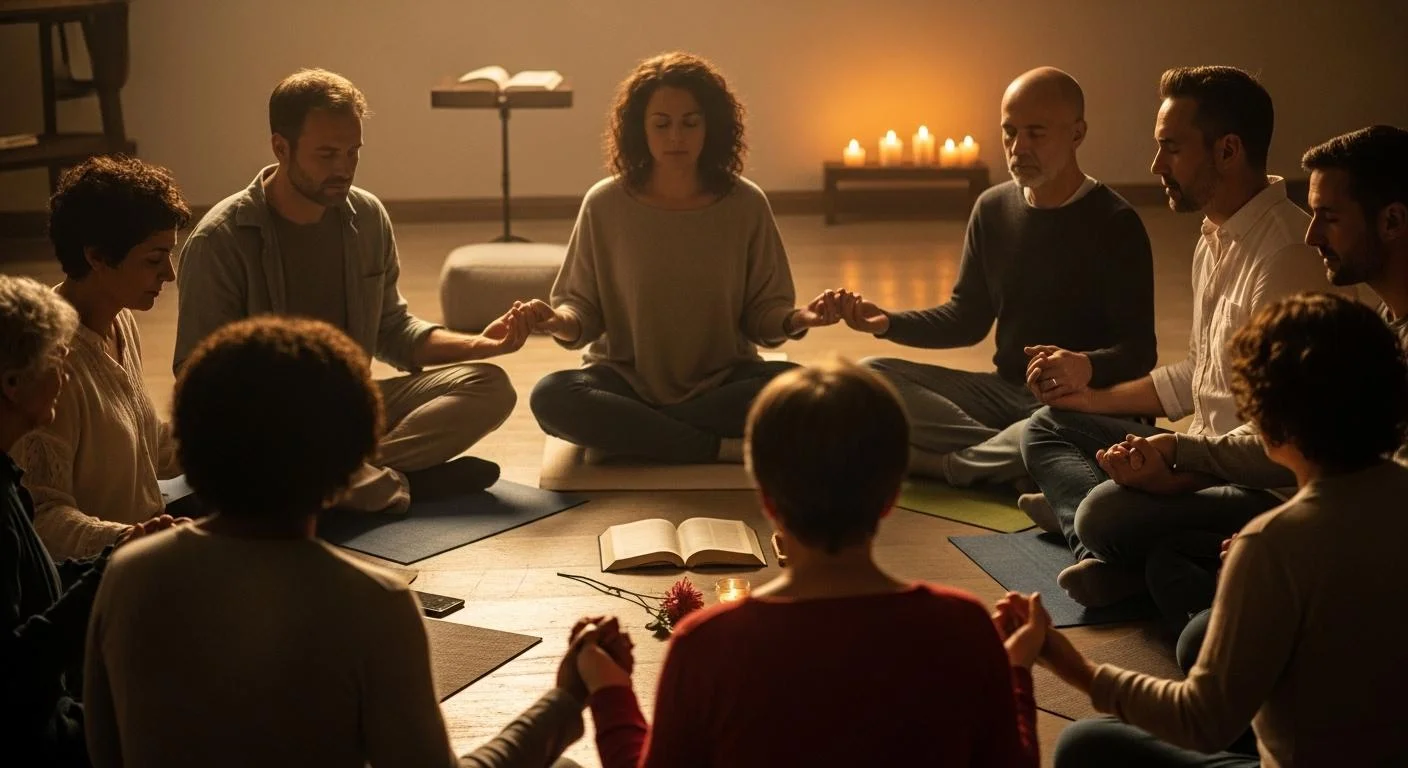
So, on this March 3, you may have crossed the threshold of a church or a home, you likely felt a strange atmosphere, where silence does not weigh down, it connects. The World Day of Prayer does not play in the same yard as most religious ceremonies. It whispers its invitation everywhere on the planet, more than 170 countries welcome the same energy almost at the same moment. It works because humans seek belonging, and this morning, linguistic barriers and time zones fade away. One single message circulates: you are not alone. It should be emphasized, nothing equals this gathering woven from stories, efforts, and voices carried by solidarity and fraternity. Who can resist it, anyway? This day invites not only to pray but also to act, it shakes up associative calendars, it stimulates collective choices.
The meaning of the World Day of Prayer and its ecumenical foundations
A ceremony that truly unites humanity? You feel the ecumenical dimension, everywhere small relational miracles take shape. Churches breathe a different atmosphere, faces open up, everyone adds to the mosaic without fear of being out of place. A spontaneous phenomenon, far from habits, where faith becomes a collective act, commitment, and why not a springboard for new projects. No exclusion, no elitism, no overly marked borders.
The origin of the celebration, a collective impulse in service of faith and the world
You go back to 1880, a discreet start in the United States, then in Canada. Christian women step out of line, Protestants, Catholics, Orthodox, they imagine a crazy movement: to deploy, everywhere on the planet, a chain that connects prayer to concrete action in service of peace. 1927, an unparalleled turning point. Everyone gets on board, Europe, Africa, Asia, no brakes, no selection at the entrance, everything widens. The tenacious will to gather Christians under a universal banner, does that surprise you? A pilot country animates the theme of each year, a text arrives, a song responds, March 3 inspires, gathers, shifts the lines. A revolution without drum or trumpet, a silent but imposing weaving.
The objectives and values of this exceptional mobilization
At the core, it is not just spirituality that is moving. You move from one culture to another, from one ritual to another, the movement expresses itself through concrete action, listening, and solidarity. The strength of the collective is striking: donations are organized, girls are educated, women are protected, debates on ecology, workshops on social justice. Christian unity takes shape, international solidarity translates into actions, peace and justice animate minds. The feeling of belonging to a planetary movement shifts the lines, you feel it physically, even at a distance.
The visible unfolding of the March 3 Day of Prayer, between rituals and diversity
March 3 is not just lived, it is traversed, it shakes up an ordinary calendar, it imposes itself in agendas in the name of a synchronization between territories that had, until now, nothing in common.
The date, a symbol or a coincidence?
Why this choice of early March, why converge all these voices at this time? It is not just the religious tradition at stake, there is also the will to mark a rhythm, to rekindle hope, to establish a rare international stability. Spring sneaks in, regularity reassures. You will always find this meeting point between the ecumenical program and civil society, a kind of rare mix where the inhabitants of the five continents meet.
| Date | Global Event | Scope |
|---|---|---|
| March 3 | World Day of Prayer | 170 participating countries |
| March 8 | International Women's Rights Day | Social issues and equality |
| First Friday of March | JMP Celebrations | Synchronic ecumenical support |
| March 21 | International Day for the Elimination of Racial Discrimination | Justice and global citizenship |
You witness a kind of synchronization, a planetary echo that blurs borders, federates all generations, even surprises skeptics. No one claims their share of individuality, the exception becomes the rule for a few hours. Who would claim that these moments have no influence?
The highlights of an engaged celebration?
The atmosphere shifts from the welcome. The annual theme is displayed, words circulate, readings take on unexpected accents, everyone gets in tune. Poetry is invited, music rises, the harmony of voices transcends all borders. Collective intercession anchors the message, it does not stop at the simple repetition of a learned prayer.
A gesture draws attention: a collection, discreet or festive. Donations soar, money flows, a school opens its doors, an association strengthens, clean water flows for the first time in a remote village. Solidarity replaces routine, commitment shatters the distance between continents. Few events maintain this vigor, even after March 3. Can we dream of a stronger social fabric?
The initiatives associated with the March 3 day transform solidarity and culture
It is not prayer that sets the tone, but rather the way the entire local fabric mobilizes its resources. Collectives imagine educational projects, activist networks boost campaigns on human rights, artists join in. Justice and cultural diversity marry, creating an unexpected dynamic.
A campaign emerges within the coordinating country, awareness explodes, debates multiply, the associative alliance expands. March 3 does not sleep, it infiltrates the activist agenda, it offers itself an unprecedented public space. Who suspected that religion could impact the social calendar with such force?
- More than 170 participating nations each year
- Donations redistributed to concrete educational and health projects
- A new pilot country for each edition, to renew perspectives
The international organization, the discreet actors, and the power of networks
The success of such a global meeting is not by chance. Several determined women, historical figures, pastors, heads of associations intervene, accelerate the movement. The countries at the root of the project have never given up, committees take turns, monitor institutional integrity, delegate the annual coordination of themes and actions. You find in this scheme a refreshing simplicity: solidarity takes precedence over internal disputes, action prevails over speeches.
The personalities and organizations that guide the movement?
The reality is these charismatic women always on watch, these networks that nourish the initiative well beyond the ceremony itself. From France to Lebanon, from Canada to Switzerland, everyone finds their place, each builds their own brick in a discreet but effective architecture. The International Committee of the World Day of Prayer monitors the major balances, ensures the alternation of leading countries, adapts the agenda. Since 2010, social networks have shaken things up and made visible the diversity of gestures, faces, causes. You witness the metamorphosis of an old ritual into a hyper-connected mosaic that never misses an opportunity to engage.
The local networks, essential pillars
Churches, women's collectives, NGOs, entire families form this living transmission belt, this fundamental relay. Rural France joins the Canadian dialogue, Lebanon engages alongside West Africa, no one is left out. The base is territorial mobilization, well-rooted, engaged, stable. Just cross the threshold of a hall or a temple, the ambient energy reveals the potential of grassroots mobilization. You meet entire generations, volunteers from other backgrounds, an uncommon relational fertility.
The impacts and potential for social transformation carried by the World Day of Prayer
Does this seem abstract to you? Yet, the results align, concretely. The momentum born in the 1980s propels the creation of schools, supports educational development, redefines the education of girls across several continents. In 2026, the figure of 1.8 million euros distributed reaches its target: educational organizations, health campaigns, structures fighting domestic violence directly benefit from this impulse. The social dimension prevails, solidarity takes on tangible contours: political decisions, health support, increased female presence in church councils, everything evolves in the wake of this collective March 3.
The testimonies, the memory passed from one generation to another
« My faith was shared for the first time on a March 3, in Benin, in front of a crowd I did not know. Japanese and Philippine songs circulated, solidarity infiltrated everywhere. This experience never leaves you, it marks daily commitments at work, in the family, in volunteer engagement. »
The energy conveyed overflows borders, it anchors in memory, even in family archives. Vietnam begins to publicly debate the education of girls thanks to this synergy from the outside. In Costa Rica, a free care center is born from a dynamic of common prayer, the United States shelters victims of violence through a project conceived collectively. The qualitative strength of this day is measured by its ability to transform trajectories, to transmit, to positively infect individual and collective paths. Emotion, active memory, long-term effects: the World Day of Prayer does not blur the tracks, it illuminates them.
So, the next time the date of March 3 appears in your agenda, perhaps stop for a minute. Let yourself be carried away by this underground energy, you will see where it carries your voice. The most unexpected sometimes lurks around the corners of a simple shared prayer, far from the spotlight. The quiet strength of a global movement, rooted in solidarity and faith, sneaks in and catches you off guard.