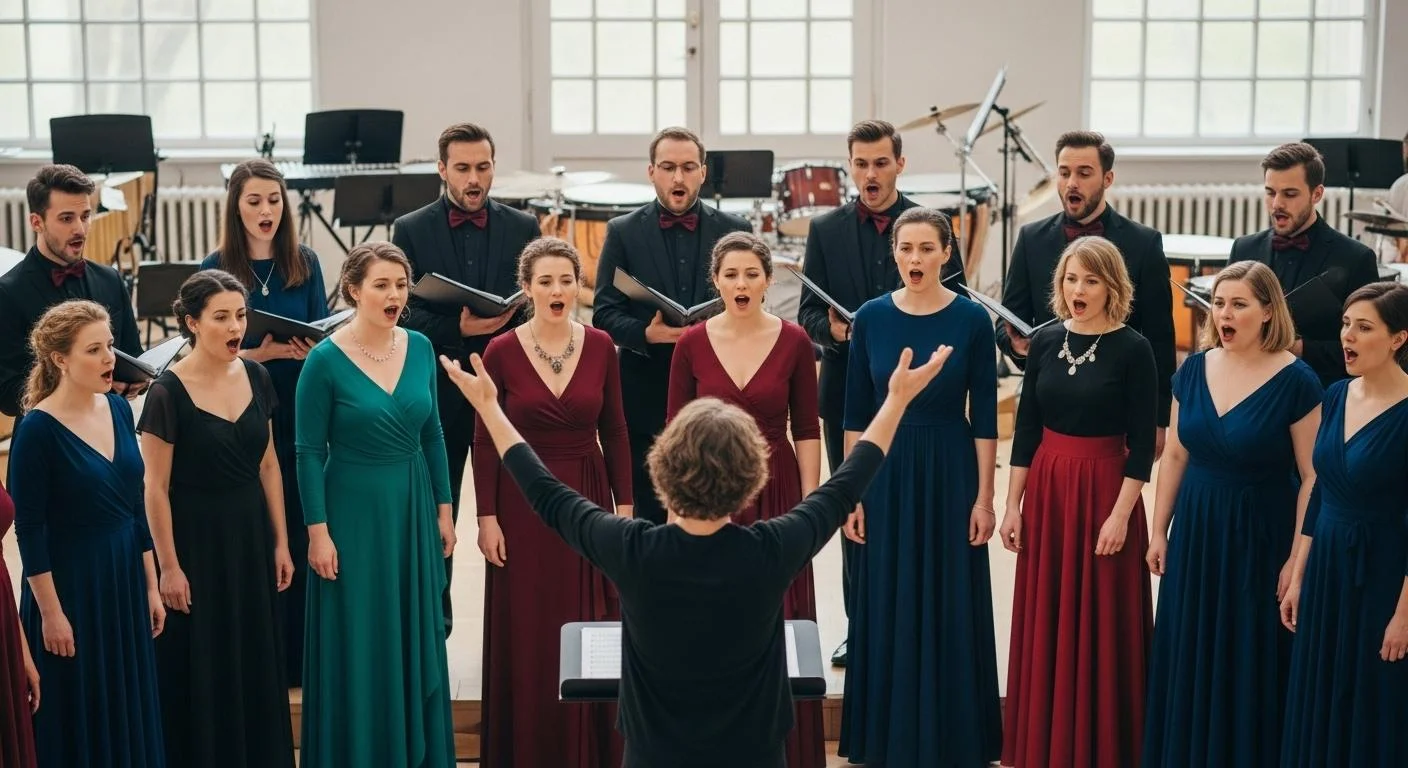
You go through December and suddenly, everything stops. A room falls silent. The anticipation becomes palpable, and then everything explodes into a wave of sound, a hundred voices, a breath, an emotion as vast as the planet. World Choral Day, rooted on December 11 for over thirty years, does not merely fill the silence; it weaves an invisible thread between all those who seek a reason to believe in music, even in 2025, in this saturated era. Yes, the magic persists, despite the turmoil, despite the doubts. Why so much power on the same date? Simple, you breathe better when voices meet. No need for frenzied passion to admit it; choral singing, a legacy of an international movement, brings together, disrupts, and questions. The numbers explode, and so do the challenges. Did you think all this was just folklore? Think again, every December 11, everything resonates differently.
World Choral Day, what are the origins of December 11?
You know that sudden desire for a single event to shake up the routine. World Choral Day has been instilling this disruption since 1990, inspired by Alberto Grau, a choir conductor from Venezuela. He did not want to create just a date; he was first looking for a force of unity, an alchemy designed for peace, so that music could become that common thread everyone dreams of. His first intention still astonishes: to gather, as much as possible, amateurs and professionals around the voice, without distinction. This promise is still heard. On December 11, 1990, everything begins, and history shifts in a few measures.
The years go by, and editions multiply. Do you doubt it? The International Federation for Choral Music aligns over 2000 gatherings each year. Does that seem enormous to you? More than 100 countries are involved in this planetary movement in 2024. Yet, it is not just a matter of attendance. World Choral Day impacts societies during crises, revealing the need for connection and belonging. Do you believe that all this noise transforms nothing? Look closer; it is the temperature of emotions that rises, not just the attendance at concerts.
The fascinating history of December 11, the date that matters
Why this date, why exactly December 11? The calendar at the end of autumn itches; we enter the period of assessments, heads full of expectations, sometimes of fatigue too. All the better, singing sneaks into this transition, offering a breath, a collective warmth. World Choral Day quickly becomes this unexpected landmark, a beacon for choirs from all backgrounds. Everyone talks about it; you hear the buzz in schools, associations, even institutions get involved. A strange feeling of being together, of having a purpose. The appointment crosses borders, the event is marked on well-filled agendas, imposing a salutary detour. You don’t believe it? Try a concert in December; you might grasp why Polyfollia, Europa Cantat, or the American Choral Directors Association also synchronize their festivities around this specific day.
The values and objectives, why does World Choral Day shake communities on December 11?
The humanist energy of World Choral Day does not tire. Have you felt it already? The event casts a wide net. Everywhere, peace, solidarity, and the desire to pass on between generations spring from the chosen repertoires. The exchange happens, of course – but also the surprise, the discovery, the obviousness that diversity gives meaning. Nothing to do with a simple alignment of songs. Do you remember Playing for Change and its contagious optimism? Yes, the spirit is well represented there.
Singing together is no longer just interpreting a melody; it is already welcoming the other, listening, and relearning to live together.
The echo of values transcends technique, surpasses age or origin. Images flash across social networks; everyone wants to capture an emotion, immortalize a smile, or the ephemeral complicity of the group. Solidarity is no longer just talk. In the face of sometimes biting solitude, in the face of urban isolation, choirs resist, defy indifference, and impose an atmosphere that warms even the most skeptical.
The educational and social ambitions, where does all the energy of the day land?
In schools, in community centers, even in some hospitals – World Choral Day invites a challenge. Teachers pass on knowledge, facilitators tell stories: attention stabilizes, confidence returns, the atmosphere changes. The social bond is rewoven, inclusion takes on new colors, the voice emerges where no one would expect it. Some school choirs benefit from a little boost from the Ministry of Culture; France initiates nearly 10,000 workshops this year, and every December 11, attendance soars. The figures from the French Federation of Musical Education reassure; the trend is confirmed: more groups, more voices, fewer forgotten ones.
| Educational Impact | Social Impact | Concrete Examples |
|---|---|---|
| Musical skills, memory growth, discipline, creativity | Strengthening social bonds, a path to inclusion, regained confidence | Primary schools with À Cœur Joie, intergenerational workshops in nursing homes, flash mobs in the city |
Do you grasp the scale? Singing is no longer a leisure activity "for those who know." It touches all generations, reforming a sometimes fragmented community. The transformation does not stop; it circulates where pessimists feel abandoned.
The events, what initiatives for December 11 in France and elsewhere?
There, the event stands out. Across five continents, December 11 releases synchronized concerts, flash mobs, cascading videos. Municipalities relay the information, schools organize the shows, fairs or associations find their echo in the dedicated programming. The digital realm completely transforms the game – since 2020, so many events have moved online, broadening the circle well beyond aficionados. The effect is observed in the neighbor's gaze, in the smile of a student proud to invite their parents for the first time.
Videos from Manila to Montreal surprise, shares explode – the audience skyrockets, the choir stretches to the shyest of living rooms.
In 2025, a new statistic resonates: one-third of events maintain their virtual dimension, even if human contact and proximity remain sought after. Hard to cheat; you can really hear the difference, you follow the little miracles that arise around a recording.
The figures that mark World Choral Day
Who pulls the strings, who infuses the rhythm? First, the International Federation structures the entire ecosystem – campaigns, workshops, even educational guides. Then in France, the most well-known face is called À Cœur Joie, uniting enthusiasts, professionals, or simple curious individuals. You also encounter the names of Thierry Machuel or Elise Hall, inspirational figures who reinterpret the repertoire in their own way and sometimes shake up habits. Personalities invest in networks, share their sense of community, motivate teams that still doubt; institutions, schools, cultural centers, or even local authorities find ways to renew the experience without ever repeating it.
The Ministry of Culture displays the programming on its reference site, the feedback intensifies, and the media also venture into it, reaching unexpected audiences. The stage no longer belongs only to the initiated.
Ways to get involved for December 11, how to engage in World Choral Day?
Are you hesitating? The starting point evolves constantly. World Choral Day does not close the door to anyone. Do you only sing in secret? No one judges you. Do you lead a choir, run a neighborhood workshop? The event offers new, never-boring opportunities. Participate, relay, share your videos, dare to use the hashtag #WorldChoralDay on social networks; the effect is quick to follow. Several teachers distribute educational kits from autumn. On Facebook, YouTube, TikTok, the voice is heard. Challenges circulate; everyone tries to drop a fragment of a refrain, a surge, sometimes a smile.
- Physical or virtual concerts open to all
- Educational kits for schools and colleges
- Vocal challenges on social platforms
- Accessible workshops in hundreds of municipalities
Digital tools shorten distances. Choir conductors, teachers, amateurs: everyone can pick free scores on IMSLP, vocal work tutorials on ChœurPlus, event announcements via Facebook. Taking action becomes accessible, sometimes even addictive. The collective takes on a new dimension; the energy flows.
| Platform | Offered Tool | Target Audience |
|---|---|---|
| IMSLP | Free choral scores | Choir conductors, experienced choristers |
| ChœurPlus | Vocal work video tutorials | Beginners, school students |
| Community groups to share, announce | All audiences |
The experience spreads; each event leaves a mark. We love to recall this testimony from Florence, an amateur chorister in Lille: “I was nervous, my throat tight, unable to sing a note three years ago… In the audience, I saw my children; suddenly, music swept everything away. Since that December 11, I haven’t missed a single rehearsal.” No need to illustrate; sharing is part of the game; the group dynamic sweeps away apprehensions.
The prospects, how does World Choral Day reinvent itself after 2025?
The pandemic has left unexpected traces. No one ignores the necessity of digital; the rise of online meetings shakes tradition. Accessibility attracts new audiences; diversity settles in. The hybrid model, between stage and screen, reaches maturity in 2025. The entire sector anticipates a continuous increase in participation, especially among those aged 15 to 35. Nothing surprising; short, mobile, participatory formats align with their desires, redrawing boundaries.
Challenges persist: how to maintain cohesion? how not to lose authenticity in the mass of shares? Regardless, the general enthusiasm remains intact. Repertoires open up, music from elsewhere gains ground, World Choral Day emancipates itself from its European roots. The momentum seems impossible to slow down.
A question arises, almost naive: who has never felt the urge to rise together to the height of a refrain? A tune is passed in the street, in the home, even in shared silences; on December 11, anything is possible; the voice never stops.