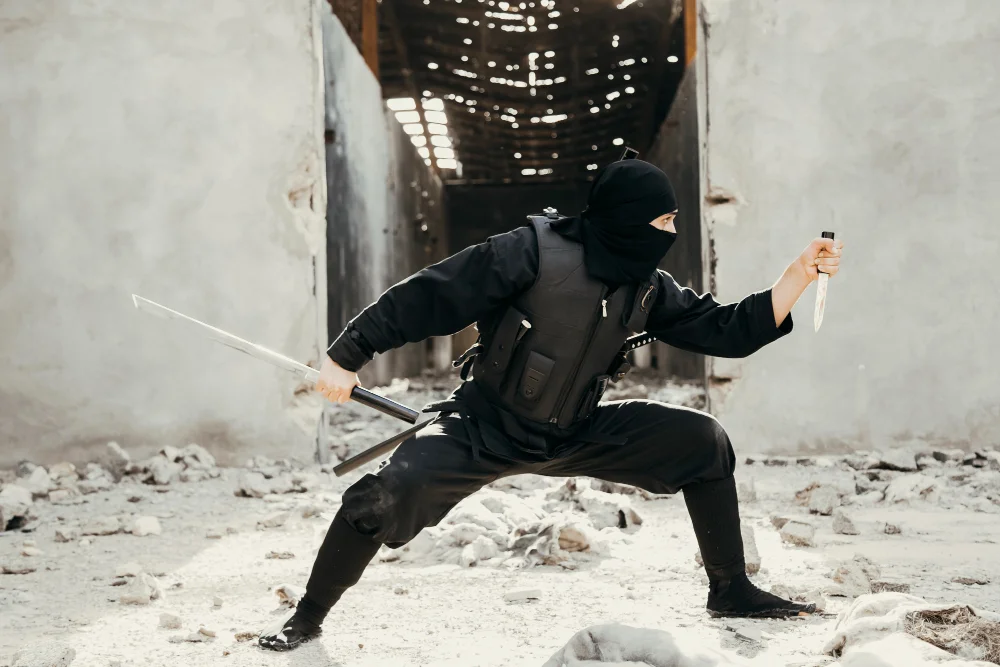
You keep your appointment every year on December 5. On this day, International Ninja Day gathers crowds, families, and curious onlookers, all eager to cross the threshold of a Japanese folklore that knows how to blur the lines. The magic of the ninja no longer leaves the planet. Afraid of missing the event? No chance: the streets, schools, and museums become the theater of a unique excitement. Masks, secrets, exported values, nothing fades away, everything mixes, tradition absorbs pop culture.
International Ninja Day, what origins, what meaning in 2025?
It is impossible to mention this December 5 without reflecting on the fascination that feudal Japan inspires. You have heard the word ninja on the radio, watched it on television, seen it in the manga aisles, spotted it in video games, perhaps even whispered between two discreet strategists. Even in the mountains of Iga and Koga, the first groups of secret agents refine their art, sometimes during the night.
For a long time, spies and swordsmen were confused, but researchers at the Iga-ryu Ninja Museum see it mainly as a community of experts in infiltration, information gathering, and daring escape. Stories circulate, willingly blurring the boundary between verified exploits and pure legends. Cinema takes hold of it, literature adds to it. You sometimes feel this strange impression that the ninja transcends all eras, without weakening, without ever freezing. Skill, silence, ingenuity stick to the skin of the myth, then slide into the Western collective imagination with rare delight.
The organizers of the early 2000s agree, launching International Ninja Day, the novelty makes noise, December 5 enters the calendar. The idea? Less a caricature than a bridge between generations. Japanese pop culture wants to breathe, to involve everyone, children and adults, geeks and one-day explorers. Workshops, screenings, costumes take flight, and the phenomenon crosses borders without ever frightening. The richness of ninja heritage illuminates debates, stimulates creativity, pushes everyone to separate the true from the false, the history of fantasies. One detail also excites, Japanese soft power grows in hearts when the mask covers the smile.
The historical roots of the ninja in Japanese culture
The history of ninjas rarely breaks down into dry dates. In the valleys of Iga and Koga, the sound of footsteps fades to make way for cunning. Not just fighters, ninjas whisper, spy, and surprise the enemy. Japanese chronicles and media trends influence perception. Infiltration, psychological manipulation, selective effectiveness oppose the brutality of the samurai. Ninjas saw their role as an endurance race, a mix of intelligence, adaptability, and improvisation. Nothing to prove, everything to adapt. In 2025, each generation adopts its own perspective, captivated by manga culture or modern thrillers.
The reasons for the invention of International Ninja Day
Why so much passion on December 5 around ninjas? The answer sometimes boils down to the desire to transmit something alive, energetic, and unifying. Fans, then broadcasters, then Japanese tourist institutions, each relay the appointment. Thematic workshops, challenges, and collective challenges invest the entire autumn month and the first week of December. You feel the strength of the group, you test it. Heritage, imagination, the feeling of living together, this mix motivates creation and attracts those who want to touch a myth without imprisoning it. Caricatures disappear, real dialogue takes place. So who, this year, will don the cape?
The traditions and events around December 5, global myth or true celebration?
December 5 never remains confined to a gym or a school parade. International Ninja Day bounces in urban centers, is inscribed in the agenda of Tokyo, Paris, Brussels, or even New York, each space chooses its formula.
The streets of Tokyo move, giant parades invade public squares, the population follows the rhythm, about ten thousand participants announced each year according to the local ministry. In Paris, the Guimet Museum gets a makeover just for this occasion, families test new disciplines, discuss with facilitators, and test agility on courses. In the United States, it is the conventions that hit hard, Anime NYC attracts twenty thousand visitors, all genres combined, the majority in disguise. In Europe, Ninja Night takes root in the alleys of Brussels, urban races, workshops, discoveries, the city temporarily becomes the dojo for all. Who has never crossed paths with so many foam katanas in their life?
The diversity of practices strikes hard, the desire to transmit pierces all generations.
| Event | Location | Type of event | Expected audience |
|---|---|---|---|
| Iga Ninja Parade | Iga, Japan | Costumed parade, reenactments, conferences | 8,000 |
| Ninja Pop Culture Festival | Tokyo, Japan | Giant cosplay, workshops, interactive exhibits | 10,000 |
| Ninja Night | Brussels, Belgium | Race, workshops, family activities | 1,300 |
| Ninja Family Conventions | Paris, France | Family events, demonstrations, ninja courses | 2,500 |
The key to success? No magic recipe, International Ninja Day never imposes itself, it adapts. The audience, multigenerational, wants to invent a shared story together. When the city dresses in black, when museums bring out foam shuriken, when sports clubs open special self-defense slots, everyone finds material to have fun, to escape, to discuss. The event is experienced outside, inside, on stage, behind the screen, but above all, everywhere a group shares a desire to play seriously with myths.
The costumes and accessories of modern ninjas? Tradition or exuberance?
You encounter all colors during International Ninja Day, from midnight blue to intense black. Linen, cotton, leather sometimes, the distinction amazes. Conventions introduce nuances, masks take on unusual shapes, shuriken are stylized, safety remains a priority. The attention to detail, nothing is improvised, each accessory tells a belonging but also the taste for play. Wearing the ninja outfit is not just about partying, it is about feeling a piece of history, projecting a communicative imagination onto the entire community.
Naruto, One Piece, the mangas serve as a source of unbridled creativity. The classics, sober, coexist with exaggerated, sometimes brilliant, often original creations. The playful dimension never fades, elegance seduces, tradition never goes out of style.
- Foam shuriken are imposed for safety, but their aesthetics vary from year to year.
- Long capes, sober or colorful, distinguish purists from show enthusiasts.
- Masks amuse, sometimes intrigue, the modern ninja does not hide self-mockery.
- The care taken in manufacturing nourishes a mini-seasonal economy, from local creators to major brands.
Stan, 32, in Lyon, no longer hesitates to prepare costumes and accessories with his daughters, the ritual glides from year to year, the family competition intensifies, the celebration is organized around play and shared vision. "My daughters scrutinize the new trends from September, they compete with ideas, analyze Naruto, observe One Piece, await the orientation race as the highlight of the season. The evening always ends around photos, emotions take over, no one misses the challenge." Each city, each family group, lives its own appointment, folklore is never fixed.
The figure of the ninja in pop culture, an assumed omnipresence?
The influence of the ninja overflows the borders of Japan, invading screens, consoles, and libraries. Do you remember the first American comics, animated series, video game sagas? The phenomenon is no longer limited to the archipelago, it is globalizing. Impossible to ignore Naruto, to pass by the Teenage Mutant Ninja Turtles, to avoid blockbuster movies and video game bestsellers.
Each generation adopts its model: in 2025, Naruto ranks among the top three most read mangas internationally, according to Manga Plus, the genre explodes, Google Trends confirms a spike in searches for ninja starting in the fall.
Ninja Gaiden has made gamers nervous for over thirty years. Sekiro, awarded Best Game at The Game Awards in 2019, reignites passion, astonishing with the precision of its battles. Teenage Mutant Ninja Turtles, an eighties icon, offers new spin-offs almost every year. Echoes transform the anticipation, everyone watches for the next creation, the next surprise.
| Title | Medium | Year | Cultural impact |
|---|---|---|---|
| Naruto | Manga/Anime | 1999-2014 | Icon revolutionizing global youth |
| Ninja Assassin | Film | 2009 | Spectacular staging of the myth |
| Ninja Gaiden | Video game | Since 1988 | Reference for all gamers |
| Sekiro, Shadows Die Twice | Video game | 2019 | Global awards, revival of the "ninja game" |
| Teenage Mutant Ninja Turtles | Comics/Film/Animated series | Since 1984 | Universal symbol of the quirky ninja style |
Heroes change but fascination remains. Fictional heroes? Historical figures? You encounter Masaaki Hatsumi, founder of Bujinkan, master of a legendary ninjutsu school, still adored. Naruto Uzumaki, a figure of hope for several generations of students, embodies perseverance and self-confidence. A few steps in Kansai and the name Hattori Hanzo emerges, the mythical leader of the shinobi, spotted even in Western blockbusters, from Kansai to Hollywood.
The duality intrigues: between honor and cunning, between solitude and the strength of the group, modern ninja models sow confusion, teasing curiosity.
The bridges between International Ninja Day and current values, transmission or simple folklore?
By brushing the mask, you touch an entire philosophy. Discretion is observed in daily life, perseverance imposes itself in school or sports difficulties. Self-control, mutual aid, sense of community, this is what the experts from Iga denounce as the foundation of ninja culture. Fraternity detaches from traditional courses: everyone progresses for the group above all, individual surpassing never blocks collective progress.
Do you perceive the influence on contemporary pedagogy? School programs increasingly call for a ninja workshop, associations partner with municipal educators, the ministry of culture validates this trend. Young people test Ninjutsu, develop agility, discover stress management, self-esteem.
The popularity of "ninja camps" does not wane, families, children mix play and discipline, creativity and respect for others.
Workshops are scattered: Paris, Lyon, Brussels, Montreal, and the dynamic expands. Who still ignores the value of collective work, support, and resilience in the school or sports universe? Ninjas traverse scenarios, anchoring modern values in a maze of participatory activities.
International Ninja Day on December 5 brings together around values of mutual aid, creativity, and intergenerational transmission.
The invisible, you glimpse it every season, between two workshops, in the gaze of the youngest or the energy of the less young. How far can you reinvent this myth, make it useful, let it circulate, cape on shoulder or team spirit full in the bag? The celebration never freezes, nor does the challenge, each city invents its own tradition, soon yours, who knows?