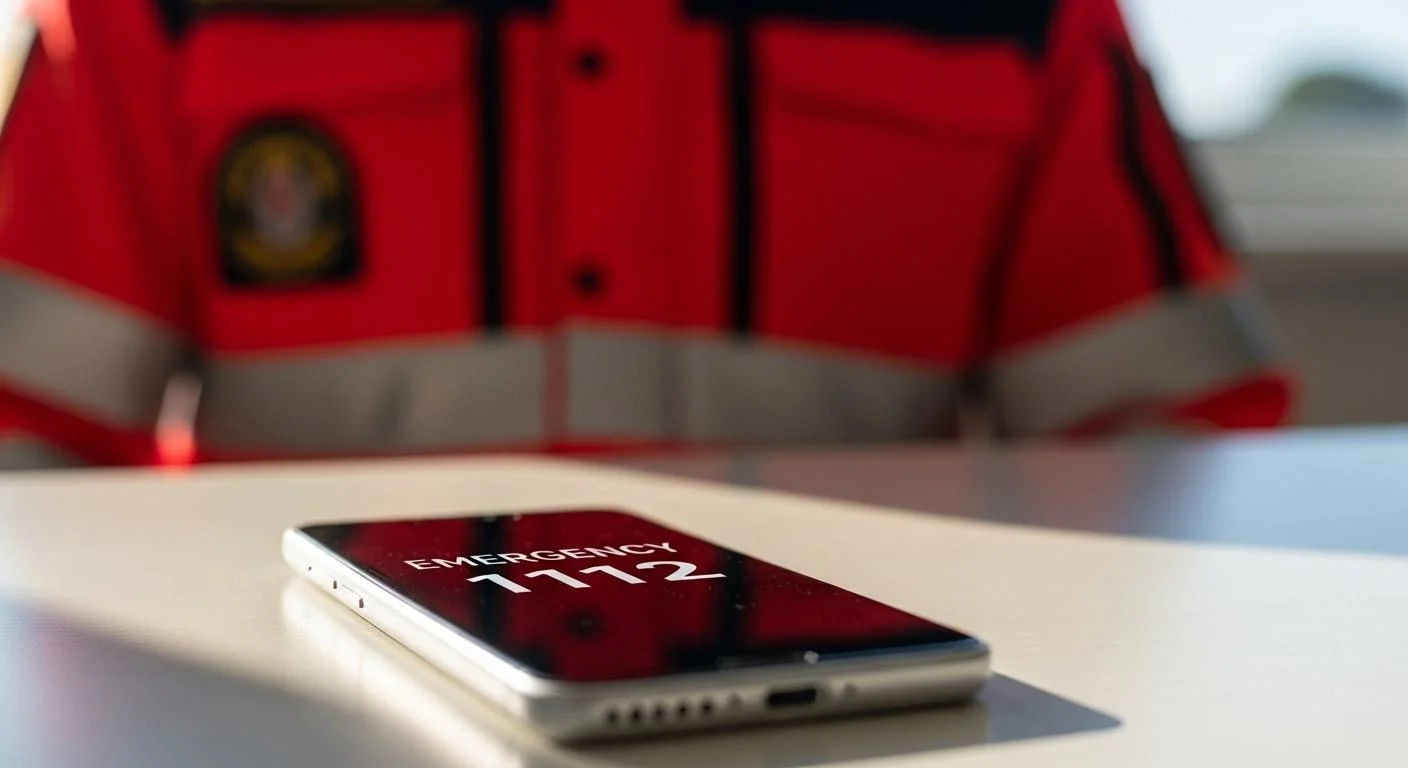
On February 11, you now know it, you won’t forget it. Europe relies on this date to remind us how this simple number, 112, brings citizens together, secures anyone crossing a border, and imposes itself, almost silently, as the guarantee of accessible assistance. The importance of this February 11? To save, protect, and reassure the entire European Union immediately, that is the answer. One winter morning, someone dials the number 112. An ordinary gesture, yes, but it changes everything; seconds stretch, the voice on the phone calms and then organizes. February 11 enters your daily life, the date resonates, the echo grows, and suddenly, it’s hard to ignore the collective stake: this is not a trivial matter, but a growing awareness. You are crossing Barcelona, lost, or you slip into an emergency situation, really, you don’t speak a word of Spanish; the reflex kicks in, 112 works. The operator answers, English brings you closer, everything seems possible, even abroad. Every year, more than 150 million calls cling to this invisible thread between panic and relief. Who around you has already used this number? Some have never heard of it, others relax just by considering its existence in the background of European cities. An European 112 Day is neither a routine nor a habit, it is an appointment. Between emotion and utility, human proximity prevails, information saves lives, no one debates.
The European 112 Day and February 11, a symbol of determining European solidarity
The whole continent stops on February 11, or almost. The union of European countries is embodied in this precise, almost mathematical choice, the 11th of the second month, an obvious nod to the famous number. This universal number is inscribed everywhere, it crosses France, Italy, Malta, Finland, providing identical reference points to all, without deviation or exception. Messages invite themselves into the Paris metro, schoolchildren scrutinize posters, you scroll between two official posts and, above all, the instruction flows without detour: promote 112, absolute priority, as soon as danger looms, regardless of the destination.
This date, decided in 2009, is not a matter of chance. It aims to unify the emergency response, to ensure that you do not lose a second, wherever you are, to remind you of your right to direct and multilingual assistance. February 11 is not just a day fixed in the European calendar, it is a landmark, a promise. You read the message and, somewhere, you feel a real breath of solidarity.
The meaning of February 11 in the European Union, what are the stakes for citizens?
Why this date, and not another? The idea takes root in the concern for clarity and coherence, this will to associate numbering and collective memory. February 11 highlights the link between daily life and public engagement, regardless of each person's personal context. You see the campaign invade the space, impossible to escape it, impossible to deny the ambition: to anchor 112 in everyone’s mind, to transcend borders and shorten the distance between a call for help and concrete intervention. This day is part of a collective project. Quietly, it reminds us that no one should face an emergency alone, that the right number is obvious, erasing doubts, smoothing out national disparities.
The history and stakes surrounding European 112 Day
It all starts in 1991, the European Union demands: all member states integrate 112, gradually, the years adjust the service until 1998. Sometimes tense negotiations, technical adjustments to harmonize, a job that progresses, a promise of responsiveness for all. A leap, 2008, milestone crossed, the European Commission recommends the active promotion of 112, followed by 2009, the official enshrinement, the famous European 112 Day is established.
| Year | Key Event | Scale |
|---|---|---|
| 1991 | Creation of 112 as a unique emergency number in Europe | EU |
| 1998 | Mandatory implementation in all member states | EU |
| 2008 | EU recommendation to actively promote 112 | EU |
| 2009 | Official institutionalization of February 11, European 112 Day | All member states |
Do you think the story calms down afterwards? Not at all, because the notoriety of 112 builds every year. New campaigns emerge, real progress, concretely visible, you can’t imagine them, they exist, verifiable, +17 knowledge points since 2019 in some countries, concrete. The European space moves, responds, adapts. The day dedicated to 112 becomes a landmark, a legislative and human dynamic at the same time. Today, European cohesion is no longer limited to administrative borders, it extends to your safety, to this shared reflex, that of calling 112 without hesitation, regardless of your language, your country, or your context.
An emergency number, a thousand uses, what are the differences with the old national systems?
You encounter this number, it reassures, it saves, it coordinates. 112 is not just a number, it is direct access to help, free, accessible from anywhere in the European Union, without a plan, without technical or financial limits. On February 11, operators speak your language, sometimes much more than you think, everything happens in the moment. Accident, malaise, burglary, fire? No need to hesitate, the call is imperative, the European rescue machine gets into motion.
The versatility of 112 and the reality on the ground
What strikes is the simplicity. You no longer try to remember three or four different numbers, 112 replaces everything, in doubt, it answers all emergencies. One call, and the system activates to guide, warn, send the right team. You encounter a technical problem, even without a SIM card, your mobile still makes the call, 112 does not negotiate, it connects, it abolishes material obstacles. The number is rooted in all layers of society, from mountain rescues to beaches, from health situations to police alerts, 112 becomes the only expected response in contexts where panic prevails.
What are the differences between 112 and the old national numbers?
In France, 15, 17, 18 mark the territory, but 112 rides on Europe and sweeps away old habits as soon as you leave the country. In Berlin or Madrid, the before and after coexist, 112 simplifies the lives of travelers, students, expatriates. You avoid confusion, the flow of information knows no obstacles, your fingers automatically find the right number, the reaction is quicker. Spain favors 112, others still leave room for local numbers in parallel, naturally, but the dynamic is accelerating, the goal remains the same: to strengthen responsiveness, streamline prevention and management of emergencies. European 112 Day acts as a reminder, year after year.
Awareness actions and the real challenges of February 11
When the calendar shows February 11, you cannot escape the media wave. Quizzes in class, posters and messages on social networks, everyone reminds, awakens, convinces. Cities seize the opportunity: public demonstrations, school exchanges, great visibility on panels and mobile applications.
- You spot strong testimonies, sometimes from firefighters, sometimes from victims, the life behind the number, the emotion breaks through
- Communities invest, schools dialogue between France and Italy, solidarity is learned early
- Messages adapt to children, seniors, often remote or disconnected populations
A true story? That night, open fracture while skiing, a bit of panic, blood, and Hélène, 34 years old in Grenoble, calls 112. No time to look for another number, the rescue localizes, everything accelerates. 112 is not a slogan, it supports, it anchors the reflex in daily gestures, it reassures those who doubt. The mobilization does not last just one day, the educational flow never stops, it adapts, again and again, to the new realities of the territories.
What are the current stakes? Why does awareness remain imperfect?
The numbers waver, reality sometimes misleads. More than 60% of Europeans know about 112, yet less than half use it spontaneously in an emergency, according to Eurobarometer 2025. In France or Belgium, knowledge approaches 80%, in other countries, it caps at 45%. Language diversity hinders some, distrust or misinformation sometimes circulates about the effectiveness of the service. European 112 Day tries to break these barriers, multiplies messages, deploys strategies to reach the “white zones”, personalizes communication to convince even the corners of the EU. It is never simple, it requires constant energy, rapid adaptation to new supports, a real listening to the public's expectations. The goal is not to celebrate a date, but to anchor the right reflex, throughout the year, and not just in big cities.
Frequently asked questions about 112 and February 11, what you really need to remember
Are you still hesitating? The sign displays, but doubt persists. Questions arise every February 11, always the same, or almost. You find yourself in the lot, nothing unusual
- What languages in the call centers? Operators systematically ensure the language of the country and English, sometimes ten other languages depending on the regions
- Does 112 work outside the European Union? Legally, Switzerland, some Balkans, and Norway have access, but effectiveness proves unequal elsewhere
- Is a SIM card necessary? No, all mobiles access 112, no authentication required, even without credit
- What to say to the operator? Position yourself, explain the incident precisely, wait for instructions, precision is key
A French person hesitates to use 112, the link is not automatic with 15 or 17? Yet, the local service takes over depending on the situation, without loss of effectiveness or crucial information.
Some tips for reacting effectively during a call to 112?
Focus on the essentials: location, type of incident, attention, conciseness alleviates tension, the operator appreciates clear answers. Stay calm, rephrase if needed, really listen, even in the most urgent situation. Do not hang up the phone, stay available, sometimes the situation rebounds or requires a quick callback. Integrate these gestures into your daily life, European 112 Day does not emphasize this for nothing: the right reflex is prepared before or after the emergency, it is never improvised when everything turns upside down. February 11 embeds itself in European minds, year after year, but there is still a long way to go. Celebration is not enough, the promise of mutual aid must live outside the event. Why not check around you – family, neighbors, colleagues – who really knows the number 112? Spread the information, offer a chance, one day, to save or alleviate distress, even unexpected.
February 11, European 112 Day, is this discreet bridge between anxiety and solution.