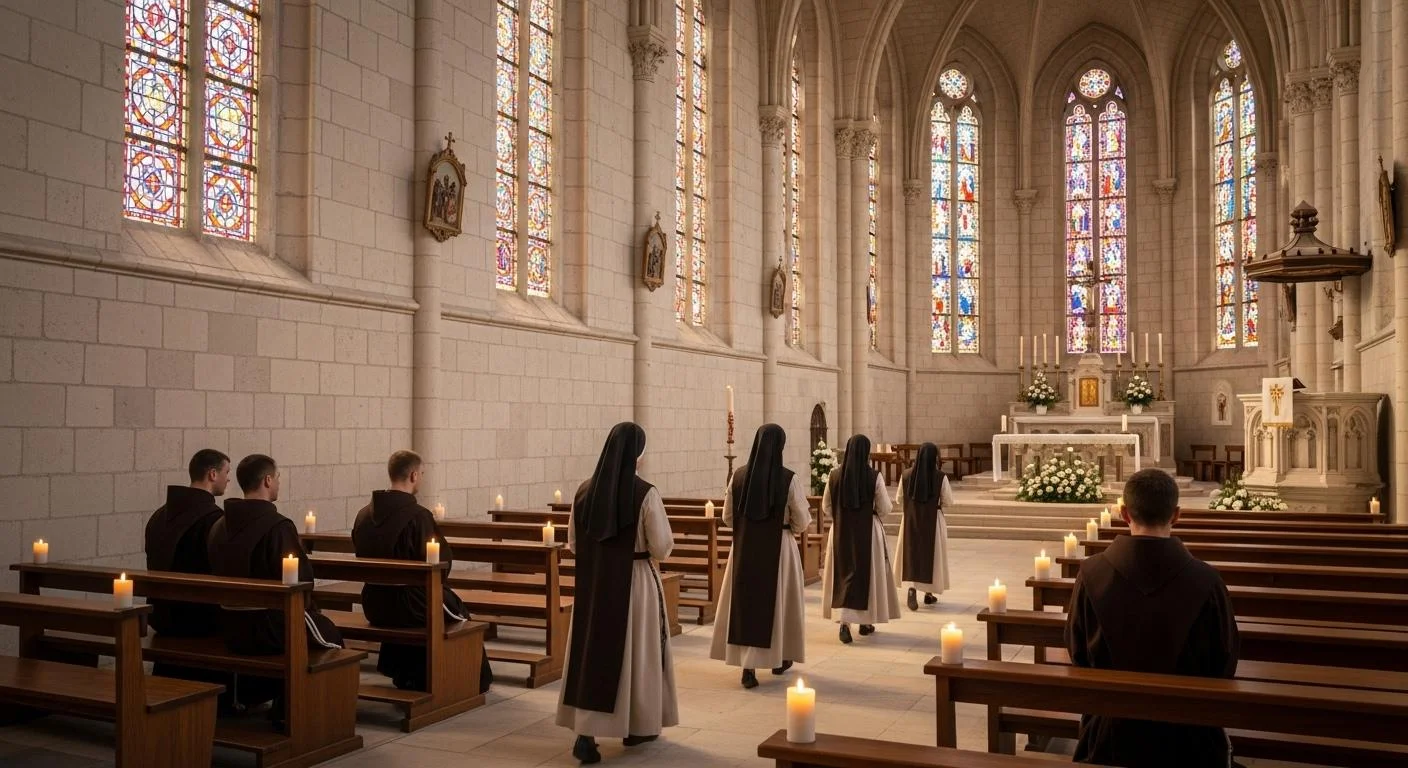
You are reading the calendar: February 4 shines differently. The UN set this milestone in 2020; it is neither folklore nor incantation. This day provokes, questions, and nourishes a vertigo: fraternity settles into existence, which sometimes tips in favor of a simple exchanged smile.
The meaning of the International Day of Human Fraternity and the choice of February 4
You may have noticed that nothing is offered by chance. If February 4 takes on this dimension, it rests on an origin, a dense history, palpable even in the neighborhoods of your city. February 4 symbolizes, between Abu Dhabi and the corridors of the United Nations, the tenacity of a resilient idea: fraternity exists, it weaves itself despite divisions.
The history of the date February 4 and the birth of a global fraternity
| Date | Event | Key Actors | Source |
|---|---|---|---|
| February 4, 2019 | Historic meeting in Abu Dhabi, signing of the Document on Human Fraternity | Pope Francis, Grand Imam Ahmed Al-Tayeb | United Nations, Official Document on Human Fraternity |
| 2020 | Adoption of the International Day of Human Fraternity by UN resolution | United Nations General Assembly | UN |
| 2021 | Official global launch of the day | Supreme Committee for Human Fraternity | UNESCO, Vatican |
| Since 2022 | Annual mobilization and events on a global scale | UNESCO, associative networks | UNESCO |
You may not know that this date stems from a document signed by Pope Francis with Imam Ahmed Al-Tayeb in the Emirates. A world first, yes really. No need for pompous solemnity; the act breaks everything: great religious leaders lay bare their differences to affirm a certainty, the equal human dignity. From this point, debates take on a new hue: abstract values circulate in the air, but putting them into practice forces one to move beyond slogans. February 4 is not limited to diplomacy; it wraps around ordinary life.
In 2020, the UN relays, officializes, and anchors this agreement in a global agenda. The International Day of Human Fraternity now has its markers, its echo in schools, associations, and the media. With each edition, a sentiment imposes itself: you intervene, you weave, you federate – or you intend to. This day does not belong to you; it circulates, it offers itself, it provokes you.
The values carried by human fraternity in a rapidly shaken contemporary world
What does fraternity hide, a sometimes overused word, but which always fascinates? Dialogue, peace, and the fight against exclusion flourish as synonyms. You do not settle for a pious wish; you enter into contradiction, into effort, into doubt: tolerate, but also defend, open up, be indignant. This is the foundation of this international celebration: refuse all discrimination, experiment with coexistence, build solidarity, disarm distrust. Do you connect theory to practice? Here lies the challenge. Pitfalls await, utopia hovers over the word fraternity: its principles sometimes break through, weaken elsewhere, but the universal continues to impose itself as a stubborn aspiration.
The actors and initiatives that relay the International Day of Human Fraternity around the world
This is not a simple concept. Behind February 4, you identify an organization, an energy, names, networks – nothing vague. Civil society does not wait for the blessing of institutions to act. On February 4, you think of gatherings, but also struggles against injustices, educational projects, improbable dialogues between people of different religions or political beliefs.
International organizations and their role in the International Day of Human Fraternity
UN, UNESCO, Abu Dhabi committee, all aligned? Yes, almost. They are the ones who launch, coordinate, and challenge. The UN deploys campaigns, provokes debate on peace, and federates change-makers. Youth finds itself at the heart of the system, through educational modules, online resources, the word circulates, outwits propaganda, deconstructs stereotypes. UNESCO does not limit itself to publishing reports; the organization establishes meetings, pedagogy, and social innovation. The supreme committee founded after Abu Dhabi gathers, each year, notable initiatives, a global peace prize, a platform for the anonymous. Religious institutions follow, sometimes even lead the dance. The Vatican discusses, Al-Azhar gets involved, churches and mosques shake up their agendas, synagogues open to curious non-believers. Everything that pertains to commitment to dialogue models the dynamics of February 4, dissolving barriers sometimes entrenched.
Major events and their impact on civil society
On February 4, you witness the birth of interreligious debates in schools, social centers, on Instagram, or even in the street. International awards honor builders of concrete utopias, murals, debates, viral videos flood your screens. Young people seize the subject, challenge certain dogmas, exchange without filter or fear. Storytelling works: the digital amplifies the reach, forges a culture of sharing.
An organizer in Marseille bluntly states: “A round table, believers, atheists, it sometimes clashes, it listens, it reflects aloud, the atmosphere becomes electric, but the exit from the room breathes true peace. So much the better.”
Yes, you grasp: the events of February 4 do not change the world overnight, but sow, sow everywhere, something always grows.
The stakes and challenges surrounding human fraternity, heading towards 2025
The International Day of Human Fraternity does not live in a vacuum. The 21st century is full of fractures, geopolitics wavers on impossible-to-stabilize borders. Racism settles in, poverty, fake news, distrust: always difficult to open a real universal dialogue, to break free from distrust, from collective isolation. Tensions cross neighborhoods, intrude even within families. Rigor and kindness fight against reflexes of exclusion. Social networks, paradoxical: bridges for fraternity or grounds for division? You navigate, never resisting the temptation of tension, but you hold on, sometimes.
Do obstacles hinder the momentum of human fraternity?
Conflicts break out everywhere, social rupture intensifies, relationships crumble under the weight of prejudices, otherness tires, some populist discourses resonate, the deleterious climate clings. Education struggles to resist. Fatalism lurks, you feel it too, this poison of resignation that muzzles collective effort. The real obstacle? Silence and resignation.
Do solutions exist to make fraternity possible and sustainable?
February 4, a true laboratory: everything is attempted, everything is invented. Civic education, here lies the nerve of the fight. Children explore respect, difference, attention to others. The International Day of Human Fraternity is rooted in reality: you relay, you support, you refuse immobility. Digital campaigns outsmart misinformation, legislation advances, pedagogy reinvents itself. Dialogue between beliefs, cooperations, associative alliances: pedagogical innovation takes root. Resisting discouragement: there are those who rise, then all the others who follow, even if it is not the crowd.
- Civic education from primary school, applied relentlessly
- Federating digital campaigns among young people
- Open debates everywhere: in families, sports clubs, libraries
- Strengthened anti-discrimination laws, without relent
Actions to take on the International Day of Human Fraternity in your daily life
The message: February 4 is experienced, it is not consumed. You host the spirit of gathering at home, at work, anywhere. What could be simpler? Send a kind word, share a coffee, or engage in a judgment-free dialogue. Commitment spreads discreetly, but collective strength embodies itself.
Personal and collective actions that validate the spirit of fraternity on February 4
A positive message sent to an isolated colleague, a conversation crossing neighborhood taboos, an association proposing a round table, a meal distribution animated by youth, everything counts. Action takes a thousand forms, from the most discreet to the spectacular. The International Day of Human Fraternity is not limited to a word inscribed in the calendar; you give it flesh, on all grounds. A survey conducted by the Observatory of Human Fraternity counts, just on French soil, nearly 650 actions in 2025: a milestone already crossed. It is not waiting that guides initiatives; it is the spontaneous momentum, carried by those who refuse to wait for an official directive.
Reliable sources to extend reflection on human fraternity
| Resource | Description | Official Link |
|---|---|---|
| UN | Text of the resolution adopting the day | https://www.un.org/fr/observances/fraternity-day |
| Document on Human Fraternity | Foundational text signed in Abu Dhabi | https://www.vatican.va |
| UNESCO | Educational resources and statistics on fraternity | https://fr.unesco.org/ |
| Supreme Committee for Human Fraternity | Initiatives, awards, and annual reports | https://www.forhumanfraternity.org/ |
You can sift through official sources, the UN for the foundational text, UNESCO for educational tools, the supreme committee for feedback and guidelines. There is no magic decree: fraternity is learned, experienced, sometimes debated, but always moves forward.
Writing on paper is not enough; gathering, daring to debate, listen, and contradict makes all the difference. Fraternity does not stop at a day; it takes root in the ordinary, it sometimes lives at night, far from cameras. What is the value of this collective breath if nothing moves in reality?
It is up to you to sketch the future. February 4 will not wait for anyone; time is pressing, fraternity is written every day, and not just on your calendar.