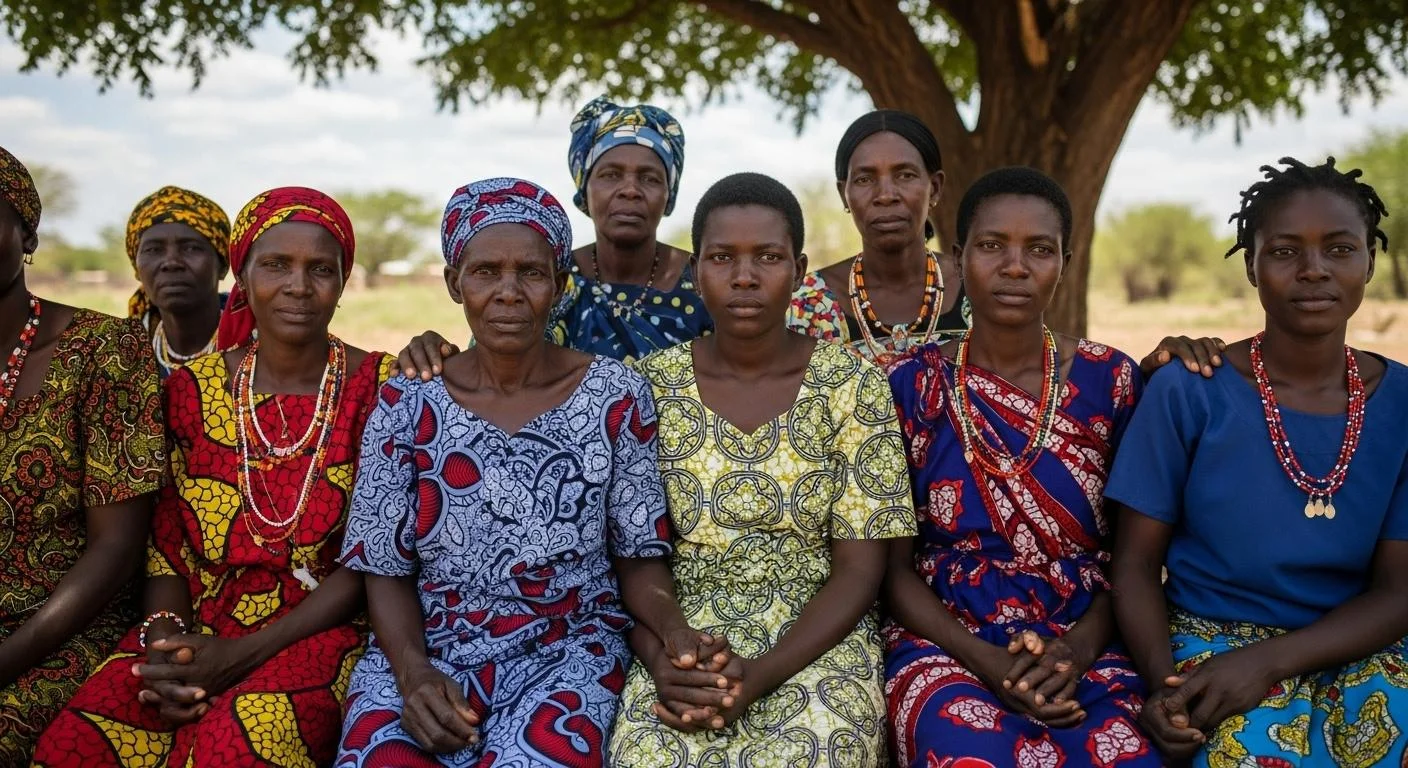
The International Day Against Female Genital Mutilation shakes certainties. Since 2003, February 6 marks a moment of pause, a call to look at the world without detour. In 2025, over 200 million women and girls remain affected. Let us state it clearly, the scale exceeds what we want to admit. In the face of silence, this mobilization seeks to challenge everything.
The Significance of February 6, International Day Against Female Genital Mutilation
On February 6, the calendar holds its breath. Why this particular day? The United Nations officially recognized this date over twenty years ago. It imposes this appointment to stop the routine, send a strong signal, demand real actions. Every minute, four girls are mutilated, UNICEF reports. It chokes words, it freezes the back. The ambition hits hard: to provoke global awareness, with no escape.
In 2025, statistics rise, the burden increases, and yet, light invites itself. Sub-Saharan Africa grips the heart, Yemen destroys innocence, Egypt tries to breathe. But Indonesia, Malaysia, Europe, and sometimes America also welcome this wound. According to WHO, thirty-one countries remain marked, especially in Africa, sometimes in the Middle East, and more rarely in Asia. Mutilation does not confine itself to a geographical box.
| Country/Region | Estimated Prevalence (2025) | Recent Trend | February 6 Actions |
|---|---|---|---|
| Sudan | 86% (girls/women aged 15-49) | Stagnation | Local education and care training campaign |
| Egypt | 85% | Gradual decrease | Community mobilization and dissemination of official messages |
| Indonesia | 51% (girls under 11 years) | Slight increase | Awareness through social networks and religious leaders |
| France | 60,000 affected women | Stability | Official conferences, distribution of prevention guides |
| Kenya | 21% | Rapid decrease | Public exhibitions, testimonies from survivors |
Society often dodges the subject. Let’s speak the truth: these mutilations trample on human rights. Entire states rally, supporting associations and events. Every year, February 6 disturbs, shakes, invites to move, to arm oneself with courage. Inform, yes, but also mobilize, support, legislate, and awaken consciousness.
The Global Environment of Female Genital Mutilation
Ancient rites do not let go, even after decades of debate. Female genital mutilation encompasses all voluntary harm to the female sex, without medical reason. Excision often hides behind a facade of purity, honor, tradition. Victims live on all continents, 92 countries in 2025 according to accumulated data. Rather than believing this reality confined to a few villages, it is better to look at this figure: over 200,000 girls threatened in Western Europe. The global mobilization aims to unite states and citizens; nothing truly protects.
The Objectives of the International Day Against Female Genital Mutilation
The heart of the mobilization? Raise awareness to protect, awaken to heal, shake the norm. February 6 shines a light on the medical urgency, psychological trauma, and the tools to overcome it. This appointment does not remain fixed in speeches; it deploys educational interventions, displays, workshops, actions in schools. Associations, NGOs, public authorities, all strengthen the safety net. Initiatives intersect, collide, and relay even into French parliamentary debates. This calendar serves as a backdrop for mobilization, but it multiplies the impact of grassroots action, encourages the voices of victims, and pushes for mutual aid.
The Forms, Origins, and Prevalence of Female Genital Mutilation Worldwide
The Different Forms of Female Genital Harm
The World Health Organization dissects the phenomenon into four variants. Firstly, partial or complete removal of the clitoris. Next, that of the labia minora, sometimes combined with the previous one. Then comes infibulation, almost total closure of the vulva, extreme pain. Finally, any unclassified act: incision, puncture, elongation, dangerous substances. The severity depends on the act, but no harm proves trivial. Each time, health deteriorates, life shifts.
The Consequences on Health and Mind
The body endures immediate traumas: infections, hemorrhages, sharp pains, shock. The mind then bears long-lasting scars: anxiety, depression, sexual problems, maternity disorders. How many women lose sleep, confidence, the desire to move forward?
"I wanted to flee my own body," whispers Aminata, twenty-four, during a conversation in a reception center. Her voice trembles, her gaze wanders. Listening soothes, medical care sometimes repairs, but reconstruction takes years.
A psychological follow-up is essential; it acts as a lifeline, now recognized for its true value, the establishment of the World Day has helped this recognition.
The Distribution of Excision, Where and How Many?
UNICEF estimates East Africa accounts for over a quarter of the cases recorded worldwide, sometimes up to 80% in rural areas of Mali or Somalia. In Southeast Asia, the practice extends a bit further. In Europe, vigilance remains: most reports concern young migrants in France, the UK, and Germany. In 2025, Chad and Guinea still worry with a prevalence above 85%, while Kenya manages to reduce the rate from 27% to 21% in five years. The collective work of February 6 shifts the numbers in some countries; unfortunately, secrecy intensifies elsewhere. The fight does not stop at the border; it must innovate, anticipate, and shake up the routine.
Initiatives and Mobilizations in Action Around February 6
The Mobilization of Associations, NGOs, and International Institutions
We hear everywhere the names of Amnesty International, the Raoul Follereau Foundation, the United Nations Population Fund, and UNICEF. These organizations mobilize around February 6. NGOs create internships, distribute resources, train professionals, share tools. The Switchboard initiative from the UN High Commissioner for Refugees has changed the game; reporting becomes swift, victims dare to break the silence more. Since the creation of this world day, cooperation has gained strength.
State and Legislative Efforts on the Issue
France, the starting point in 1983, imposes heavy penalties for excision: up to twenty years in prison. Starting in 2024, the European Union harmonizes policies. With 46 countries having clear laws, the gap remains between theory and application. Egypt shows certain progress, especially after the tightening of the law in 2022, but secrecy slips everywhere. The struggle oscillates between sanctions, awareness, and educational approaches. The real effectiveness of the law is not judged by a text; it is measured in the streets.
What Levers for Every Citizen and for Victims?
In France, there is a national help number, 0 800 00 45 67, platforms to report, psychological support provided by the Interministerial Mission for the Protection of Women. You also discover guides on service-public.fr, and anonymity remains the golden rule. Healthcare professionals receive training as soon as they start working; teachers also receive educational materials. Citizen engagement makes a difference; even a visit to a municipal meeting counts. Every individual action strengthens the prevention net. Supporting victims means keeping secrets, combining competence and respect, integrating trusted community relays. This network needs to expand; you can become an actor in it.
- Distribution of educational materials in schools
- Organization of exhibitions and sharing testimonies from survivors
- Awareness among local communities
- Training for healthcare professionals and teachers
The Future Perspectives of Mobilization and Its Obstacles
Significant Advances Since the Creation of the International Day Against Female Genital Mutilation
In 2025, a report from UNFPA reveals a global decrease of 2.5 points in five years. New states enact protective laws, campaigns infiltrate even into social networks, and major media finally seize the subject. The empowerment of survivors stands as a real victory; they free their voices and gain access to care. In France, the number of legal proceedings has doubled in six years, reflecting a concrete advance. We are witnessing a wake-up call, certainly fragile, but well anchored.
The Obstacles, Where to Place the Next Step?
The weight of traditions weighs heavily, the burden of community scrutiny, the lack of infrastructure even on European soil, all hinder progress. Some invoke cultural preservation, blocking any reform, retreating in the face of reality. Family, social, and community resistances delay progress. The fear of rejection silences many victims. Anonymous reporting seems impossible, as silence protects the perpetrator. To move forward, it will be necessary to strengthen local relays, train trusted leaders, provoke a shift in mentalities. Driven by urgency, February 6 anchors itself as a landmark. Where will you direct your energy to change the lives of all those affected by this violence?