February 8 sounds the alarm, it summons the disturbing reality of large-scale human exploitation. Do you want to grasp the immediate impact? The World Day of Prayer and Reflection on Human Trafficking, set for this date, imposes an obvious truth on everyone: millions of people live in the violence of silence, trapped, invisible. What remains to be done in the face of the persistence of this global scourge?
The meaning of the World Day of Prayer and Reflection on Human Trafficking and its impact on February 8
In the face of ordinary indifference, February 8 breaks routines, nothing compels you to close your eyes again, everything pushes to take a fresh look at the wounded human dignity.
The origin and history of February 8, dates, symbols, and figures of the international struggle
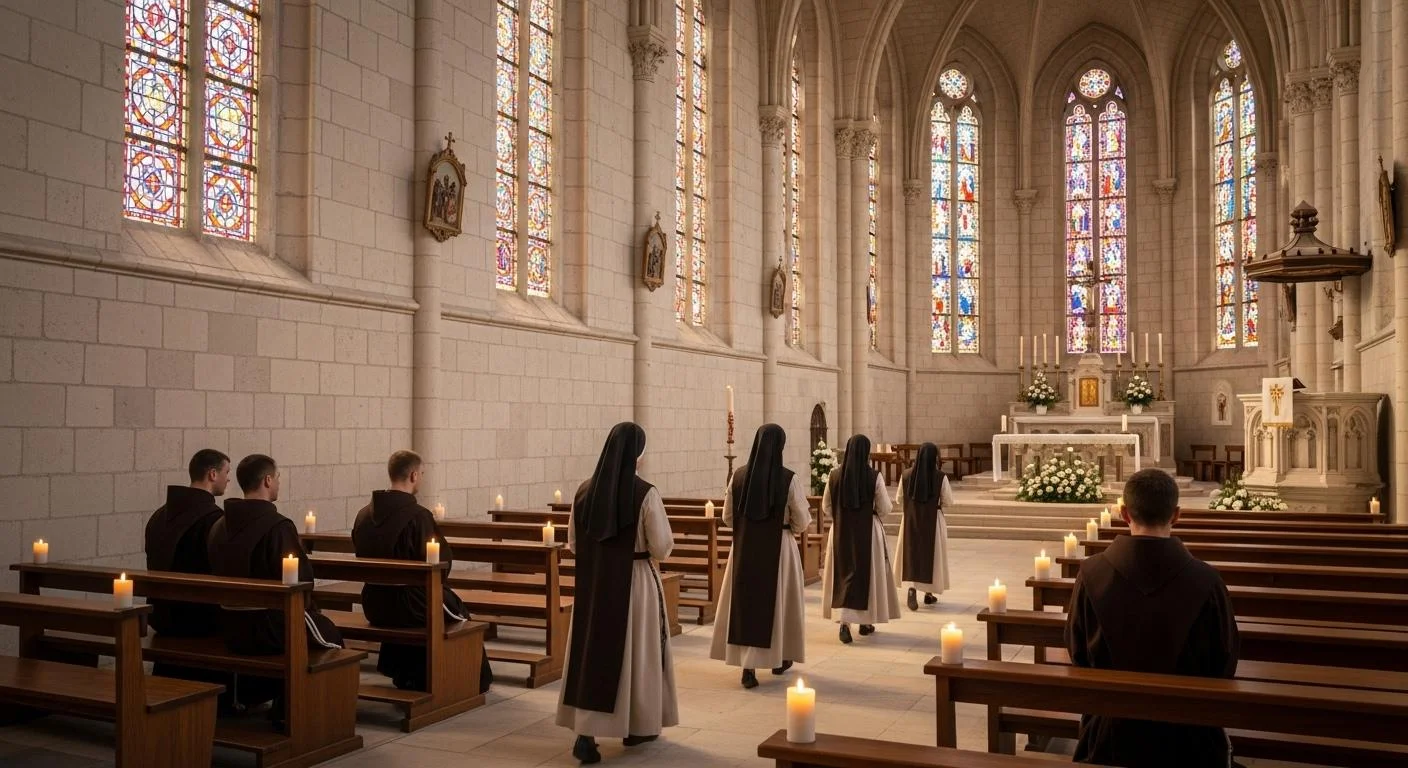
Since 2015, the international calendar has come to a halt, the World Day of Prayer and Reflection on Human Trafficking forces a stop, bringing back the urgency to stand firm. Pope Francis emphasized this strongly in 2015, but the momentum has not been confined to the Catholic sphere. On February 8, it is impossible to look away; this appointment has been forged around the memory of Saint Josephine Bakhita, a Sudanese woman reduced to slavery, who became an icon of resistance and was canonized in 2000. You see the history that pierces through the ages, the strength that is transmitted, you feel it in the mobilization of believers, laypeople, but also of citizens without religious anchorage. The Church catapults this movement; it rebounds everywhere, it breaks boundaries, it forces reflection, it is no longer just a simple commemoration; it seeks revolt, it demands concrete actions. The calendar is not enough; it questions, it demands commitment.
The scope and forms of exploitation, how far does the international threat go?
What you call human trafficking does not stop at sidewalks or clandestine workshops. Insidious recruitment, forced transportation, hidden accommodation, all of this intertwines, all of this aims to exploit through cunning, coercion, vulnerability. Nothing is more toxic, and it is not reserved for a distant continent. Forced labor is exploding in the back kitchens of urban areas in France as well; domestic servitude infiltrates daily life, the trafficking of children or people to force them to beg or commit criminal acts is embedding itself. You even find networks for the exploitation of people for medical purposes, through organ extraction. The United Nations and the ILO all agree, exploitation takes a thousand frightening forms. Have you ever asked yourself where naivety stops? Ignoring it feeds the problem; danger lurks in silence, it knows how to dress differently today than yesterday.
The role of prayer and reflection in the global mobilization of February 8, how to stand firm, where to find momentum?
On February 8, everywhere, communities cross their voices, mix convictions and traditions. Prayer is not reduced to a religious approach; it merges with reflection, the call for a global fraternity. In churches, mosques, synagogues, temples, regardless of the space, what matters is played out elsewhere: the refusal of fatalism, the urgency to reject passivity. Doing nothing is abandoning those whom society relegates to the shadows. A gesture, a minute of silence, a demonstration, a reading, everything counts, everything weaves a link that traffickers hate. Believer or not, participating, meditating, listening, or telling is a way to slightly undo the invisible chain. Do you doubt the usefulness of these gatherings? Try it just once; you will feel the wave, that moment when emotion becomes a collective force.
The statistics and scope of human trafficking in the world, what assessment to make on February 8, 2025?
The weight of reality imposes itself in numbers, nothing theoretical. The explosion of documented cases as missing persons provokes relentless global mobilization.
The global situation and the numbers, where do we really stand in 2025?
In early 2025, the International Labour Organization throws a stone into the pond, nearly 27.6 million human beings are suffering this nightmare. All forms of exploitation combined, the increase compared to 2021 exceeds 9%. Southeast Asia, Sub-Saharan Africa, Eastern Europe, these regions show red numbers, according to UNODC data from spring 2025. On the American continent, some Central American countries no longer hide that the progression of networks is exploding; France, Germany, and the United Kingdom in Western Europe also see cases rising, whether internal or imported.
| Region | Estimated number of victims | Predominant form | Evolution (2021-2025) |
|---|---|---|---|
| Asia-Pacific | about 14 million | Sexual exploitation, forced labor | +11% |
| Africa | about 4.8 million | Forced labor, child trafficking | +8% |
| Eastern Europe | about 3.7 million | Trafficking for sexual exploitation | +7% |
| Latin America | about 2.5 million | Forced labor, domestic exploitation | +10% |
The profiles of victims and traffickers, who suffers, who orchestrates the silent crime?
Women pay a heavy price, 72% of victims according to UNODC. Children represent nearly a third of the total; these are not statistics, these are lives snatched away. Migration routes, the chaos of conflicts, abject poverty, the lack of structured education, all feed this grinding machine. Traffickers move in all forms: mafias, family networks, cybercriminals, isolated predators; violence changes its facade according to contexts. But the spring remains unique: exploiting vulnerability, manipulating, accumulating profit, taking advantage of a system that leaves gaping holes.
The most affected regions, why do they always occur where fragility settles?
In Africa, trafficking explodes in crisis pockets or territories marked by disorder, from Nigeria to the DRC through Libya, everything has worsened since 2023. Asia is not spared; Thailand and Cambodia serve as transit, arrival, or departure zones. In Eastern Europe, networks take advantage of political ambiguity or precariousness; they reorganize quietly. Why? Corruption, misery, uprooting, impunity, fatalism, everything that renders invisible feeds the problem.
Organizations on the ground testify to a double struggle: freeing victims and awakening society.
The initiatives and means of action on the World Day of February 8 and citizen mobilizations
Commitment does not remain an abstraction; the World Day of Prayer and Reflection on Human Trafficking brings forth a dynamic on the ground that is frankly unpredictable, sometimes bubbling, often stimulating.
The mobilization campaigns, what gestures make a difference, what actions transcend words?
In the streets, silent marches follow one another, candles illuminate collective vigils; sometimes, emotion flows even onto public squares. Debates enliven in amphitheaters, educational programs invite themselves into schools or high schools, businesses no longer remain on the sidelines. Social networks vibrate, the dedicated hashtag slips into all stories, solidarity spreads, lucidity shakes public opinion. Awareness workshops are emerging, educational kits are distributed, training is provided to detect trafficking signals; civil society infiltrates political debate and pushes against ambient passivity.
- Share a badge or a Stop Trafficking message to break the silence around you
- Attend a night march, reignite collective courage, and acknowledge the distress of victims
- Relay a petition, encourage new laws, awaken decision-makers in the public arena
- Support NGOs, modestly, regularly, to provide concrete and lasting help
The associations and organizations, what role do they play in the chain of solidarity?
| Organization | Flagship action | Area of influence |
|---|---|---|
| United Nations (UNODC) | Global campaigns, publications of international alerts | International |
| Caritas Internationalis | Specific support for victims, relentless advocacy | Europe, Africa, Latin America |
| Collective Together Against Trafficking | Public vigils, training courses for activists | France, Western Europe |
| Josephine Bakhita Foundation | Networking of survivors, awareness-raising in schools | Africa, Europe |
The tools to contribute, how to tip the balance in favor of freedom?
Join an organization, attend a workshop, propose a school conference, publish on your networks; all your actions become levers. Mobilizing around February 8 means taking collective responsibility not to look away. Offering a donation, signing a commitment, supporting a victim is investing in a humanity that refuses to abdicate.
The future perspectives and challenges of the fight against human trafficking in the world after February 8
The fight for liberation does not stop; the World Day of Prayer and Reflection on Human Trafficking rekindles the spirit of mission, but what does the future hold?
The challenges ahead and collective strategies, how to contain or reverse the dynamics?
Traffickers never sleep; they adapt, they master digital and anonymity. The dark web, clandestine platforms, private applications, all serve their dynamics. Technical innovation also infiltrates the fight, thanks to software for tracking, to viral alert chains, but nothing is simple. The international alliance is advancing, however, with more synergy between states, institutions, NGOs, local associations; everything is integrating. You feel the progress, but vigilance is essential; victory is not declared; it is snatched piece by piece.
The legal and institutional advancements, does the law protect sufficiently?
The Palermo Protocol inspires national legislations; it motivates changes. In France, Law No. 2022-297 guarantees more protection and accommodation; the European Union strengthens sanctions and improves reintegration in 2025. More resources, more police and judicial cooperation, more reception facilities; concretely, victims regain rights. But is it enough to vote laws? Society still hesitates; victims often hesitate to testify; fear and shame weigh on their shoulders.
Civic and societal engagement, how to change the order of things all year round?
February 8 marks a high point, but commitment refuses to pause. Initiating awareness from school, spotting weak signals, equipping teachers, supporting mutual aid networks, everything contributes to prevention and repair. Reopening the dialogue, alerting society, shaking up prejudices; nothing advances without human and lasting engagement. Influencing, challenging, investing, even at your local level, is joining the global dynamic. It is fragile, but it sometimes weighs more than one believes.
Under the low ceiling of a small church in Marseille, Fatou adjusts her veil, wipes her fogged glasses, and then shakes hands with an activist. “February 8 matters to me. I crossed three countries to reach France; I no longer believed it; no one wanted to hear me. Today I expect nothing, except perhaps to be looked at with respect.”
This day of February 8 no longer confines itself to religious alerts; it transcends the sacred sphere; it compels lucidity; it forces everyone to ask the question, why look away?
Participating in the World Day of Prayer and Reflection on Human Trafficking is affirming that the struggle never stops, that indignation is kindled from all sides, that the horizon of a liberated society does not dissolve under the weight of habit.
Victory, whether small or total, begins the moment a face, a name, a story no longer disappears silently from the world.