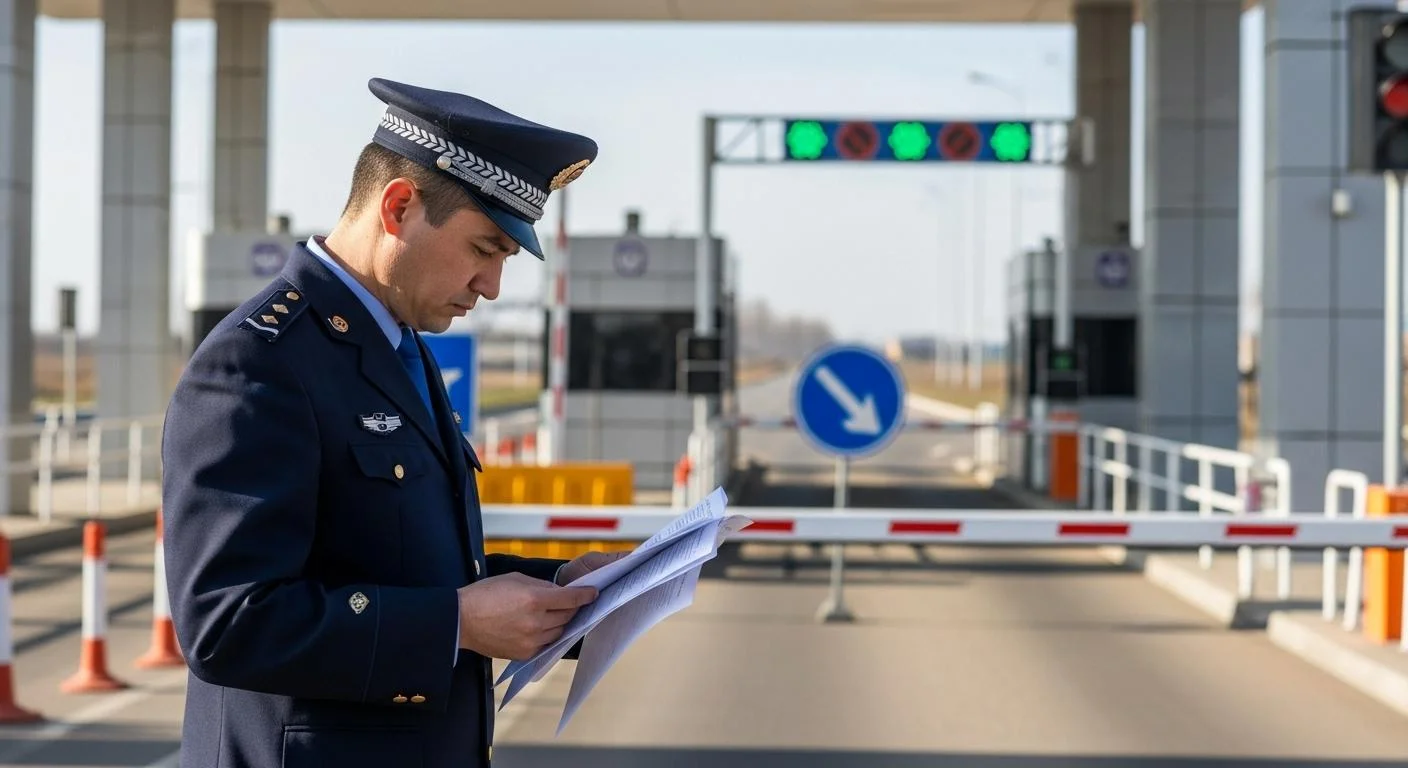
January 26, a date that often escapes the agenda but never loses its relevance, poses this almost provocative question: what ensures the stability of global trade if not an unshakeable ethical foundation? You see the issue, every border, every package, every signature, everything trembles and organizes around this shared intimate value of trust. This is not folklore, but a concrete and vital pillar. The World Customs Organization pushes the global calendar and imposes, on this famous January 26, a symbolic course that structures much more than procedures. Thus, World Customs Day and Ethics, in 2025, still marks the true beating heart of commercial transparency. So, rediscovering this day means accepting that ethics structures more than administrative protocols; it touches your business, your products, your certainties.
The significance of January 26, World Customs Day and Ethics in this globalized world
International trade needs a reference date and a trigger for debates, so January 26 transcends the years; it never ages. Why does this day fascinate both experts and skeptics? Surely because it raises, against a backdrop of economic upheavals and bewildering global circuits, the real question of trust maintained or broken at borders. The symbolism does not stop at the counters; it runs through warehouses, ports, planes, and hushed discussions between states.
The origins and ambitions of January 26 Day
Brussels, January morning 1953, the Customs Cooperation Council settles in almost timidly, ambition in its pocket. The movement makes no noise but plants a seed, that of the future World Customs Organization. The choice of date is no coincidence. This is the precise day of the first major meeting between these nations determined to align procedures and minds for fairer trade. Over the decades, World Customs Day and Ethics takes root, multiplying memberships, expanding its circle in response to tensions, crises, and advancements. In 2025, it counts 183 members who claim it, a solid figure, less anecdotal than it seems.
Quickly, the objective imposes itself; you feel it everywhere, impossible to escape it; it is not about aligning stamps on papers. The challenge is to protect, facilitate, sometimes decide, to provide reassurance to companies that bet every day on the integrity of the system. This day does not go out of fashion because it reminds us that customs control will never be a routine or cold act. Customs ethics is lived; it questions, it sometimes shakes, it keeps a global organization standing.
| Country | Event | Theme |
|---|---|---|
| France | International conference in Paris 2025 | Ethics and traceability of goods |
| Côte d'Ivoire | Official ceremony for customs agents | Transparency in procedures |
| India | Inter-agency roundtable | Anti-counterfeiting and integrity |
| Peru | Human rights awareness workshop | Respect for rights and health security |
Actors in full effervescence on the customs scene
In Brussels, in Abidjan, in New York, nothing ever happens in silence; no capital is an exception; every institution pulls on the thread of ethics in its own way. All this world is agitated, coordinated, debated, monitored, pushed to the test. The World Customs Organization, of course, but also national administrations, maritime transport giants, agencies like WHO or INTERPOL. The European Union? It supervises. The United States? They patrol. South Americans, West Africans, each has its own ceremonial, often with companies that attach themselves, economic operators who inject vitality.
No one can pretend indifference. Even partner companies like Maersk or Bolloré, known for their pragmatism, want to show their most ethical face. World Customs Day and Ethics does not settle for a strict decor; on that day, borders vibrate, and customs officers share the idea that any ethical breach undermines society as a whole.
The place of ethics in current customs practice
The mission moves, evolves, continues to complicate its rules, injecting new codes, and yet it insists on returning to one question: ethics precedes technique, never the other way around. Integrity imposes itself; it does not waver.
The values that carry customs missions daily
Integrity everywhere. Impartiality in the face of temptation or routine. This is the framework that underpins, day after day, the behavior of thousands of agents at the borders. You wonder if these words go beyond the administrative gesture? No, trust shatters as soon as partiality creeps in. Duty, transparency, accountability, respect; it is all daily life dictated by the concern for fairness. Without solid ethics, customs could not convince anyone that it protects the interests of a nation or a trade bloc. You feel this momentum, this attention; the adopted ethics charter never diverts attention. Since 2021, the WCO has intensified the transmission of its guidelines; no less than 183 administrations realign their requirements on this modern common foundation. This changes the game, even discreetly.
The challenges of ethics today?
The facts speak. Since the World Bank has multiplied reports on suspicious flows, the prevention of conflicts of interest has become imperative. Customs IT management is no longer escaping media scrutiny; the slightest failure triggers cascading reactions. Thus, confidentiality, fairness in controls, become shared concerns, discussed, sometimes contested. The drifts revealed by Panama Papers or LuxLeaks awaken citizen vigilance; each report rekindles the feeling of essential oversight. Traceability progresses; everyone demands total readability of procedures, at the risk of undermining agents if trust does not follow. You realize that ethics is no longer an addition to discourse. Transparency International indicates in 2025 that 60 customs administrations rank among the most respected institutions, a remarkable progress compared to the previous decade.
Concrete actions during World Customs Day and Ethics
On January 26, activities are buzzing on all continents. No routine; the agenda explodes, unfolds, and constantly reinvents itself.
Official events and rituals in the service of transparency
In Brussels, in the WCO auditorium, discussions resonate, awareness campaigns spread, ethical excellence awards change destinies. Elsewhere, Japan aligns its leaders; France refines its tools. This ritual does not settle for displaying good intentions; it pushes agents to pay more attention. The pressure rises because the slightest breach today explodes in the media. In Abidjan, emotion takes hold; a customs officer receives recognition for her determination to stop the trafficking of protected wildlife. These gestures matter; these events reveal the hidden energy behind the administrative facade.
Global best practices, recommendations that travel
The ethics charter does not remain in a drawer. It is displayed everywhere; it spreads its spirit even into the corridors of Marseille and Dakar. At the same time, training on customs ethics resonates everywhere, with 400,000 agents engaged in the process, according to the WCO. Successful experiences are shared candidly, failures are recorded and discussed. France, pragmatic, pushes the DGDDI to establish an integrity unit; this federating bet doubles reports but does not undermine trust. Do you see this dynamic? Ethics does not stifle work; it elevates it.
- Continuous and adapted ethical training
- Support for whistleblowers
- Regular publication of charters and updates
- A strengthened internal audit and alert system
On a freezing morning, somewhere at the Slovak border, Lukas, a customs officer, detects a suspicious detail in a truck's cargo. He hesitates; the pressure mounts; everything rests on his decision. His superior appears, whispers a word, "do what is right, keep your conscience a priority." Lukas checks again; he dares to question. By nightfall, the discovery of fraud reassures; a letter of congratulations arrives. Here is customs ethics embodied, without glamour, but rooted in reality. This anecdote circulates; it reminds everyone that honesty does not love decor but is invented on the ground.
The effects of customs ethics on global trade and current society
Trust, that word we use all the time, is built through rigorous controls and sometimes heroic efforts.
Ethical customs, a source of trust and fluidity
A customs organization aligned with ethics attracts, reassures, and retains investors and carriers. The ICC barometer in 2025 validates this observation; 81 percent of major global groups now mention customs integrity in the specifications of their logistics partners. Security does not scare; it enhances. Fraud, counterfeiting, and drifts diminish when transparency settles in. IMF studies record sustainable economic gains; growth is established at 0.3 percent higher over 5 years in areas where control integrates a reinforced ethical approach. Even more unexpectedly, the digitalization of procedures reduces smuggling by up to 26 percent in certain African and Asian routes. Do you question the relevance of this data? Ethics proves to be much more powerful than the gadget of official figures; it modifies a country's priorities.
Successes and examples from elsewhere
Japan traces a diagonal of integrity, inspiring Singapore and its neighbors. South Africa, since 2025, is betting on a major anti-corruption operation in customs; results are not long in coming, tax revenues soar, and trust returns at the counter. European controls, with the support of Europol, streamline passages where the ethics charter applies without detour. The WCO reminds us every year of a stunning statistic: customs clearance times decrease by a third in countries adopting vigilance from whistleblowers and the wave of continuous training. Yes, ethical customs lay the foundations for reliable and respected global trade.
The challenges of the coming years for ethics and new customs standards
The future is being built; it resists; it adapts to inventions and threats.
Technological changes, friends or foes of ethics?
Smart sensors, automated processes, artificial intelligence, blockchain are making their way into the landscape. At the customs of Dubai or Roissy, no package crosses without passing under the digital eye. This mutation accelerates traceability, but beware; every flaw, every suspicion of algorithmic bias, every data leak breaks the trust dynamic. Ethical committees in Canada and Singapore are turning into permanent sentinels, monitoring and repairing immediately, or at least they try. This technical dilemma affects society as a whole. One failure, and a country's reputation slips, dragging every actor into uncontrollable turmoil.
Paths for a stronger customs ethics tomorrow
The World Customs Organization does not spare its efforts. It insists, collaborates, and reminds us since 2023 that customs ethics never freezes. Cooperation between governments is growing; training adapts, charters revive when a flaw appears. Civil associations participate, audit, monitor, and intervene more often than before.
Agencies and control bodies multiply surprise inspections; recommendations abound, without seeking to show off. Standards, flexible, evolve at the pace of society. You will discover more trained agents, interconnected systems, and collective vigilance. International trade relies on every individual effort as much as on the technicality of machines.
On January 26, World Customs Day and Ethics, you will find, in the background, the question everyone avoids: does trust still circulate unhindered, on every road, at every border, in every port? And what if ethics remained the common thread of exchanges for 2025 and beyond?