On January 27, everything changes, nothing is more important than memory. Families reflect on what they have endured, you hesitate to evoke these pains, some prefer to remain silent, while others let it all out at once. Talking about January 27, Holocaust Remembrance Day and the Prevention of Crimes Against Humanity, gives you a red thread for the year, a landmark against collective forgetfulness. It is much more than a fixed commemoration. The event shakes consciences, incites action, and questions the resurgence of hatred. Who dares to deny the utility of remembering? The commemoration of January 27 places you before collective responsibility: if this memory disappears, what will become of society?
The Universal Scope of January 27, Holocaust Remembrance Day and the Prevention of Crimes Against Humanity
In 2025, January 27 does not only rhyme with ancient history. The event coincides with the liberation of Auschwitz in 1945. The industrial brutality of evil never fades. The UN decided too late for some, but since 2005, the date has been anchored in global memory. Each state organizes itself, more or less seriously. Some laws affirm this duty of memory, while others reduce commemoration to a school ritual.
| Country/Organization | Date of Establishment | Major Actors | Specificities |
|---|---|---|---|
| France | 2000, National Day | Ministry of National Education, memorial associations | Duty of memory enshrined in law |
| UN | 2005, resolution 60/7 | Member States, UNESCO | Universal framework, constant reminder |
| Germany | 1996, generalization | Bundestag, Holocaust museums | Massive support for memory pedagogy |
| Italy | 2000 | Ministry of Culture, schools | Official commemorations, public archives |
Look at France, law on the duty of memory, continuous action from associations, involvement of schools and families, memory never remains an abstract concept. The memory of the Holocaust thus weaves itself into daily legislative, educational, and familial life, provided it goes beyond mere institutional reflex. A territory is never equal to another, disparities persist.
The Uniqueness of International Recognition and Its Roots
Do you question yourself? Why does official recognition always lag? Years go by and some countries hesitate, weighed down by their past. Before 2005, nothing was uniform. Resolution 60/7 finally guarantees harmonization, the date of January 27 imposes itself, even on the most recalcitrant.
The collective history crystallizes on the exit from the barbed wire of Auschwitz. Here, voices coexist, former deportees, associations, the official fabric. Schools and museums emphasize this date, memory then leans towards transmission, young generations witness, the word circulates, sometimes violently, always gravely. Institutional texts systematically mention Auschwitz, the shock never leaves official discourse.
The Gestures and Rituals of Collective Memory
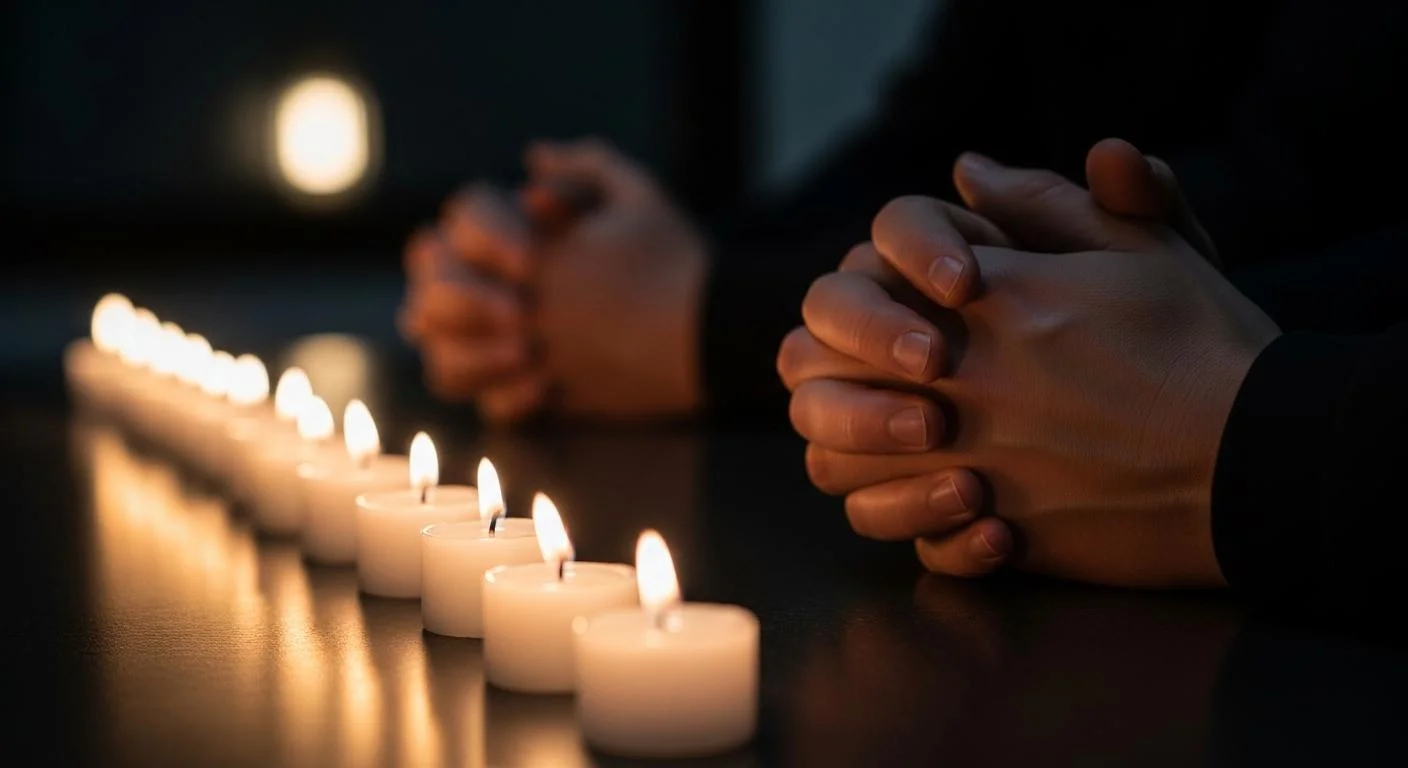
Visible emotions, strong symbols, memory takes on a physical dimension. Commemorations revolve around simple gestures, flickering candle, awkward silence. You remember, as a child, that suspended minute, the grave voice of the teacher. Memory does not imprison in a frozen repetition, it evolves, adapts to society, captures cultural and generational mutations. Debates multiply, museums modify their exhibitions, digital media breaks through, schools open up to unprecedented approaches.
The Commitment and Objectives of the National Day of Holocaust Remembrance and the Prevention of Crimes Against Humanity
Who dares to claim that January 27 remains a mere ritual? You feel the weight of this memory, the shock of denialism. The fundamental issue concerns the fight against forgetfulness. Societies face a dangerous fracture, alteration, falsification, instrumentalization of history. The fight covers the progression of anti-Semitism, preserving knowledge, and the strict defense of memorial sites form the foundation of this symbolic day.
| Main Threat | Consequence | Main Measure |
|---|---|---|
| Denialism | Weakening of the collective narrative, increased social divisions | Specific laws against denial, awareness campaigns |
| Generational Forgetfulness | Loss of reference points, trivialization of hatred | Transfer of knowledge through education, direct testimonies |
| Destruction of Memorial Sites | Disappearance of historical heritage | Protection and restoration, involvement of public institutions |
The latest UNESCO surveys show a worrying spike in anti-Semitic acts over the past five years. Teachers note the fragility of memory among adolescents, transmission no longer circulates as well as before. Podcasts, documentaries, social networks, these are the new vectors, but the battle remains unfinished.
The Tension Between Collective Memory and Forgetfulness
You feel the dilemma, to commemorate without turning memory into routine. The pedagogy of memory is not limited to official dates. Local initiatives propel new tools, digital applications, virtual visits, each instrument fights against erasure. The preservation of historical sites occupies the center of the debate, nothing equals the sensation provoked by a ground trodden by memories.
The Holocaust Museum in France, for example, adapts its approach, digitizes archives, offers young people interactive applications. Have you ever felt the difference between learning through family testimony and discovering through documentaries? Two worlds, one common goal, transmission.
Living Initiatives Around January 27
January 27, Remembrance Day, transforms educational institutions. Historians visit classrooms, open discussions, raw emotions. Traveling exhibitions, reflection workshops, intergenerational meetings, tribute knows no barriers. Formats multiply, podcasts, large conferences, online media relays.
- Interactive exhibitions in libraries and cultural centers
- Guided tours of memorial sites adapted for young people
- Webinars with survivors or specialists in Jewish history
- Artistic competitions around the duty of memory
The surprise anecdote? In a provincial high school, a survivor whispers to the class the weight of the yellow star. The adolescent in front questions, wonders, "What was it like, after all that?" This silence, this trouble, nothing truly replaces it.
You do not find these emotions in a textbook, that is where the true meaning of transmission lies.
The Contemporary Scope of the Commemoration of January 27 Today
The times do not bow to rituals. Did you think hatred was receding? You see the opposite on the Internet, venomous hashtags, streams of anti-Semitic remarks, the banality of evil online. The vigor of January 27, Holocaust Remembrance Day and the Prevention of Crimes Against Humanity, is rooted in the immediate fight, the response to the worrying rise of anti-Jewish acts in France and Europe. Challenged by current events, teachers, institutions, citizens question, reinvent commemoration, relying on new solidarities.
The Recent Challenges Facing Anti-Semitism and the Multiplication of Hate Speech
January 27 becomes a response. It acts for inclusion, reminds dignity when everything shakes. You follow alerts on social networks, collectives that spread the hashtag "No to Hate", UNESCO relays campaigns, schools serve as relays for national mobilization. Vigilance does not wane, speeches and initiatives follow one another, French society reaffirms its choices.
The Actors of Memory in 2025
Who holds memory today? Museums, educators, descendants, the list is growing. Educational institutions are now turning to digital, video platforms, social networks, virtual archives. Education, unsurprisingly, remains the pillar, but associations and institutions adapt their methods, targeting all audiences. Audiovisuals, digital testimonies, exhibitions outside the walls in villages, transmission has never seemed so vital, nor so contested.
The Future of Holocaust Memory and the Prevention of Crimes Against Humanity
The challenge arises brutally: what will you do with memory when the last witnesses have disappeared? Technology offers unprecedented responses, virtual reality, interactive museums, audiovisual resources. In 2025, the digital experience allows students to explore Auschwitz with a VR headset, listen to a voice, compare the shock to the real visit. Emotion transmits, or alters, each has its response.
| Pedagogical Innovation | Benefit | Recent Experience |
|---|---|---|
| Virtual Reality | Immersive visit of historical sites | Auschwitz Museum in VR, 2025 |
| Digital Archives | Global access to testimonies | Shoah Foundation database |
| Interactive Projects | Engagement of young generations | National Resistance and Deportation Competition |
Digitization brings about a upheaval: now, over 55,000 testimonies from former deportees circulate freely around the world, multiplying opportunities to teach differently. School programs redefine transmission, value orality and video, the present finally dialogues with the past.
The Real Challenges to Maintain the Vitality of Memory
Concern persists. Young people quickly turn the page, too many cultural offerings, too many online stimuli, not enough time to feel, to react. The challenge lies in the ability to renew the format, to take memory out of the category reserved for history, to make it shine in daily life, to integrate it into education but also into popular culture. Associations, teachers, event organizers compete with ideas, urban walks, video contests, relays on TikTok or Instagram.
You wonder: how to transmit tomorrow what resembles you so little but concerns the whole world? The strength of Holocaust Remembrance Day and the Prevention of Crimes Against Humanity may reside there, in the uncertainty of a living heritage rather than in the certainty of a frozen past. The story of January 27 never completely closes, it troubles, it awakens, it also prepares for collective vigilance.