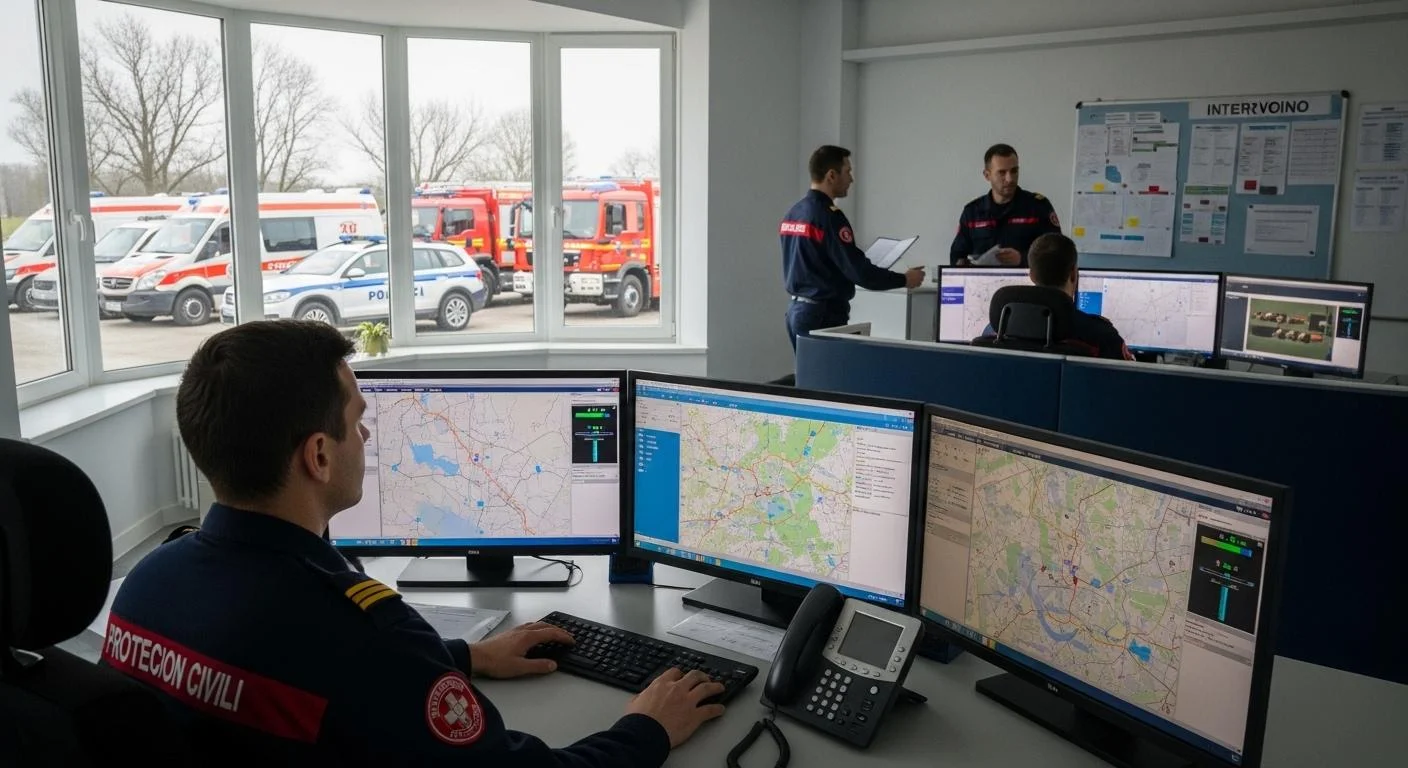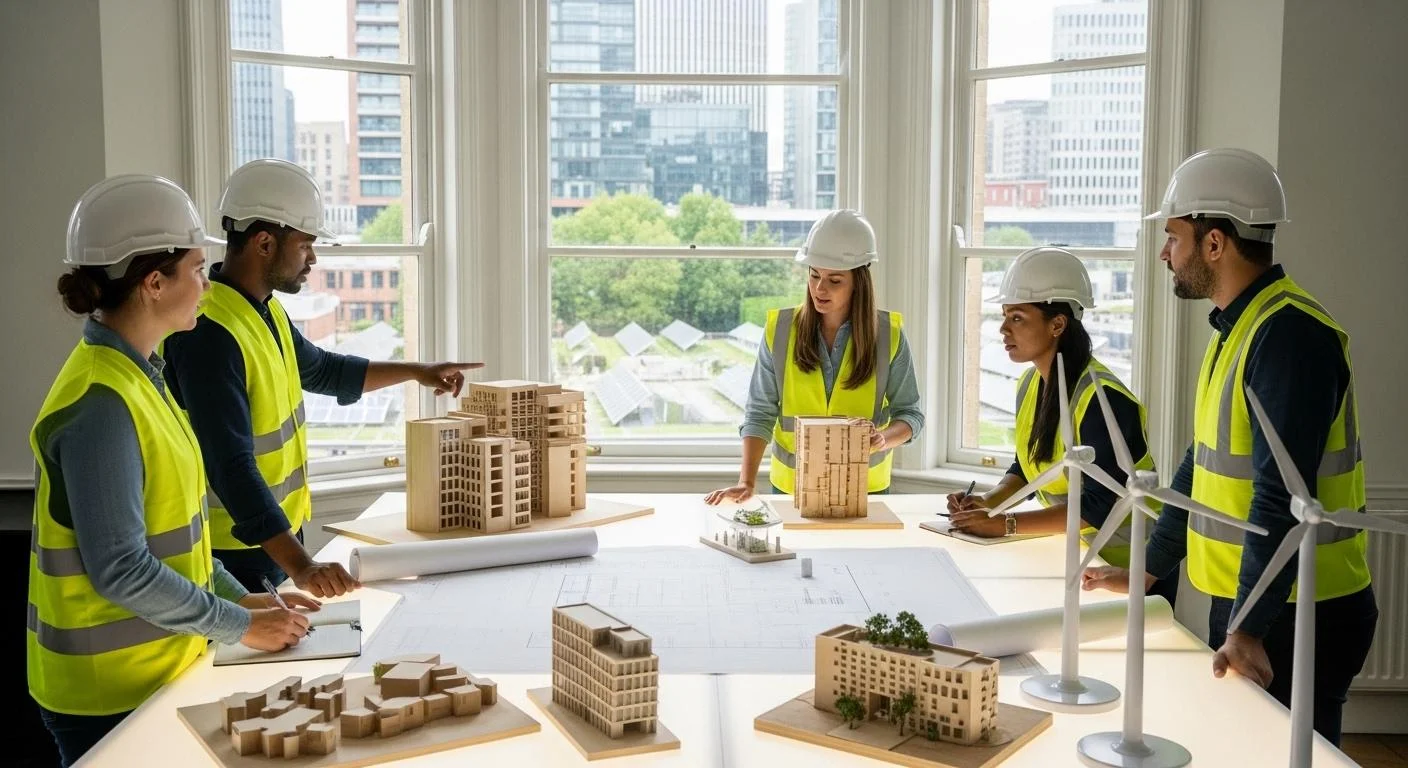
March 4 sets the pace for a sustainable future, World Engineering Day for Sustainable Development asserts itself in the global agenda. You live in a society shaped by engineers, you encounter their inventions, you directly feel the impacts of their choices. This collective date questions the immense place of innovation in your life and gives impetus to the ecological transition. Is it a coincidence that a city evolves, that transportation finally breathes the fresh air of green mobility? No, it is a deep will, a human commitment fully visible in daily life.
The origin of World Engineering Day for Sustainable Development
You walk through the streets, you look up at a solar bridge, you catch sight of these next-generation stations, everything adjusts to the millimeter to serve urban balance. March 4 is not an "administrative invention"; the weight of history concentrates in this meeting established by UNESCO and the World Federation of Engineering Organizations. A shared anniversary since 2020, a founding date that attempts to ward off the risk of irreversible imbalances.
One hundred thousand organizations, eighty countries, this is not a joke: March 4 frames the ecological awakening, it unites women and men who are eager to invent better, to join forces so as not to let everything slip away. Why this day in particular? It is the day that saw the World Federation come into being in 1968, a landmark date. The strong symbol of the union between technology and international solidarity. During these 24 hours, eyes converge on the following question: how many technical solutions contribute today to true collective progress?
The scope of World Engineering Day for Sustainable Development
If you dream of a low-carbon world, there is no need to beat around the bush; without engineers, nothing moves. Engineering pulls out all the stops to meet the UN's sustainable development goals, tackling drinking water through innovation, green energy thanks to a proliferation of solar panels and wind turbines in every sensitive area. Infrastructure, too, is not exempt from this tidal wave: permeable roads, bridges barely trembling under the threat of an earthquake, coatings that catch rain to absorb it faster than the storm.
You breathe better, you drink without fear, you save time every morning because a handful of creators are rising to the challenges of transformation. Who would have bet on this twenty years ago?
The results are glaring, they propel social and territorial mobility, they combine social utility with technical audacity. Without committed engineering, where would you be today during a power outage or an unforeseen drought?
The priorities of World Engineering Day for Sustainable Development
The context does not escape you: drought looms where it was least expected, cities suffocate during each heatwave, resources are lacking even in reputedly prosperous countries. Faced with this advancing wall, the engineer reinvents themselves, adopting three brand new battle horses: water, energy, and the fight against pollution. You feel the urgency, World Engineering Day for Sustainable Development expresses it forcefully, reminding us that innovation is envisioned collectively, pulsing in laboratories but also on the ground.
How to manage waste in a village in sub-Saharan Africa? Who repairs weather stations during floods? The goal of March 4 is not limited to raising awareness; it seeks to federate, to invent prototypes, to multiply unexpected exchanges. It is about supporting the shift, a profound mutation of the profession and society.
The ambition of the March 4 celebration
The 2026 edition shakes up the routine, infusing new energy, aiming to educate, awaken, and connect. What do we take away? Many debates on collaborative spirit, on passing knowledge to new generations, on the necessity of anchoring technical gestures in collective culture. Youth comes together, tries to imagine its place, exchanges in workshops, dares unexpected partnerships. The common thread? The date of March 4 imprints social memory, it fosters sharing and questioning.
Events and actions on March 4, a global panorama
You browse the agenda of initiatives and, from one continent to another, the dynamic astonishes you. UNESCO opens its doors in Paris, hackathons explode in Nairobi, conferences on new recycled materials settle in Sydney. At each step, the formats break the routine: public webinars, outdoor demonstrations in the rain or sunshine, competitions where students cross paths with seasoned startups.
Universality is palpable, everyone contributes their stone, big or small, to the collective challenge. Partnerships no longer oppose NGOs and private companies; they cross their visions, experiment without a safety net, believe in the common interest. A table helps you visualize this mosaic revived every March 4:
| Country | Event | Audience | Partners |
|---|---|---|---|
| France | Green jobs forum, interactive workshops | High school students, university students | French Federation of Engineering Societies |
| Australia | Conferences on water management and hackathons | Academics, startups | UNESCO, Australian Engineers |
| Kenya | Educational days in rural schools | Children, educators | Local NGOs, Ministry of Education |
| China | Seminars on industry and climate innovation | Companies and grandes écoles | China Engineering Academy, SDG networks |
The French variations of March 4, a fertile ground?
Polytechnic, Centrale Nantes, Supélec, everywhere schools open up, debates on carbon sobriety spring up, students orchestrate games on resilience against floods. You enter the atmosphere of simulations: how to manage the crisis, who gives the orders, who tries to recruit young talents? Municipalities, companies, and training organizations cooperate in a stimulating atmosphere, each relying on the strength of the collective, not on competition.
You encounter engineers in the field, students who scrutinize the smallest details of eco-districts, citizens testing waste management prototypes. Suddenly, the distance between theory and practice dissolves, the event deploys its resolutely embodied dimension. Who has never discussed with an engineer during World Engineering Day for Sustainable Development?
Committed individuals, transformed daily life
Some do not wait for grand ceremonies; they act in total discretion; in Senegal, Lamine Ndiaye designs bio-filters for a school with limited resources, inspired by the roots of water lilies. For two years, his innovation has saved the health of hundreds of children; his peers see in his action a lesson, a way to place the human back in the technical equation.
A testimony sometimes outweighs thousands of speeches; you realize that the capacity for innovation survives everywhere, even far from the Parisian spotlight. And the example multiplies, in Paris, in Lyon, in Dakar, men and women are designing new neighborhoods, inventing educational modules, transforming access to hydrogen, bicycles, or digital equity. The DNA of World Engineering Day for Sustainable Development is embodied in these modest stories.
The stories of young talents, the next generation already at work
Solène, the doctoral student from Lyon, does not hide her ambitions: "I want to give a chance to those who have neither regular electricity nor breathable air." Such a confession creates a breach; Adrien, who passed through Grenoble INP, installs wind turbines in the Savoie valleys, advocating for local autonomy. Lina, on the other hand, distributes educational materials on digital transition to children in Occitanie, sometimes posing more questions than answers.
This transmission runs from one generation to another, it breathes life into the Day of Committed Engineering for the Future. You perceive the desire to go beyond the famous all-technology to work towards a more equitable society.
Participation, who really dares to take the step?
You want to get involved on March 4, you hesitate, what to do? The options abound, nothing complicated, just a desire to try.
- Schools choose scientific workshops, local competitions, educational games to break the routine
- Companies stimulate internal dialogue, value their teams, sometimes set up an unprecedented challenge in one day
- Communities weave a new link by launching joint plantings, opening schools, or organizing public demonstrations of green technologies
March 4 revitalizes the local fabric, it shakes up administrative tranquility, perhaps simplifies access to engineering, anchoring it in the reality of territories. You realize that no collective, no institution, has a monopoly on this shift.
Resources to continue the momentum of World Engineering Day for Sustainable Development
MOOCs, UNESCO publications, podcasts on energy circulate; believe it or not, the diversity of resources allows for maintaining the dynamic, avoiding the typical heat stroke of one-day commitments. The Order of Engineers opens its portal, offers guides, publishes webinars, nothing is lacking.
Do you feel ready to keep the spirit of this March 4 alive well beyond the official calendar? What mark will you leave in the long march towards the future?
Evry, March 4, the crowd gathers in front of the library, Lina rejoices: "I designed a circular economy project between the school, the local business, and the community; I see my hesitant neighbors, then convinced." The smiles spread like wildfire, pride overflows the sidewalks.
This evening, the question weighs heavily: will you be at the celebration next March 4?