December 18, do you really follow what this date means? Year after year, this appointment sounds the global alarm on migrations and all its contradictions. As soon as the calendar displays this day, the debate invites itself on all lips, not just in the media, but in the daily lives of millions of people. It is difficult to ignore the importance of this global event; everyone talks about it, questions abound, and reflection is imposed, almost against one's will.
The historical and committed significance of December 18 for the rights of migrants
The history of December 18 is not improvised. Going back to 1990, the United Nations General Assembly adopted the International Convention on the Protection of the Rights of All Migrant Workers and Their Families. At that time, the urgency to protect displaced persons already appeared evident, but the ratification of this text also shows the ambivalence of States. Many question, engage half-heartedly, but the declaration remains, unshakeable, on the international stage.
Something shifts this year. December 18 becomes not just a significant date; it crystallizes the idea of a universal fight for human dignity. The day did not arise by chance; it embodies a collective recognition, an obligation to act in the face of the reality too often denied of migrations. Since 2000, the United Nations has inscribed this day in the official calendar. A day dedicated to recognition, which distances the temptation to forget or trivialize each journey.
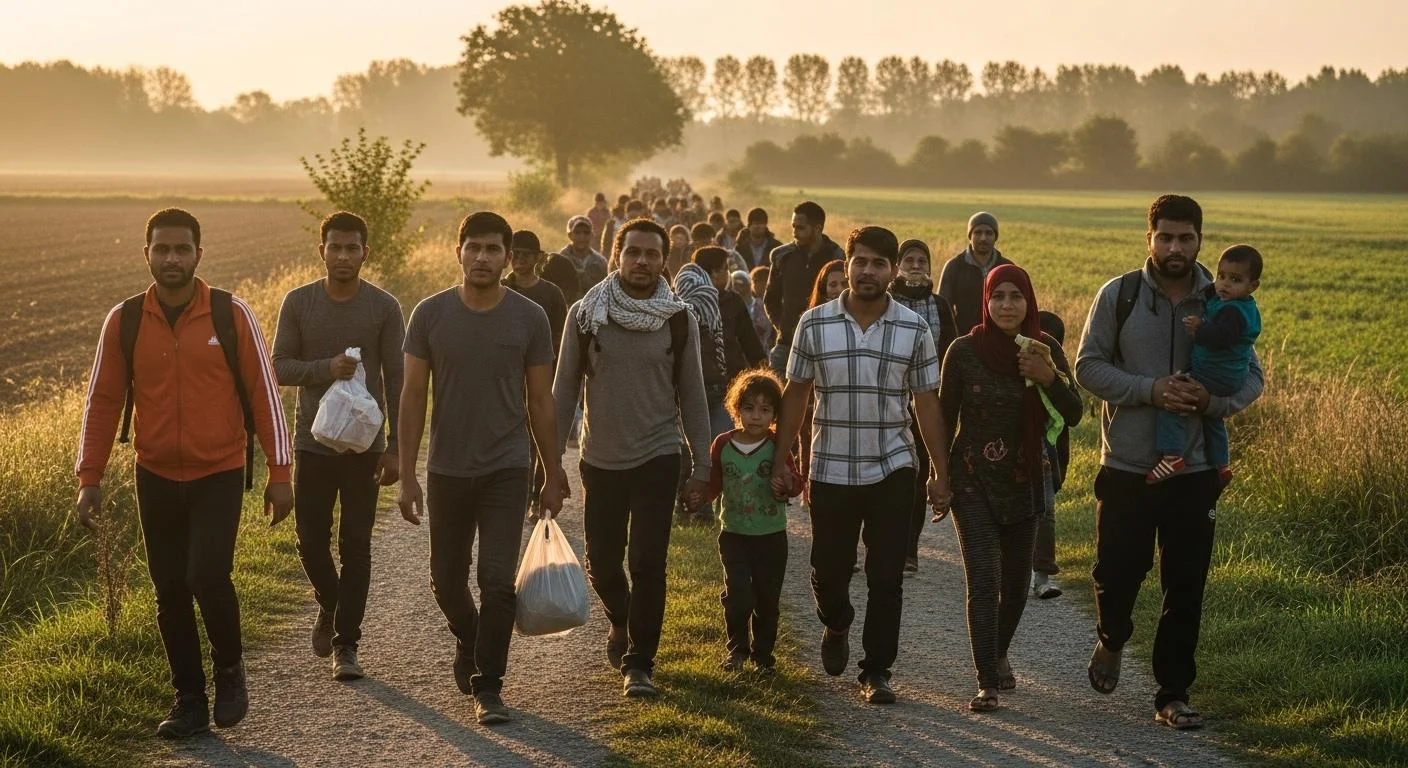
You feel the weight of these stories. Improvised camps, multiple flags, posters, slogans chanted in the street, nothing is set aside on this day. Everything converges to tell migrants that they are not erased, encouraging host societies to break down walls. Testimonies accumulate, debates erupt, and societies question themselves; stereotypes are challenged. Who really observes this journey? Who dares to respond frankly: it is our collective affair right now, not tomorrow.
The global realities on December 18 around migrations, what truths?
Did you think you understood everything? The figures invite themselves and undermine certainties. In 2022, the UN counted 281 million migrants, or 3.6% of the world population. Hardly time to look back, in 2023, there are already 287 million. The year 2024 shows 293 million. Small or large flows, each movement silently transforms the map of the world.
The day dedicated to migrants forces us to look at each statistic as an individual story. You see trends changing. The top trio of host countries is changing, marking unpredictable dynamics:
| Year | Number of migrants (world) | Main host countries |
|---|---|---|
| 2022 | 281 million | United States, Germany, Saudi Arabia |
| 2023 | 287 million | United States, Germany, Canada |
| 2024 | 293 million | United States, France, United Kingdom |
Data provided by the UN on the occasion of International Migrants Day.
Migratory routes are traced between continents, the Mediterranean sadly remains the most dangerous route in the world. Some flee a war, others seek family reunification, or wish to study, but no motivation resembles another. You question a statistic, it always refers you back to a face, to a unique trajectory, sometimes happy, often tragic.
In 2025, the UN High Commissioner for Refugees explains bluntly, the majority of international migrants remain on the same continent as their country of origin. Surprising? Would you have thought the opposite? Yet, geographical distance does not dominate. Migration affects all social strata, blurring the boundary between the familiar and the foreign. The movement, omnipresent, feeds the news but also minds.
The current issues and challenges faced by migrants worldwide
Texts guarantee rights, but on the ground, everything gets complicated. On the path of reception, December 18, certain points emerge with brutal clarity: limited access to healthcare, unequal rights to education, labor market rarely open. Europe, North America, the Middle East, each continent invents obstacles, administrative conditions, and discourses on "management" replace real listening.
| Region | Access to health | Right to education | Legal work |
|---|---|---|---|
| European Union | partial | partial | restricted |
| Middle East | limited | low | very restricted |
| North America | variable | variable | restricted |
No one forgets the burden of paperwork, the waiting lines, the uncertainty over each residence permit renewal. Discouragement wavers with the desire to settle down. Racism, exclusion, the fear of expulsion haunt the procedures. How to move forward, how to resume a life under these conditions? Integration stumbles, against a backdrop of insidious discrimination. Local solidarities strive to break solitude, to reinvent dignity by all possible means.
Rachid clutches his bag, Austerlitz station, very small hands, twelve months without work authorization. He never forgets the vertigo of the unknown, but hope clings on. The promise of this global day for migrants? Just that his voice exists, even if just for a moment.
The visible actions and initiatives on December 18 for the defense of migrants
You enter a whirlwind of initiatives. Everywhere, conferences are blossoming, voices are being freed, radios take over to give a voice to those who are never seen. The International Organization for Migration animates social networks, governments display themselves, some sincerely, others almost embarrassed. On this day, solidarity is no longer abstract; it shakes society, forcing gazes to meet those we usually avoid.
- Schools offer workshops to raise awareness about discrimination.
- NGOs organize citizen gatherings in several cities.
- The media give voice to new witnesses in each national edition.
Testimonies emerge from the shadows. Children, families, young adults, elders, all participate in workshops or share a meal with their neighbors for a special event. The images that remain in memory never come from statistics, but from these moments, a smile, a shy dance, a hand extended. Associations multiply campaigns. Some cities test shared accommodation, others organize portrait exhibitions in public spaces. Boundaries blur, trust slips into discussions.
The future perspectives for the rights and recognition of migrants
Take a step back. In 2025, the revision of the so-called Dublin rules, the signing of new texts for orderly migrations, better reception in some countries, all this progresses step by step. Integration is no longer just a pious wish; the challenge is imposed on all States. Various initiatives multiply. From the multilingual school in Berlin to professional sponsorship in Lyon, solutions are sought, discussed, sometimes falter.
The watchword? Make diversity a wealth, not a social abyss. Demography evolves, the economy demands renewal, culture is expressed in the plural. Reception is no longer an option; it is sometimes a matter of survival for some countries. Yet, the fear of the other persists, the slowness of administrative hassles tires the best intentions. Obstacles remain, but so does hope.
On December 18, International Migrants Day poses the uncomfortable question: why retreat before difference, why transform mobility into a problem? How to establish the dignity of all, how to make mobility a shared opportunity instead of an imposed burden? Clearly, no ready-made answer; the question remains wide open, each journey reignites the debate. And if the real revolution consisted of never turning away, even after December 18?
The date of December 18 stands as a mirror; everyone must seek their share of responsibility in reception or indifference. Human destinies often play out at the threshold of a door, in listening to a story, in the willingness to build differently.