On February 10, you will inevitably encounter this event. The International Day of Legumes is everywhere, from the cafeteria to home, it appears on social media and makes its way into political debates. Why is this date so firmly established? Nothing happens by chance; it is about taking action. Today, legumes are shaking up diets, challenging prejudices, inspiring the planet, and promoting solidarity. Do you find this annual breath of fresh air necessary? If you pay attention, it is not just a pretext; it is a clear and collective response to burning issues.
The International Day of Legumes in February, history and recognition
Every year, the planet vibrates to the rhythm of a seed. This February 10 event is not limited to a celebration; it is rooted in a global will to act for sustainable food and a more supportive world. Schools are buzzing, families are gathering, everything is organized around this moment of shared commitment.
The history of the International Day of Legumes, an initiative from the UN and FAO
One might think that everything started recently, but no, the mobilization dates back to before 2016. October of that year marks a turning point, as the United Nations officially recognizes this event, driven by the FAO, which has long advocated the strategic importance of legumes in the fight against hunger. And why February 10? This date echoes the conclusion of the International Year of Legumes. From then on, every institution, from the FAO to national ministries, supports this message of general interest. The French Ministry of Agriculture quickly gets involved, leading other countries into an unprecedented dynamic.
Institutionalized in 2016 by the UN and FAO, highlighting global food challenges, official recognition of February 10, do you see the progress made? This moment stands as a powerful landmark in the political and civic agenda worldwide.
The reasons for this annual event on February 10, why persist?
February 10 is unlike any other date; this day embodies a fight against hunger and openly celebrates diversity at the table. You hold here much more than a symbol; a universal will is expressed: food diversity, environmental respect, appreciation of natural resources. This event hammers home a strong idea: what truly nourishes grows in patience and solidarity. Awareness spills over from the plate; it extends to food sovereignty as much as to the preservation of biodiversity.
The FAO emphasizes that it is about addressing the dual challenge of malnutrition and climate disruption. February 10 brings forth this ancestral agricultural heritage capable of addressing the challenges of the century today. Who would bet on the power of a simple seed to shape the future?
Legumes, composition, varieties, and nutrition
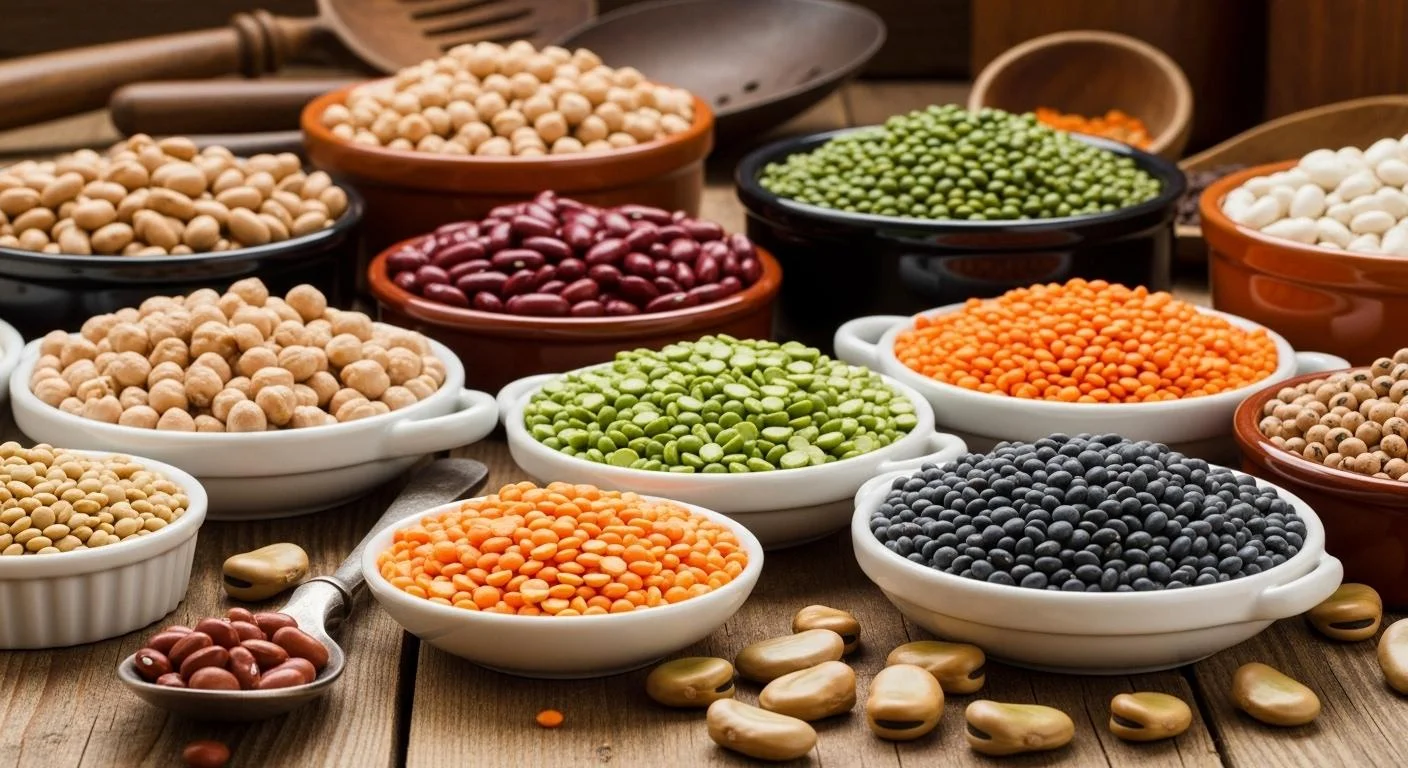
We talk a lot about legumes, but what exactly are they? You encounter a thousand faces of this large family: chickpeas, green lentils, beans, fava beans, split peas. On February 10, the varieties express themselves on every continent, in every kitchen. A Moroccan couscous, an Indian soup, a Mexican chili, even a French cassoulet, each dish is rooted in a living and local tradition.
The diversity of legumes, uses, and cultural roots
The botanical family of legumes is never limited to three or four species. You would be surprised; about a hundred occupy our daily lives: from breakfast to dinner, from shared meals to feasts, they all invite themselves. The FAO publishes device after device, highlighting this exceptional biodiversity. Have you noticed? India dominates production, accounting for nearly a quarter of the global harvest, while Canada also provides a huge share. Each continent claims its specialties and culinary creativity.
| Common Name | Main Origin | Key Culinary Use |
|---|---|---|
| Chickpea | India, Middle East | Hummus, falafel |
| Lentil | France, Canada, India | Salad, soup, dhal |
| Dry Bean | Brazil, United States, China | Chili, cassoulet, feijoada |
| Fava Bean | China, Egypt, Europe | Stew, puree, tagine |
The diversity of legumes often surprises the most skeptical, they assert themselves in festivals, specialty shops, even in the aisles of supermarkets. From February 10 until the return of sunny days, curiosity rises. The FAO guides affirm that these varieties preserve an essential part of global food security. Do you want to rediscover these historical flavors? Nothing could be simpler.
The nutritional virtues of legumes, what evidence?
Legumes prove to be a valuable source of plant proteins, fibers, minerals, and trace elements. The low glycemic index reassures, it speaks to those who monitor their sugar levels. Nutritionists applaud; fats remain discreet in this family, no gluten either, ideal for those living with intolerances. Are you looking to satisfy without excess? Legumes offer lasting satiety and limit snacking.
French awareness campaigns state: eating legumes regularly reduces the incidence of chronic diseases. The International Day of Legumes triggers workshops, demonstrations, and debates around February 10. The health benefits are no longer up for discussion; everyone gains, children, parents, seniors. Are you wondering why wait? The season opens, recipes bloom.
The ecological and economic stakes of legumes in today's world
The planet is no longer satisfied with slogans; it seizes the concrete. Producers, scientists, citizens, all grasp this change. Whether you are curious, skeptical, or already convinced, the proof is present on the ground, in the fields, on the plate. This strength also nourishes a more resilient local economy.
The role of legumes in preserving nature
Legumes fascinate farmers, ecological associations, and local communities. Fixation of atmospheric nitrogen, improvement of soil health, drastic reduction of chemical fertilizers, everyone finds a concrete advantage. In France, the government confirmed it in a report published in 2025; crops incorporating legumes save nearly 40% of nitrogen fertilizers nationwide. The carbon footprint is among the lowest, far behind traditional animal productions. Water becomes less scarce, biodiversity regains vigor. Have you ever thought about the effect of a simple plate of beans on the planet?
The celebration of February 10 reflects a deep commitment, an ecology of the earth that is built plate by plate.
Researchers affirm that integrating these seeds into agricultural rotations shapes a more sober and healthier future. It is no longer a pious wish; it is a concrete transformation, visible every year.
The economic repercussions for farmers and society
Legumes are not just a green economy; they are also a major asset for rural and urban areas. Agricultural sectors are evolving, incomes are diversifying, local agriculture shines in a new light. Reports from the FAO and INRA point to stable growth in the sector for several years in Europe. Demand is up by 6.6% according to the latest figures, short circuits are stimulated, partnerships with schools, and animation of farmers' markets.
Stéphane, a Breton farmer, shares his experience: "For the past three years, I have welcomed entire classes on February 10 for workshops and demonstrations. The students return motivated, the mayor is interested, and I am expanding my outlets with local cafeterias. You can really feel this virtuous circle."
The associative dynamic is strengthening; society is seizing the subject. Local initiatives enter public policies, supported by the renewed understanding of citizens. Everything is played out in taste but also in the economy; do you see it in action?
- Significant reduction in the use of nitrogen fertilizers
- Support for local farmers through short supply chains
- Multiplication of workshops and educational events
The initiatives of February 10 for the International Day of Legumes
Are you wondering what drives the International Day of Legumes? Let yourself be surprised. It overflows with creativity, debates, desires to taste differently, to share, to learn, to act. February 10 bursts with new projects every year, whether in schools, businesses, or even at home.
Institutional and associative actions around February 10
Conferences, culinary workshops, challenges in schools, challenges launched to the general public, initiatives are multiplying. Every year, the FAO organizes an international symposium on the promotion of legume crops, relayed by ministries, NGOs, and communities. Special menus in cafeterias, webinars, musical meetings, or small solidarity markets, nothing is left to chance. Even schools innovate; they include the seed in unison in their programs.
Online debates allow farmers, researchers, and supportive citizens to rethink food circuits together. In France, about twenty regions delight their inhabitants with competitions, demonstrations, and farmers' markets. Information circulates, curiosity rises, and routine crumbles.
The gastronomic and cultural expression of legumes on February 10
| Iconic Dish | Region of the World | Type of Event |
|---|---|---|
| Cassoulet | France | Culinary festival of February 10 |
| Dhal | India | Special menus in schools |
| Feijoada | Brazil | Discovery workshops for children |
| Lablabi | Tunisia | Traditional market of February 10 |
On February 10, gastronomy takes over public space, chefs demonstrating near the markets, family recipe contests, tastings on-site or to take away. Consumer associations, enthusiasts, students, everyone claims the right to engaged indulgence. We savor, we discuss, we invent. Each dish then becomes an opportunity to share a story or a family memory, do you recognize yourself in this hummus or this lentil soup? Memories sometimes return unexpectedly.
An unexpected abundance rekindles the curiosity of young and old. Routine explodes, tradition is reinvented anew. The seeds have not finished making themselves heard; February 10 paves the way. So, have you ever thought about what the seed of change could transform in your daily life? The next meal is being drawn here, before your eyes.