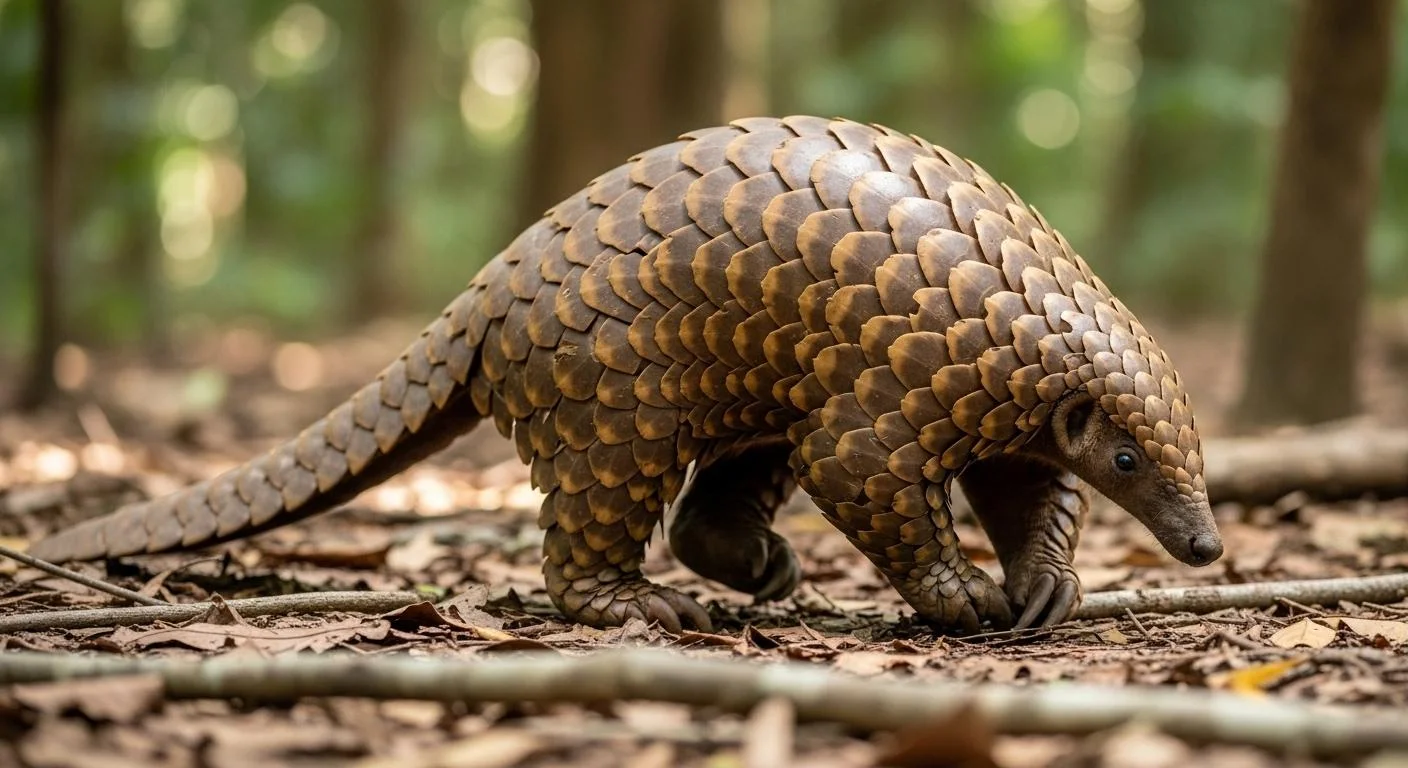
February 18 is no ordinary day; it stirs crowds, attracts public attention, and brings the pangolin into the spotlight. Are you wondering why this commotion? It is explained by a mobilization around a discreet, unique, yet threatened mammal, the pangolin. World Pangolin Day stands against urgency, strikes hard where silence fell, and leaves no one indifferent.
World Pangolin Day, a mobilization that continues to grow
What drives so many people to rally for a little-known animal at first glance? The scene unfolds far from the usual glitz; we forget the spotlights in favor of round tables, verbal exchanges, and even debates in the intimacy of a municipal hall. Sometimes, a question slips into minds: have you ever heard of World Pangolin Day? Yes, it is this moment, on February 18, when scientists, volunteers, entire families unite to awaken a dormant cause. The pangolin, through its discretion, now attracts the attention of the whole world.
You walk down the street, you see posters, you catch a report, everything revolves around the same word: conservation. Why this particular day? You think about it, you question, the media stirs, networks come alive. On February 18, the entire universe gathers to defend the only scaly mammal.
The origin and importance of February 18 in the fight for pangolin conservation
Since 2012, this date marks the advent of a global momentum. The choice is not random; it responds to a precise logic: to prevent the peaks of poaching that occur as soon as spring arrives. Global coordination, thoughtful strategy, you witness an alliance of NGOs, researchers, and volunteers, all focused on a single objective.
Fighting against extinction through awareness is the primary ambition of February 18. Asia, Sub-Saharan Africa, all continents concerned about the pangolin's fate are stirring at the same time.
Educational campaigns, media interventions, everything intertwines. The IUCN and TRAFFIC International are active, distributing tools, messages, and symbols to make an impact. This is no longer just a simple day but a firm, international stance.
The objectives and awareness actions around February 18, a symbol of a common fight
At dawn, social networks relay the alert; you see hashtags scrolling, short videos, signs set up in shopping centers. Schools come alive, NGOs compete with ideas. The excitement starts in West Africa, crosses Southeast Asia, and reaches Europe. You see children, parents, educators raising the issue of poaching. Campaigns transcend borders, mobilizing all ages to spread the alert everywhere.
Educational stands, fun workshops, easily accessible podcasts, everything is organized to break the silence that weighs on the pangolin. The word returns, tirelessly, February 18. You see it, you hear it, it does not leave you.
The pangolin, between discretion and fundamental role for the ecosystem
It is hard to ignore the diversity of the species; this mammal astonishes, intrigues, and yet, it will surely fascinate even more with its capabilities and beneficial effects on the environment.
The major characteristics and ecological role of the pangolin
| Species | Range | IUCN Status | Particularities |
|---|---|---|---|
| Long-tailed pangolin | Sub-Saharan African | Vulnerable | Easily climbs, large consumer of termites |
| White-bellied pangolin | West Africa | Endangered | Solitary, nocturnal, digs deep burrows |
| Malayan pangolin | Southeast Asia | Critically endangered | Adapted to arboreal life, threatened by Asian trade |
| Giant pangolin | Central Africa | Vulnerable | Record size and strength for digging |
This great insectivore secretly influences soil balance, cleans natural crops, and reduces termite populations through its voracity. A beneficial effect for agriculture, often unknown to the general public. The pangolin, although discreet, remains indispensable. Few animals have scales; they boast a unique protection, but this particularity makes them targets for greedy traffickers.
The main threats to the pangolin, what are the stakes for February 18?
You hear about poaching, wildlife trafficking, organized networks. World Pangolin Day gains importance in light of significant facts, over a million individuals captured in a decade according to CITES. Illegal trade is fueled by the belief in the medicinal virtues of scales. Forests are receding, the agri-food industry encroaches on space in Indonesia, Gabon, and Cameroon. The pangolin is cornered by habitat destruction as much as by trafficking.
« When I saw a released pangolin for the first time, I cried. These animals do not flee; they simply curl up. One cannot remain indifferent. »
A testimony from a volunteer, in a classroom in Libreville, emotionally reminds us that this mammal prefers to curl up rather than flee. The encounter with the species rarely leaves one unmoved. After all, how can one ignore this announced disappearance, this cry of alarm that has shaken the month of February since 2012?
Global and local initiatives on February 18, a collective response for the pangolin
Multiple organizations are active, creating unprecedented synergies, inviting experts and activists to build bridges between continents. You discover a dense network of actors, united, ready to innovate. On February 18, the light shines on these shared commitments.
The influential organizations and actors for the pangolin, what solidarity dynamics?
| Name | Role | Actions | Scope |
|---|---|---|---|
| IFAW | Global NGO | Protection campaigns, lobbying against trafficking | International |
| Wildlife Conservation Society | Research and fieldwork | Population monitoring, local education | Africa and Asia |
| Elisa Panjang | Malaysian scientist | Research and advocacy | Malaysia, Southeast Asia |
| World Animal Protection | Awareness | Online courses, annual events for February 18 | Global |
Dozens of projects are emerging, driven by these organizations. Field research, awareness sessions, sanctuaries for injured animals, all contribute to enhancing the visibility and protection of the pangolin. Volunteers, personalities from the scientific or artistic world, influencers, and journalists, the galaxy revolves around the same cause, a unique solidarity for the pangolin.
The progress and challenges since the creation of World Pangolin Day
The ban on traditional medicine based on pangolin products in China is rooted in the news of 2020. Laws are also tightening in some African states, and massive seizures show a growing awareness. However, corruption at ports and distrust in consumer countries hinder progress. NGOs like WWF denounce a very low survival rate for pangolins victims of poaching, often below 20 percent.
- China has officially banned the trade of pangolin products, a precursor for Asia.
- Central Africa is increasing seizure operations against trafficking.
- International cooperation facilitates the extradition of offenders, a small victory that calls for more.
You sense hope rising, but the effort persists. We talk about progress, never about a final victory, not yet. The mobilization knows no respite; each year extends the list of pangolin defenders.
Means of action on February 18, a commitment that spreads from the citizen to the school
This February 18, the cause invites all profiles to engage; you don the scarf of the citizen, the curious, the parent, or the schoolchild. How to do it? The time is no longer for passivity. The agenda opens, solutions are offered.
Simple gestures to support World Pangolin Day
Collective displays rage, the dissemination of educational videos becomes a reflex. You participate in citizen meetings, you exchange, you question, you share information. Some families decide to make a donation, while others choose to open the discussion at home or at school. Social networks are ablaze, the hashtag #WorldPangolinDay spreads from one continent to another.
Specialized sites suggest resources, allowing individuals to contribute to the cause. Engagement requires neither a diploma nor a specialty; it is cultivated over a lifetime, from a simple gesture to speaking out at a local event.
Educational tools and resources for the animation of February 18, what initiatives in schools?
Schools seize World Pangolin Day to work on biodiversity without heaviness or obligation. Educational sheets, artistic creations, lively discussions, traveling exhibitions renew interest in animal protection each year. Teachers no longer hesitate to bring in specialists, to disseminate podcasts or documentaries filmed in Africa, to place the ecosystem at the center of the classroom. Some institutions in Europe join educational platforms, WildAid Kids, Eduscol, to enrich students' experiences.
You see drawings, giant posters passing by; everywhere the scientific word of the pangolin punctuates the hallways. Access to scientific conferences via the internet sparks curiosity; no need to be an expert to grasp it. World Pangolin Day also spreads the passion for living beings among the youngest, engaging the imagination, intellect, and hands all at once.
The motif returns, the mobilization too. A question is thrown straight out; do you feel it coming? There are only a few days left before this February 18, so what will you do when the message resonates? Will you be one of those who pass by or one of those who reignite the wave for the conservation of the pangolin?