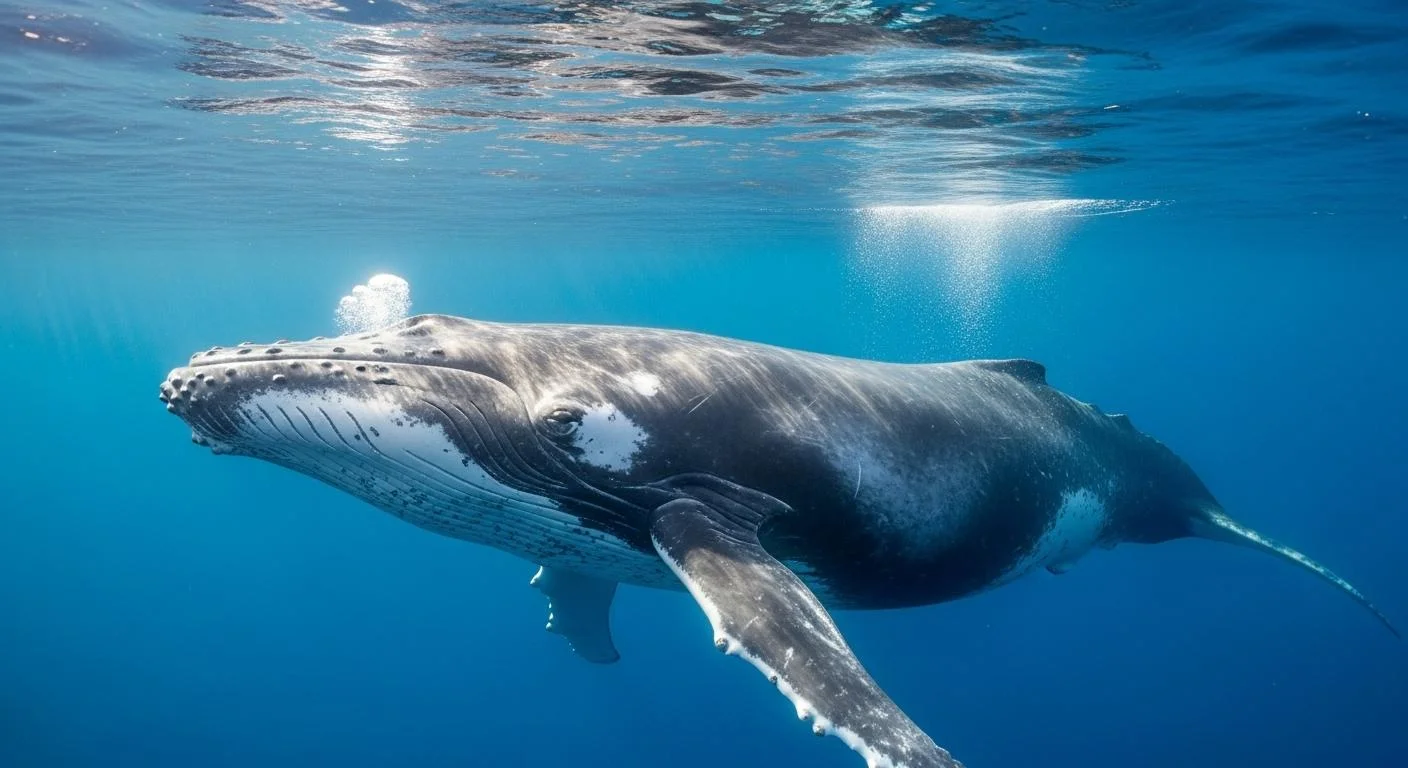
The sea air saturates your nostrils, you catch the dull breath of a cetacean breaking the surface. Nothing escapes your gaze, not even the fragility of a sea monster. On February 19, emotion surges, the celebration rises. Have you felt it before? This peak of mobilization, this global union for preservation. International Whale Day responds to a very real urgency: if nothing changes, these giants will fade away. Do you think it only happens to others? You've just touched on the reality.
The significance of International Whale Day, a movement on February 19
Do you hold the thread of February 19? It's not just a date, it's a shockwave across the planet.
The history of this mobilization, why honor this February 19?
It all began in 1980, on the volcanic lands of Maui. Greg Kauffman, a fearless biologist, founded the Pacific Whale Foundation. His observation: a brutal decline of the humpback whale. Whaling, fueled by Japanese and Norwegian demand, devastates populations, beaches fill with carcasses from New Zealand to Chile. Kauffman does not remain silent. He rallies, ignites the fuse. The UN, IUCN, and IFAW take over. February 19 comes at the right time, aligning with the birthing season and major migratory routes. International Whale Day is over forty years old today. It aims for the essential: to prevent extinction. While it all started with the humpback species, the event now encompasses all cetaceans. Do you hear that primal song in February, from one continent to another?
The main objectives of February 19, what remains to be accomplished?
Several missions are essential. Raise awareness among all audiences, without exclusion. You read posters in the streets, you take your children to activities, you engage in conversations at school pick-up. Workshops multiply, films loop, debates even invite themselves where the ocean does not exist. You become the strong link, education makes you the guardian of the message. International Whale Day also means concrete actions. Sharing content, signing a petition, spreading the word on social media, every impulse influences whaling and the protection of marine life. No one remains isolated in this adventure. February 19, 2025 is already on the horizon, what will you attempt?
Whales, species diversity, their roles, the threats in 2025
What makes these animals command so much respect? Eyes turn to the ocean, media abound with alerts, the public mobilizes?
The species involved in the global mobilization and where to observe them?
| Scientific Name | IUCN Status | Distribution Area | Estimated Population |
|---|---|---|---|
| Blue Whale (Balaenoptera musculus) | Endangered | Atlantic, Indian, Pacific Oceans | 10,000-25,000 |
| Humpback Whale (Megaptera novaeangliae) | Least Concern | Coastal and oceanic sections | 84,000 |
| Common Fin Whale (Balaenoptera physalus) | Vulnerable | World Oceans, especially temperate | 100,000 |
| Gray Whale (Eschrichtius robustus) | Data Deficient | North Pacific | About 20,000 |
The figure that shakes everything, the blue whale never really recovers. The IUCN fights against extinction, its population lags far behind the common fin whale. Around the globe, disparities strike. There is no ocean without mystery, no bay without surprise. International Whale Day sheds light on these nuances, reaching out to help you understand and take action.
The ecological role of whales, how do they influence ocean life?
What is the role of a whale in the ecosystem? Stanford University reveals in its studies that whales shape the carbon cycle at sea. Their breath, their migrations, each descent into the abyss disperses nutrients, gold for micro-plants. Iron and carbon move from one corner to another, the consequences ripple through all marine life. You are surprised, aren't you? When whales disappear, all species falter. The reservoir of food for dolphins, sharks, turtles, everything declines. Local fishermen follow cetaceans because they prepare the entire terrain; lift your head and consent: no whale, no food abundance.
Without their action, what will we lose tomorrow if February 19 sinks into oblivion?
The threats to whales in 2025, why is mobilization still vital?
| Threat | Main Impact | Actions to Pursue |
|---|---|---|
| Hunting and Overfishing | Marked reduction in the number of individuals | Enforcement of international moratoriums |
| Plastic and Noise Pollution | Tissue degradation, loss of bearings | Reduction of pollutants, cleanup operations |
| Collisions with Ships | Significant mortality of cetaceans | Creation of protected navigation corridors |
| Climate Change | Changes in migrations and food resources | Coordinated research, local planning |
Do you visualize the stakes? Despite the actions of the International Court of Justice, some states persist, hunting continues. Waste accumulates, sonars disrupt the songs of whales, and climate alters their routes. On February 19, protest swells, the call survives.
The events of February 19, what the celebration produces each year
Excitement grips associations, museums, emotion overflows. What really happens on that day?
The initiatives around the world, what have you missed?
Energy simmers and explodes in February. Young people participate in workshops, science is showcased in Marseille, beaches in South Africa regain a semblance of cleanliness, a bit of hope. Museums join the dance, aquariums compete with interactive exhibitions. You see divers collecting waste, documentaries flood your news feeds, illustrated stories captivate families. You sometimes feel the piling up of good intentions, but digging deeper, the urgency becomes tangible. Efforts are never quite enough, yet they bear fruit.
One February morning on the Breton coast, the rain lashed faces, "I saw my son cry while picking up a stranded net, he caressed the rough skin of a dead pilot whale, he looked at me, shaken, and told me he wanted to save the whales; that day, I understood that International Whale Day was not just another day but a necessity for our children to still see these living giants," the words of Claire, a volunteer at Oceanopolis, still resonate with all those who invest themselves.
The figures and collectives, who keeps the flame alive?
Greg Kauffman remains a strong symbol, you would hear his name everywhere at the time of the event, the Pacific Whale Foundation multiplies actions, supported by WWF, IFAW, the League for the Protection of Birds, and many others. Local NGOs build a tight-knit fabric, France, Canada, and Australia weave the same web. Influencers join in, Jérôme Bouvier, a former member of Captain Cousteau's team, captivates on video platforms, biologist Océane Le Texier creates excitement that day. Parents and teachers, decision-makers, no longer remain spectators, mobilization gnaws at all sectors. International Whale Day lives through this deep-rooted commitment.
Ways to act, moving beyond February 19, engaging all year round
Did you think everything rested on a spotlight moment? No, the momentum follows you, even outside the calendar. How to participate all year round?
Responsible actions, what will you adopt?
- Reduce plastic consumption, every less packaging counts
- Favor sustainable fishing practices and evolve purchasing habits
- Raise awareness in your surroundings, your neighborhood, your children; passing on knowledge becomes the rule
- Participate in beach clean-ups or report a stranded animal; every minute counts
Everyone becomes a defender, for a day or a lifetime. Associations fill schools, communities carry the torch, the spirit born in 1980 weaves into daily choices.
Resources and channels for tailored engagement, where do you draw from?
| Resource | Link | Type of Action |
|---|---|---|
| French Office for Biodiversity (OFB) | https://www.ofb.gouv.fr/ | Information, official campaigns, events |
| Pacific Whale Foundation | https://www.pacificwhale.org/ | Commitments, training, volunteer programs |
| Cap Corse Marine Nature Park | https://parc-marin-cap-corse-agriate.fr/ | Field outings, reporting, and citizen education |
| World-Day.com/Whale | https://www.journee-mondiale.com/396/journee-internationale-de-la-baleine.htm | Complete agenda, media partners, and open workshops |
The right information, the real contact, the right resource, that's what matters in 2025. The OFB website is full of in-depth files, the Pacific Whale Foundation directs towards concrete action, and marine nature parks offer events where hands engage, eyes connect, and voices carry. You find no excuse; everything organizes around a collective engine. International Whale Day is not confined to a box; it breathes commitment, cultivating a permanent vigilance.
Look, the wind pushes a white breath to the horizon. Do you feel this emotion, hidden behind the spectacle? February 19 does not claim the planet; the sea circulates, it offers, it shares. Will you consent to lose everything if one day this sea becomes silent? Whales return, simply posing the question. No one stops to answer; is February 19 just a starting point?