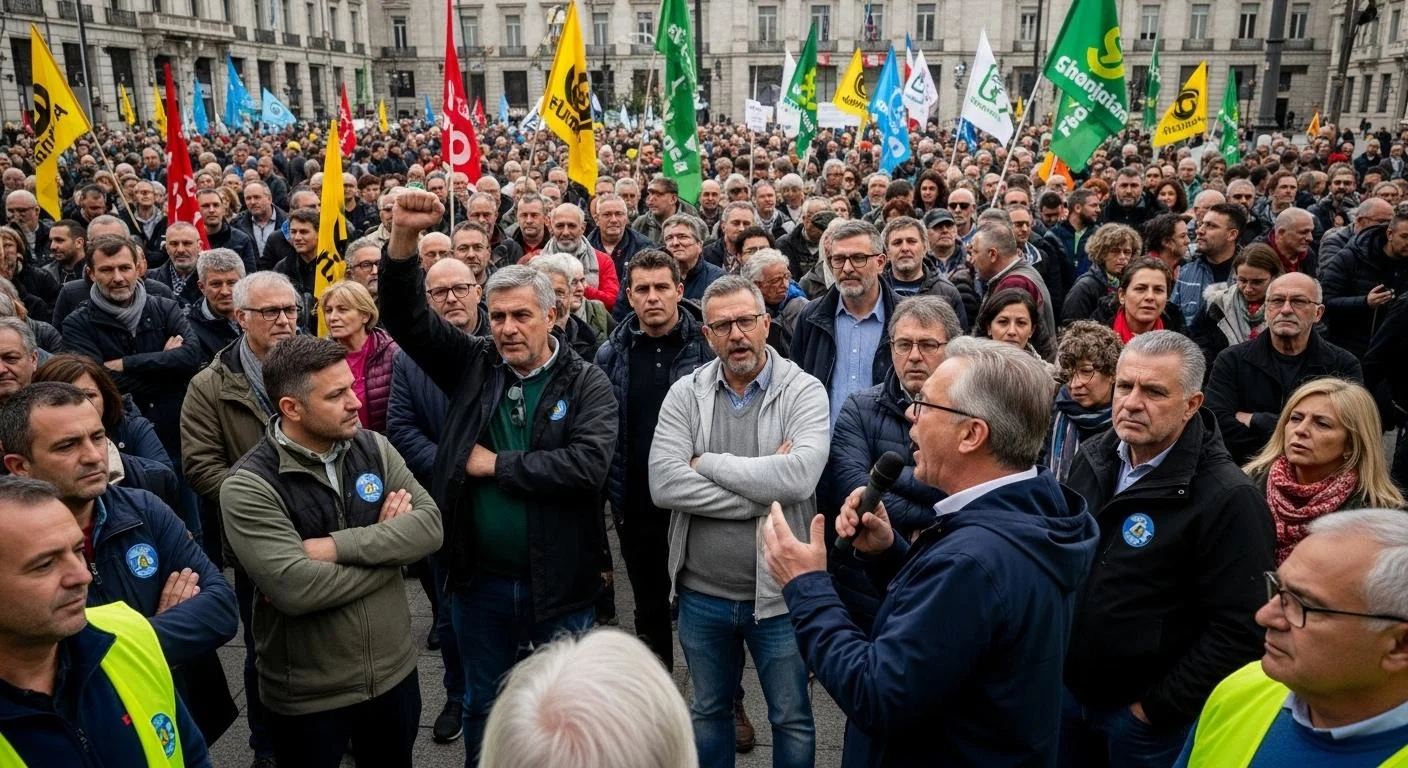
February 18 has established itself, year after year, on the militant and civic calendar. Do you count in the world of work? You inevitably feel this date that resonates, that shakes indifference. World Action Day in favor of the right to strike no longer slips under the carpet; it asserts its presence everywhere, without erasing memory. No, it does not only concern the burned-out heads of unions. This day has succeeded in federating, in establishing itself in the agenda of those who sometimes doubt the real scope of union struggles. So, what does this February 18 really bring to workers? From now on, you hold the answer: the flame of trade union solidarity does not waver; it spreads. This is how a minority event shakes the entire planet.
The Meaning of World Action Day in Favor of the Right to Strike
World Action Day in favor of the right to strike suspends the usual discussion time to impose a common cry. It acts, questions, and sometimes disturbs. In 2025, this meeting will expand well beyond union walls. The International Labour Organization, the International Trade Union Confederation, the European Trade Union Confederation, all resist the gradual erosion of this inalienable right.
The International Context, What Reality of the Right to Strike?
Since 1919 with the International Labour Organization, the defense of this freedom has never ceased to occupy the ground of social battles. Of course, public power dynamics never sleep. Sometimes, it only takes a political tremor for the right to strike to retreat brutally. Does the union scene boil down to dusty debates? No, just look at NGOs, citizen groups; they all converge. This world day takes root in the tension of 2012, when governments dared to challenge the interpretation of the famous article 87. Since this showdown, mobilization no longer targets just one group or region. Each country reinvents, in its own measure, the truly global trade union defense.
The Importance of February 18, Why This Date?
Would you have bet on another day? Not this time. In 2015, debates within the Committee on Trade Union Freedom intensified, the ILO decided: this current of February will officially mark the struggle for the right to strike. Since then, this date has imposed itself, cementing mobilization everywhere. Conferences, assemblies, press releases, field or digital actions, nothing stops during this period. Why this sudden effervescence on February 18? Because challenges do not disappear with a wave of the hand. It is this meeting that channels attention, amplifies every voice. Social networks vibrate as soon as the hashtag #WorldActionDayRightToStrike spreads, revealing the depth of the feeling of injustice. 60 countries sometimes respond. An unexpected snowball effect, civil society seizes it with renewed vigor.
Contemporary Issues of the Right to Strike in the World
Some dates run, others rise. February 18 rises higher; it sometimes worries authorities or reassures those who feel isolated. At a time when the world of work is tense, the strike crystallizes fear and hope. No sector escapes pressure.
The Major Challenges Faced by Workers
The right to strike is resistance against oppressive laws. Have you noticed the multiplication of restrictions in transport, health, and so-called essential sectors? Some governments speak of public order, of national interest, but what do these arguments tell workers in Egypt, Turkey, or Bangladesh? Criminal sanctions, expedited dismissals, sometimes even prison. Amnesty International recorded 108 arrests in 2022 in the MENA region, just for work stoppages. Workers pay a heavy price; they face indifference or fear. So why does this February 18 resonate so much across all latitudes? The issue transcends cultural distinctions. When a voice rises, it shakes established patterns.
Advancements and Hopes Driven by Trade Union Dynamics
Does everything stop at repression? Clearly not. Unions do not relent. The ILO fuels dialogues, negotiations gain momentum, and in 2025, a 12 percent increase in collective agreements on the right to strike shakes emerging countries. A judicial victory occurs in the United Kingdom, where the Supreme Court imposes the primacy of the strike against anti-union constraints. On the African continent, February 18 federates new momentum. Petitions and webinars explode, walls crack, solidarity no longer knows borders.
Key Dates and Figures in the Conquest of the Right to Strike
February 18 does not emerge from nowhere; it draws from a history marked by crises and conquests.
Major Historical Moments in Favor of the Right to Strike
| Date | Event | Location | Key Actors |
|---|---|---|---|
| 1884 | Statutory recognition of the right to strike for the first time | France | Labor movement |
| 1919 | Foundation of the ILO with integrated defense of the right to strike | Geneva | Signatory states, unions |
| 1948 | Adoption of the Universal Declaration of Human Rights | UN | International delegates |
| 2015 | Official recognition of February 18 as World Action Day for the Right to Strike | International | ILO, ITUC |
The struggles of the 19th century continue relentlessly; repressions, major crises, and wars shift the lines. The succession of international texts strengthens this foundation, certainly, but nothing spares sudden setbacks. February 18, a "late appointment"? Let's say rather a symbol that imposes itself, through raised arms, voices that do not yield.
The Women and Men of the Global Trade Union Movement
Guy Ryder, Sharan Burrow, Luc Triangle, Mary Kay Henry… Do you recognize these names? Some shape institutions, others galvanize crowds through engaging speeches. The ILO, the ITUC, regional networks relay the struggle in 60 countries or more. Human anchoring makes all the difference. Individual energies stir a militant fabric of unparalleled richness. Every February 18, these faces slip into the militant mosaic. It is impossible to separate the individual fight from the collective breath.
The February 18 Demonstrations Around the World
February 18 is not invented in an office; it is rooted in reality and expressed, depending on the regions, through a diversity of unexpected initiatives.
The Key Actions of February 18, Region by Region
- Coordinated strikes in the transport and health sectors, especially in Europe
- Movements for social justice, public readings of motions, and massive gatherings in Africa
- Intensive communication campaigns and associative relays in the Americas
Sometimes you observe the birth of ephemeral alliances, the emergence of spontaneous mobilizations. February 18, a simple date? No, a launching pad for all excesses, all solidarities. Nothing breaks the momentum of February 18, not even the variety of methods.
The Digital Initiatives and the Virality of the Trade Union Struggle?
World Action Day in favor of the right to strike also invades social networks. Twitter, Instagram, a like, a shared message… and suddenly the struggle overflows where the press closes the floodgates. Facebook lives, podcasts, webinars shake up censorship zones. The digital age extends the trade union struggle, connecting the North to the South, the East to the West. Are you hesitating to click? A simple gesture, sometimes, breaks the solitude of a striker on the other side of the world.
In this airport corridor bathed in artificial light, Marie clutches her banner, face tense. "I thought about giving up," she recounts. "The fear of punishment, the fear of emptiness, fatigue, everything seemed to hold me back. But on February 18, the messages on social networks, the words of unknown colleagues carried me. I did not bend. A gesture, a raised hand, was enough for me to feel joined. "
Perspectives to Strengthen the Exercise of the Right to Strike
World Action Day on February 18 also raises the question of what comes next. What if everything depended on continuity?
Priority Actions for Institutions, How to Move Forward?
NGOs, unions, states, all agree on one idea: the legal arsenal does not strengthen itself. Discussions with decision-makers, citizen mobilization, legislative developments… everything remains on the table. The creation of mutual aid funds, the structuring of international alliances constitute the next step. The year 2025 promises to be eventful; February 18 gains more weight. The dialogue will not stop vibrating as long as the repressive threat persists.
Resources and Tools for Clarity
Do you want to delve deeper? The publications of the ILO, the annual reports of the Global Rights Index, the website of the Ministry of Labor, or Vie-publique.fr offer a precise mapping of the developments of the right to strike. Specialized works such as "The Right to Strike, Genesis and Perspectives" by Bernard Bossu, reports from the ITUC, all contribute to the development of a collective culture. Documentation evolves; it structures the hope of February 18, preparing the ground for mobilization in the years to come.
Are you taking a deep breath? This day touches much broader circles than those of the initiated. No matter the sector or geography, World Action Day in favor of the right to strike challenges immobility. You will never be alone, nor silent, as long as this date resonates across the entire planet. Commitment is sometimes crafted through social networks, sometimes in the streets, but no one leaves unscathed from an intensely experienced February 18.