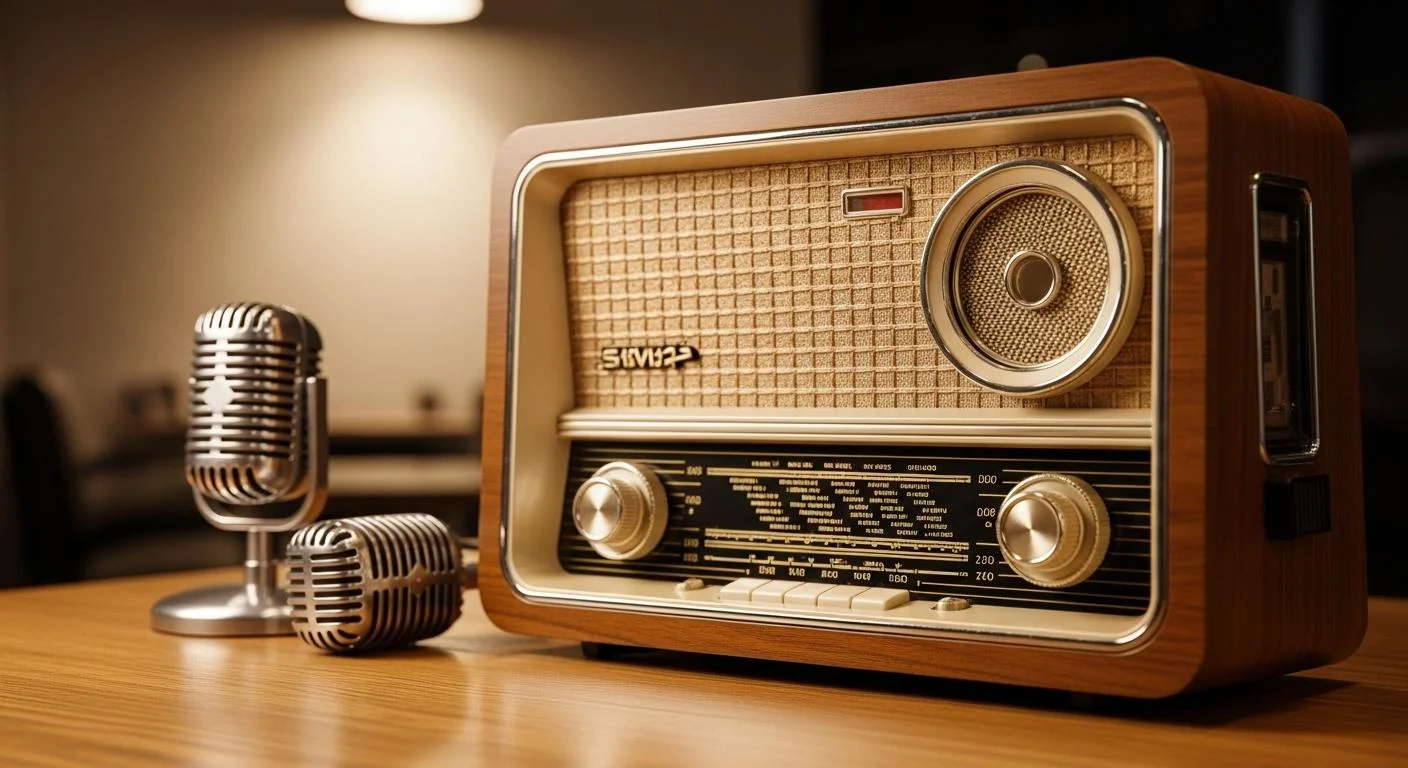
It is impossible to ignore the date of February 13, which is now inscribed in the international calendar, a moment when radio asserts itself in public space. You turn on your radio, you perceive a connection, a companionship, rarely equaled. So, why still honor this media in 2025? Because radio does not fade away; it adapts, it unites, it reassures, it sings, it sometimes shouts, it is embedded in our memories. The event does not disappear; it renews itself; every February 13 clings on, takes root. Here is World Radio Day, still standing against the digital tide.
The significance of World Radio Day and the importance of the date February 13
When the presenter’s voice fills the room at dawn, World Radio Day resonates with a universal echo. This gathering, far from being a mere ritual, anchors a tradition, recalls a social revolution, and pays tribute to a media that has traversed all mutations. Take a moment to ask yourself what this date represents for so many generations, what memories does radio revive?
The historical origin and significance of February 13 in the world
Where to go back to grasp the meaning of this rendezvous? On February 13, United Nations Radio addresses the world for the first time in 1946. This first broadcast lays a stone in the history of media. In 2011, UNESCO adopts the idea, the UN General Assembly follows in 2012. Since then, the event has traversed the years, reminding us of the initial vocation of radio media, its ability to connect both the anonymous and the Powerful.
February 13 asserts itself, as an obvious fact, it does not respond to chance, it bears the traces of a shared history.
This particular day carries within its frequency the ambition to bring peoples closer together, year after year, across all continents. International institutions emphasize in their archives, it is not a hollow symbol; radio still plays its role as a mediator, even in the era of ultra-personalization.
The ambitions and global influence of this event, why this choice?
The media scene is not lacking in official days, so why choose this one? It is primarily about supporting the diversity of voices, making visible the plurality and universality of information. You reflect on what radio, in its multiple forms, brings to your daily life. Waves have no borders, they sometimes circumvent prohibitions, they serve as a tool for dialogue even in emergencies. Freedom of expression, this vague promise on the Internet, has a different flavor on radio waves. You are part of this global community without even moving from your home.
Celebrating radio is asserting its relevance, even in a chaotic digital ecosystem..
The evolution of radio today, between heritage and digital challenges
Television hypnotizes you, the Internet absorbs your time, and yet radio always finds its place. You think you have left it behind, it catches up with you in the car, or by the bedside, it comes to keep you company when the screens saturate.
The current positioning of radio in relation to audiovisual and all-digital
Radio occupies an intermediary zone, neither entirely in competition nor entirely on the sidelines. Information remains immediate, tangible, credible. In isolated villages, in areas without Internet, in emergencies or during natural disasters, radio makes the connection. Local weather reports land in homes thanks to portable radios, the media withstands outages, which television or the web do not always ensure.
Who has ever let themselves be rocked by a special program on February 13, feeling that collective pride, that little thrill of being part of a global movement?
| Usage | Radio | Television | Internet |
|---|---|---|---|
| Mobile access | Very simple | Limited | Variable |
| Emergency consumption | Essential | Fragile | Often unavailable without a network |
| Local voice | Enhances its strength | Less present | Diluted |
UNESCO, in its annual observations, specifies that radio remains much more resistant to interruptions than its digital rivals. The figures? More than 70% of the global population still has access to it every week according to the International Telecommunication Union, year 2021. This media does not abandon the scene. You adopt it without even thinking, as background noise, like an old reflex that reassures..
Technological advances and new uses related to radio, where are we going?
Gone is the single family radio, radio migrates to smartphones, travels on public transport. The metamorphosis accelerates. Podcasts are becoming widespread, the relationship between listener and host becomes almost intimate, personalized. Apps follow everywhere, a radio show can now be listened to on replay. Streaming audio blurs the boundaries, where does radio begin, where does the podcast end, where do playlists stop?
Digital radio, like DAB+, brings clarity, interactivity, increased possibilities, sometimes unsuspected. The French? According to Médiamétrie, more than 90% listen to the radio weekly, one in six via streaming or podcast. This is enough to challenge preconceived ideas.
February 13 no longer just celebrates a memory, it points to this permanent laboratory, this sound experimentation ground..
Someone, somewhere, picks up a microphone for the very first time during a radio workshop in February 2023, in Marseille. The words tremble, but resonate. A parent watches, moved, as their child opens up, shaking off shyness. “Radio gives courage, voice, today, he discovered that he could really express himself.” The emotion leaves the studio, the memory remains etched.
On February 13, radio brings depth to ordinary destinies..
The fundamental orientations addressed during World Radio Day
Over time, the celebration takes on unexpected dimensions, driven by the most pressing current events. Diversity, climate urgency, or peace become the guiding threads from one edition to the next. This day anchors radio in today’s world, gives a voice to the forgotten, raises real debates on digital transformation, the place of citizen speech, the management of health or social crises.
The global themes and annual campaigns, what do we remember?
Since 2021, UNESCO’s official campaigns have focused on sometimes unexpected topics: innovation, trust, resilience, peace, or solidarity. Each of these axes resonates with a specific reality. You surely recognize references to the fight against warming, to the question of pluralism, or to radio’s ability to maintain social ties during turbulent times. Debates often revolve around a significant topic. You may have experienced it during an epidemic, a weather alert, or a conflict: radio, simply, relays the voice of those who are heard nowhere else.
| Year | Theme | Main message |
|---|---|---|
| 2021 | New world, new radio | Innovation and cooperation |
| 2022 | Trust in radio | Ethics and social impact |
| 2023 | Peace and freedom | Pluralism of voices |
| 2024 | Social role during crises | Solidarity and information |
| 2025 | Climate change and resilience | Action for the planet |
The background remains stable, but each year, radio proves its responsiveness, its ability to anchor itself in global current events. No one decides the topic in advance, no one masters the wave, and radio loves that unpredictability.
The events and activities on February 13? Diversity in action
The program is never fixed during this revisited World Radio Day. Some young people discover the magic of a microphone, in their school or neighborhood; others listen to their first collaborative show between several countries; writing workshops animate schools; spontaneous debates arise in community radios.
The word circulates, youthful voices emerge, radio becomes a tool for collective emancipation..
- School or community radio workshops
- Live international debates
- Community radio projects with testimonies
The NGO Reporters Without Borders emphasizes, particularly in Africa, the impact of radio in areas excluded from the web. This event sheds light on the issue of local democracy. Several public stations take the opportunity to open their doors, invite former foreign journalists, and multiply Q&A sessions. Diversity, this time, is heard, lived, and fully expressed..
The prospects for radio, what challenges and hopes in 2025?
Nothing is ever guaranteed in this universe. Platforms compete for originality, new formats attract, habits fade. Young people seek new, fast, customized content; loyalty to the old is waning. Innovation no longer functions as a gadget, it asserts itself, propelling World Radio Day towards a new youth. Decision-makers, on the other hand, manage the shift: artificial intelligence penetrates the waves, topics adapt, narratives are invented live. Native podcasting invades the scene, interactivity becomes the rule, not the exception. UNESCO’s data, at the global level, sets the bar: more than 44% of stations are attempting to transform towards digital, nearly a third seeks to expand its content and formats.
Radio does not escape the revolution, but it resists, reinvents itself, reacts..
The chances of universal access to information, radio for all?
Solar-powered radios in villages in the Sahel, radio education projects in São Paulo, spontaneous partnerships in reconstruction areas, reality surpasses fiction. This world day calls for solidarity. Distributing adapted radios, training in sound production, ensuring translation and accessibility have become priorities. Even devices for the visually impaired are developing; radio opens up without reserve to everyone, regardless of linguistic or material barriers. Here is a media that forgets no one.
The right to hear, to be heard, to listen, naturally imposes itself as a shared universal demand..
So, does radio, that forgotten device on the shelf or the app in your pocket, still hold its power? You choose whether it continues to rhythm your mornings, to connect you to the rest of the world, to grant you a moment of reflection, intimacy, or simply companionship..