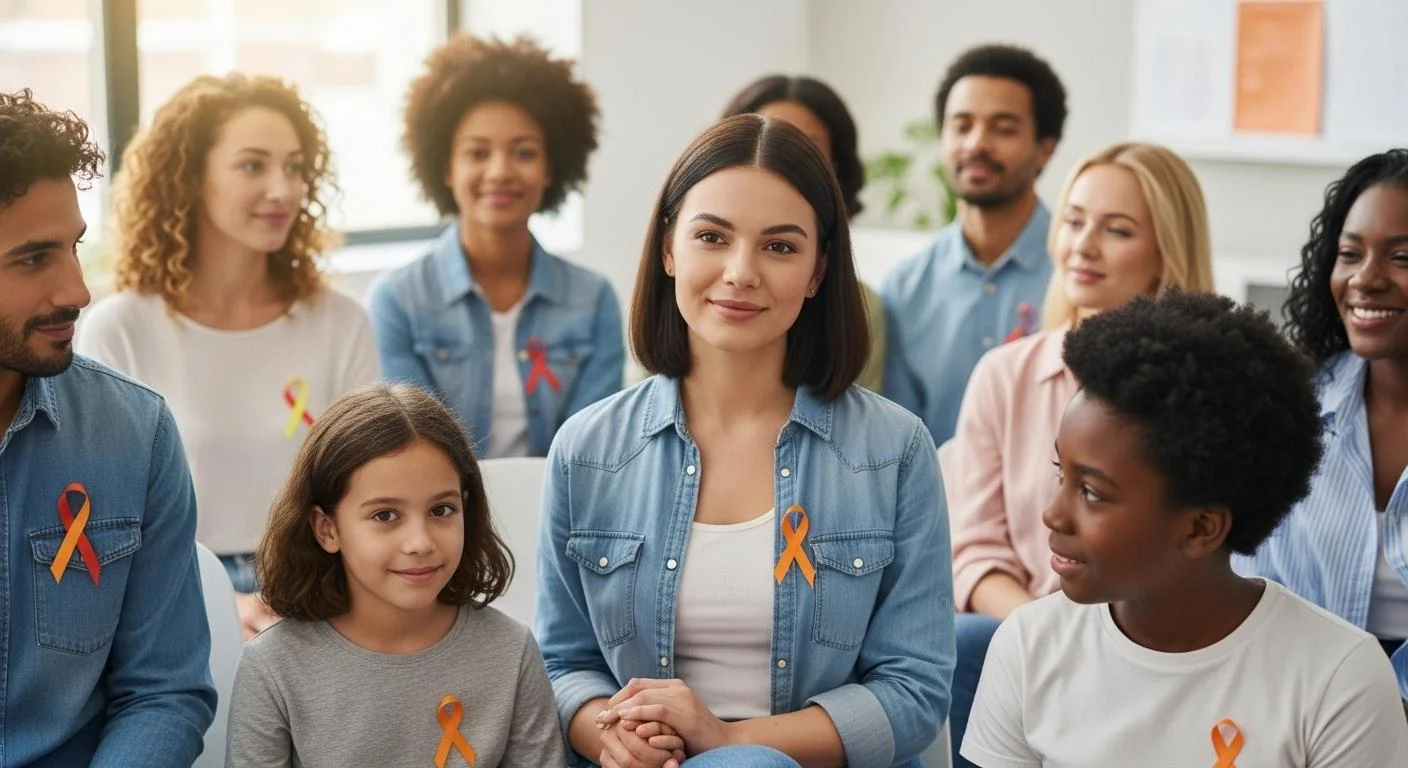
February 28 changes the ordinary. This date aligns the focus on these pathologies that shatter lives but unexpectedly unite patients, families, and caregivers around a global cause. You feel the wave passing, you grasp the strength of this global mobilization; it is not just another day marked on the calendar. It is the moment when invisibility ceases, when solidarity rises, even if it unfolds against a backdrop of silence far too often. The answer to the question in the title? It is indeed this February 28, every year, that everyone gathers to break the indifference surrounding rare diseases.
International Rare Disease Day, what date really makes sense?
Nothing is left to chance; you notice the duality of the date, sometimes February 28, sometimes February 29; it all depends on the calendar. This peculiarity catches and disturbs, while families around the world count the days outside the standards. No one decides out of habit; no, we follow the rhythm of rarity. Social networks buzz, slogans circulate, one voice, an echo, even in places where everything is usually silent.
The symbol of February 28, why does this date resonate so much with the public?
You immediately feel the effect of February 28. This strange sensation that everyone shares deep down, of being both together and out of sync. Associations prepare for this day, children post messages on Facebook, parents cling to the event. It is neither a ceremony nor a simulation of unity; it is a cry, rare as well, that crosses continents. The leap year shifts the date to the 29th, reinforcing this idea of exception. It brings a smile, but it hits hard. It also makes you think. Have you ever felt that little disturbance in front of something that always escapes a bit? This February 28 never comes back quite the same. In 2025, it returns, it questions, and it rallies voices that were previously unaware of each other.
The global expansion since the first impulse
No one expected the dynamic to gain such momentum. Since the European initiative in 2008, the “International Rare Disease Day” now attracts attention well beyond the borders of Europe. France takes up the challenge, then Italy, then Canada. Quickly, you encounter signs of support in Japan, Africa, on almost every continent. Conferences multiply, media campaigns emerge, science sometimes advances under the pressure of this unusual calendar.
You wonder how many people really follow this mobilization? Hard to measure. But no one forgets the driving role of France or the commitment recognized by the WHO. The story weaves itself year by year, with memories that remain etched or fade, depending on the battles won or lost. Deep down, it is the determination that never wavers.
Rare diseases in the healthcare landscape, how many, who, why?
You enter into complexity; it is not just a question of diagnosis. Europe sets the rule, France follows: it takes less than one in two thousand to speak of a rare disease. You have heard of cystic fibrosis or sickle cell disease, names that we remember for their uniqueness. But how many escape the conversation? Rare conditions exceed 7,000 today, a staggering figure, a string of unimaginable stories.
The rare condition, where to place the boundary?
It remains difficult to put simple words on this plurality. Sometimes, a disease affects a thousand people; elsewhere, fewer than a hundred. Genetic or autoimmune secrets blur the picture. Each disease disrupts entire families, the balance of daily life explodes, medical language searches for itself, time stretches in the wait for a name.
The medical odyssey imposes itself, sometimes for years, while society watches, powerless, the crossing of a labyrinth. Landmarks disappear, adaptations become the norm.
The realities, what numbers to understand?
| Geographical Area | Number of Affected People | Diagnosis Rate | Access to Specific Treatment |
|---|---|---|---|
| France | 3 million | 25 to 40% depending on the conditions | About 5% |
| World | 350 million | Less than 50% | About 5% |
You read it right, 3 million people in France, 350 million on the planet; these figures command respect, they strike the mind. Barely one in twenty benefits from a specific treatment; a chasm separates medical innovation from the reality of a family lost in waiting for an adapted solution.
No one dreams out loud, but everyone hopes. Neonatologists have been refining screening since 2024, more children identified, but everything remains fragile. The road is still long; the battle is replayed in consultations and behind the screens of association networks.
The objectives of the mobilization on February 28 in the healthcare world
The objective is not only written in institutional programs; it seeps into family discussions and hospital corridors. This day does not just raise awareness; it triggers debates, provokes alliances, even upsets some taboos that no one wanted to see. Changing perspectives, intensifying mobilization, capturing the sometimes too scattered attention of journalists, is the ongoing challenge.
The importance of shared commitment, where do the real battles take place?
Associations and families enter the arena; they force the agenda of ministries or institutes. Research does not advance on its own; it finds support in these one-day campaigns, in the public interventions of patients suddenly brought to light. The idea is: it is impossible to ignore the impact of February 28; everyone sits at the same table to share experiences and projects.
- To evolve the representation of rare diseases in the media
- To establish cross-border solidarity between patients, doctors, and associations
- To generate renewed hope through advances in medical research
The advances and obstacles since the first edition, where to place the cursor?
| Advances | Obstacles |
|---|---|
| Increased funding in research | Care inequalities across the territory |
| Better diagnosis thanks to increased neonatal screening | Strongly present medical odyssey |
| Strengthened associative support throughout the year | Few truly available educational resources |
Victory exists in the progress of screening or the increase in research budgets, but the medical journey still resembles an obstacle course; loneliness gnaws at some households, and triumph sometimes seems modest. Expert centers share this nuanced observation each year, between pride and the hope for better days.
The roles and impacts of associations, structures, and events on February 28
The strength of the collective is reflected in the mobilization of associations, but also in the real impact on care. EURORDIS, AFM-Téléthon, Alliance Maladies Rares; these names circulate during discussions, but what is their real weight?
The structures and groupings on the front line, who supports whom?
You often see the acronyms without necessarily visualizing all the foundational work. These groups structure the daily struggle, build campaign dynamics, sometimes call out a government that drags its feet. Reference centers – supported by the State – relay the coordination of care pathways and impose a method where everyone eventually finds their place.
“At 17, Aurélie thought she would remain all her life in the shadow of an unknown diagnosis. This February 28, she stood on stage, panicked, in front of two hundred people. After her few words, applause resonates. Tears rise. At the end of the day, a teenager approaches, hand on her shoulder: I also want to believe that I am no longer seen as a curiosity. This contact changed more than words. An invisible community, shining with solidarity.”
The significant initiatives of February 28, where does the mobilization express itself?
On the day, everything moves. Some hospitals open their doors, scientists hold conferences, students launch flash mobs. The digital space fills with hashtags, the public space vibrates with testimonies that are displayed. Journalists echo the words of researchers or anonymous children; families emerge from isolation, and the news temporarily aligns with this collective cause. Life then takes on a different meaning; dialogue with professionals establishes itself; the barriers between expert and patient fall a little. This event, even if momentary, breaks anonymity and connects the most solitary experiences.
The medical and human perspectives in 2025, where are we going?
Some recent advances have frankly reassured families. The fields of gene therapy are accelerating; some so-called orphan drugs are finally going through the long approval process. Rare platforms are multiplying across France. New networks, via Maladies Rares Info Services, simplify file transfers, guide families lost in the healthcare complexity. Innovation remains discreet, but it no longer really stops. The epidemic of hope takes precedence over fatalism.
The persistent challenges, should we fear routine after February 28?
Nothing seems guaranteed. You feel the weariness rising in the face of diagnostic delays, unfulfilled promises, poorly adapted schooling, or treatments blocked by endless procedures. The breath of February 28 is not enough; stakeholders demand a prolonged agenda, a permanent listening ear. The question arises again after each edition: how to anchor this fleeting solidarity in the reality of daily life? Inspiration exists in everyone; the solution may go beyond the medical framework alone.
Ultimately, this February 28, everything comes together in a cohort of gestures, words, and appointments that go beyond just one day to carry, all year long, the voice of those whom statistics often forget. Renewal is not improvised; it is built, patient by patient, dialogue by dialogue. The community may be inventing itself here, before your eyes, one voice at a time.