There are dates that disturb, that remind the present of yesterday's struggles. Here comes December 14, which returns, not so trivial after all. Do you see it? A day that allows for no indifference, neither in memory nor in action. The International Day Against Colonialism in All Its Forms and Manifestations marks a collective appointment, set in the midst of current events, every year, to make the struggles against all forms of domination heard, to shed light on history, to awaken consciousness. This December 14, we will not forget it, really.
The Anchoring of December 14 in Contemporary Consciousness
Sometimes a question arises: where does the strength of this date come from, why does this day bring people together? It is not trivial, it is not a random box on the calendar. The uniqueness of December 14 asserts itself.
The Foundations and Objectives of the International Day Against Colonialism, do you know them?
Since 1960, after the adoption of resolution 1514 by the United Nations, the date asserts itself, assuming an extraordinary significance. The text enshrines a principle that has become universal: the right of peoples to self-determination, to break free from the chains of colonialism. Colonialism is not just political; you also feel economic and cultural marks that resist, that still stifle. December 14 concentrates memory, sharpens commitment, insists on vigilance to oppose all traces and forms of domination. A day to inform, transmit, and remind that the wounds of the past never heal on their own, a day to break the silences about legacies.
| Resource | Type | Target Audience |
|---|---|---|
| Independences or New Empires? (Arte) | Documentary | General public |
| The Empire That Does Not Want to Die (Seuil, 2021) | Book | Academics and informed readers |
| Musée du quai Branly Jacques Chirac (Paris) | Permanent and virtual exhibition | Families, students |
| UN Site, Decolonization | Information portal | Citizens, teachers |
December 14 becomes a scene for pedagogies in motion, platforms of ideas, new techniques for raising awareness. Impossible to bypass the profusion of resources and supports. Teachers initiate debates, the media cultivate in-depth files, associations take to the streets and networks. The date does not fit into routine; it shakes things up, it questions, it creates spaces for exchange and confrontation.
The Historical Legacy of Colonialism and the Relevance of Its Forms
You may be wondering: what past does this day force us to confront? In the 19th and 20th centuries, colonization structured the global space. Routes, borders, languages, economies, everything is redrawn in the wake of colonial domination. Europe conquers, administers, controls, but at what cost? Displaced peoples, looted territories, confiscated sovereignty. In 2025, despite international law, 17 regions remain dependent, still classified as non-autonomous according to the UN. History never fully draws the curtain; it invites itself in nuances, sometimes disturbing.
The vocabulary evolves, the notion of neocolonialism emerges. No more armed conquest, but the logics of economic and cultural domination persist. By the way, have you noticed? The debates on the restitution of looted artworks resonate in European museums. The Sarr-Savoy report, updated in 2023, awakens memories in Paris, London, or Brussels. Decolonization struggles to finish; some territories are still agitated: Western Sahara, Palestine, New Caledonia. Time suspended, unfinished page.
Visible Actions and Commitments Around December 14
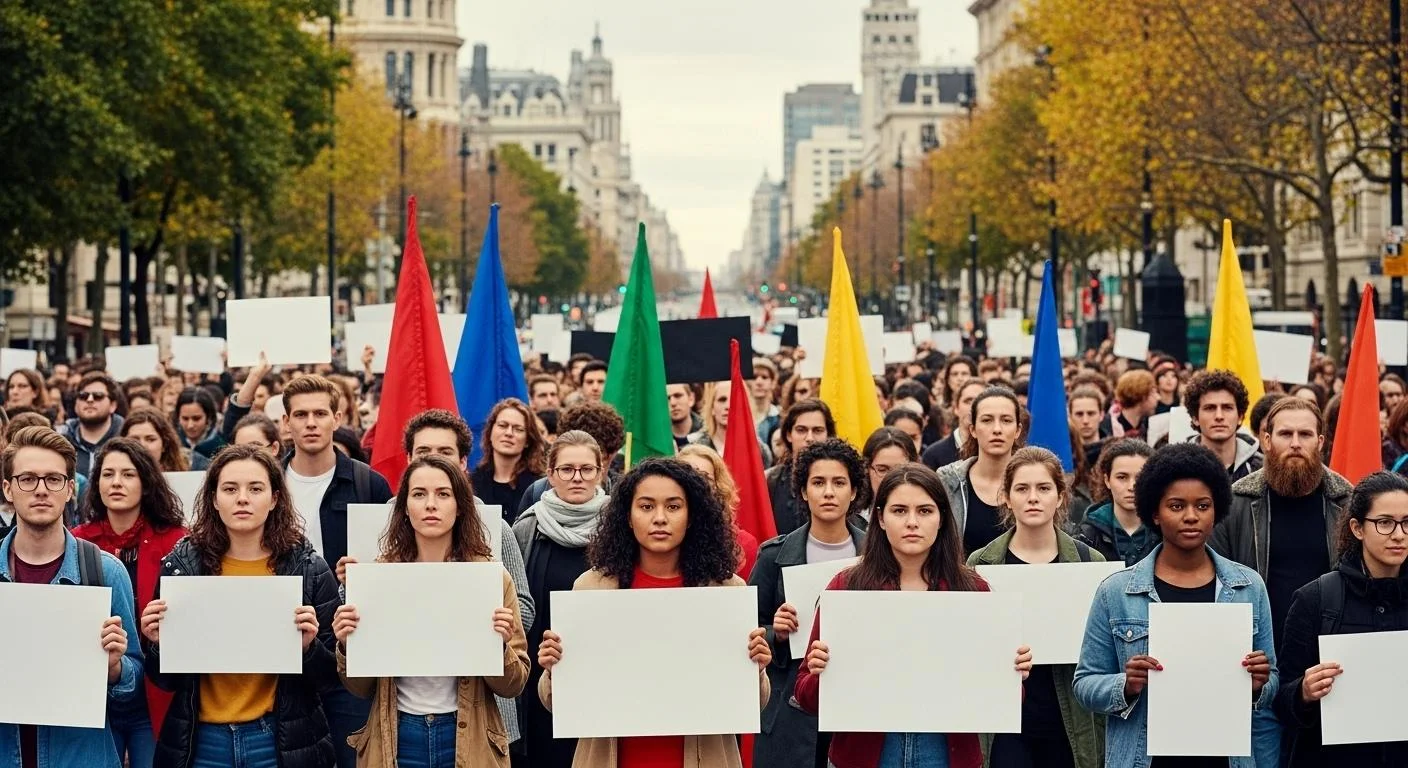
What if we lingered on recent demonstrations? Can we really remain blind to the resonance of this date? Impossible, honestly. December 14 has found its place within institutions and in the streets.
Do you follow the official or associative global initiatives?
In the UN corridors, it is impossible not to perceive the agitation imposed by the International Day Against Colonialism. From Dakar to the amphitheaters of Paris, there are debates, organization, commemoration. António Guterres, the UN Secretary-General, reminds us in December 2023: The legacy of colonialism continues to deepen injustices and tensions on a global scale. The same dialogue is found at the African Union or within viral campaigns on TikTok, Facebook, Twitter.
In Africa, in Dakar, the Panafricanists association federates students and activists behind a citizen march on December 14. Further west, it is the indigenous collectives that take the floor in Latin America. In France, the Foundation for the Memory of Slavery engages with high school students and teachers, workshops supporting lively and vibrant discussions. Universities invent other meeting formats, adapted to younger generations. December 14, with its vitality, releases a breath of resistance.
- The UN multiplies international forums inviting dialogue
- Exhibitions in Paris and Brussels revisit the question of looted artworks
- Campaigns on social networks involve the global youth
Educational Supports and Awareness Campaigns, Effective or Evolving?
Have you already consulted the series “Decolonisations” on France TV Education? More than 1.5 million views later, the subject remains relevant. The hashtag #DecolonialDay, which appeared on social networks, reaches hundreds of thousands of interactions in 2025. The National Library of France promotes its virtual exhibition “Empires,” frequented by many high school students and university students. Pedagogy is asserting itself, gaining ground, digitalizing, adapting, renewing.
In a workshop leading students to the BNF, a history-geography teacher from Marseille reports this:
“Some students thought that colonialism only belonged to textbooks, never to current life. Then they read testimonies, they listen to the words of exiles, and history takes on other colors. A perspective changes, certainties shatter.”
This clearly shows the issue: not to limit teaching to dates, but to force reflection. Awakening also comes through these intimate narratives, exposed, shared. And it’s a good thing if debates sometimes brush against discomfort.
The Current Issues in the Anti-Colonial Struggle, an Endless Debate?
It is not easy to evade the question. Why does all this persist? What is the state of the consequences in 2025? It is in current events, in the economy, almost in every interaction, that the wounds persist.
The Scars and Legacies of Colonialism, Still Present?
Try to visualize a map, the borders, the former colonies, the held territories. The inequalities are glaring. The World Trade Organization no longer ignores it in 2025: over 65% of the least developed countries come from former colonial empires. Guess what? The wealth gaps, literacy rates, the fluctuation of raw materials are not trivial; everything is also explained by these centuries of hegemony. Colonialism leaves its mark on the current geopolitics.
Major European capitals experience tension around the restitution of artworks. In 2023, France delivered 26 objects to Benin, a gesture deemed historic but considered a departure rather than an arrival. This raises questions about justice, about this equity that too often takes years to mature. The voices demanding reparations amplify, never really disappearing in the media din.
Anti-Colonial Actors and Decolonial Movements Today, a New Generation in Action?
Everywhere, collectives emerge, demonstrate, dismantle the weaknesses of an official narrative. Historical examples resurface: the Algerian FLN, the MPLA in Angola, reflections of the past. Today, however, new groups are acting. “Decolonizing the Arts” in Paris organizes participatory exhibitions carrying multiple memories. In Senegal, the movement “Y en a marre” involves youth who refuse to passively accept the colonial legacy.
The digital experience reshuffles the cards, with online petitions gathering more than a million signatures. Universities in Africa and India intensify their research on colonial violence, creating an unprecedented dynamic with UNESCO. All these voices, sometimes discordant, sometimes complementary, nourish a struggle far from being finished. The December 14 day thus becomes a sounding board, a ground where memory, justice, and the present intersect.
The date of December 14 never resembles a peaceful celebration. It questions, it disturbs, it sometimes demands answers. Can we really remain indifferent on this day, amidst commemorations, seminars, marches, and demands? The choice remains: silence or participation. Transmitting this struggle, listening to calls for justice, changing perspectives. No memory without engagement, no transmission without discomfort, no peace without debate. You too, on December 14, move forward with questions, doubts, and refusals to lower arms against forgetfulness.