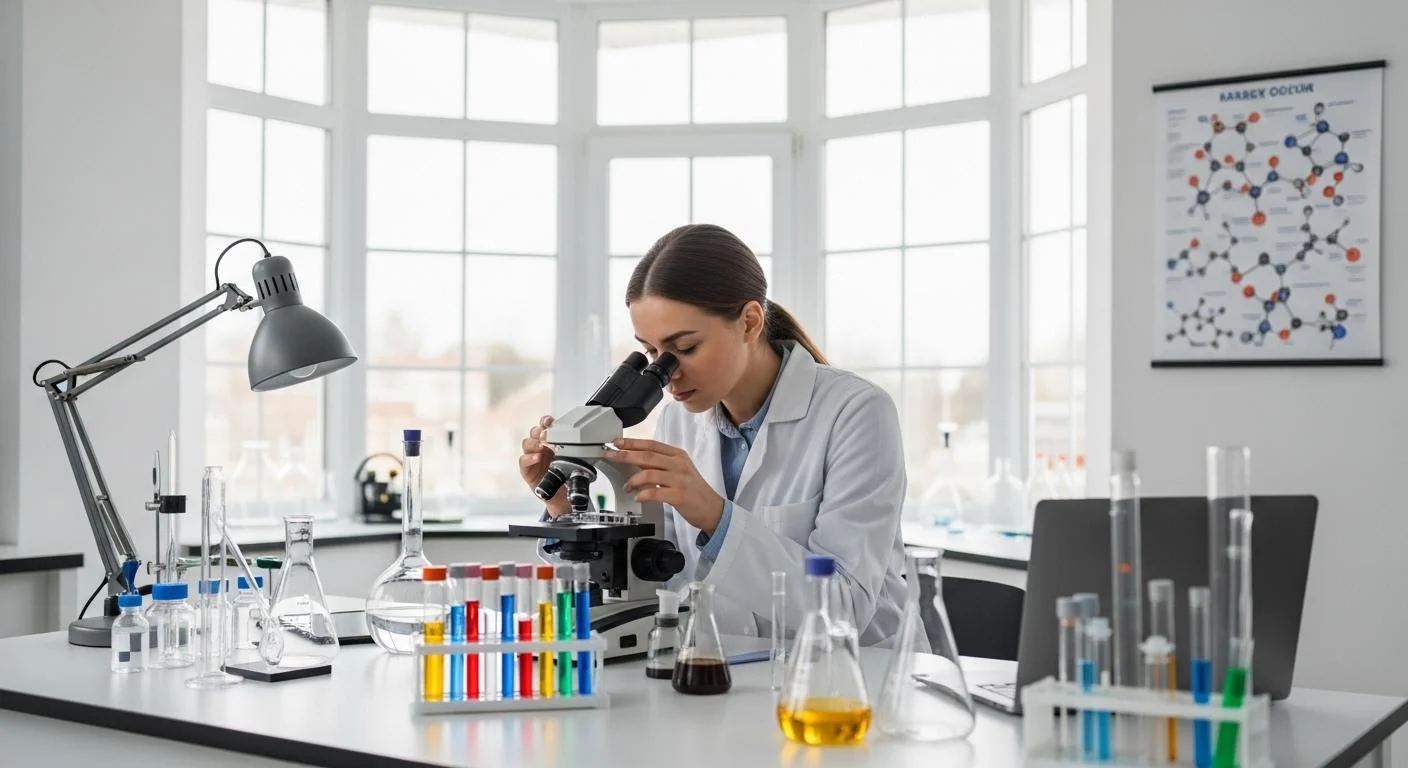
A small pang when hearing a student declare that mathematics lacks interest because, supposedly, it is not suitable for girls Yes, the heart tightens, not only for her but also for all those whom scientific passion attracts and who, nevertheless, feel excluded from laboratories or research teams
You may already know, since 2015, the International Day of Women and Girls in Science seeks to break this glass ceiling that resists In 2025, the gaps remain visible, access, opportunities, recognition, still too unequal Despite talent and boldness On February 11, around the globe, initiatives multiply to change the game and the collective vision, proving that science can only be fully built with diversity
The scope of the International Day of Women and Girls in Science today
History accelerates in 2015 when the UN General Assembly adopts resolution A/RES/70/212 and officially sets the date of February 11 On that day, scientific mobilization takes on new momentum This global impetus sets a course: to pave the way, create momentum, bring together politicians, researchers, associations, and universities
It is repeated, this approach does not stop at a simple spotlight, it plays out in educational choices, the commitment of teachers, support at every step of the scientific journey Do you feel how the symbolism of this day emerges in reality? The figures from UNESCO in 2025 are still unimpressive, only 34% of researchers identify as women Progress is slow, yes, but it is observable
The challenge of today persists, but history moves forward Initiatives, sometimes fragile, already inspire teachers, mentors, and talents
| Milestone | Year | Driving Organization | Factual Consequence |
|---|---|---|---|
| Adoption of resolution A/RES/70/212 | 2015 | UN General Assembly | Official day established |
| First global edition | 2016 | UN and UNESCO | Global mobilization, educational campaigns launched |
| Integration into the school system | 2017 to 2022 | Ministries of Education | Increased mobilization in schools |
| UNESCO interim report | 2025 | UNESCO | Stagnation of the percentage of women in research (33-34 %) |
The message resonates even in places where the female voice is too often silenced Stereotypes are being challenged, the idea of progress has no gender Who do you see in a lab coat or among the laureates of a prestigious award? Mobilization leaves no audience behind Political leaders, businesses, even families intervene to support the success of female students and diversity even in fundamental research Today, multiplying voices, broadening participation in science, technology, engineering, and mathematics is a priority
The genesis and history of February 11
Leading a global event starts discreetly, a handful of diplomats gathered in December 2015 in New York, a resolution signed, everything seems formal and distant UNESCO, UNICEF, the International Union of Pure and Applied Science, all this world unites its commitment
And then the chosen date becomes an annual habit, the machine takes off, the International Day of Women and Girls in Science is displayed on school walls, laboratory sites, social networks come alive The claim slips into the streets, leaves the palaces, is shared
The mobilization grows and quickly understands: to give visibility, to materialize equality, to associate economic actors, the ambition goes further than simple institutionalization No grand evening but a thousand small mornings of campaigns, dialogues, and projects made possible
The objectives and tensions of the current world
You might say, the game is still to be played, nothing is won, nothing is set in stone Fortunately
The global aspiration demands more than incantations Creating vocations matters, but is not enough One must also arm against skepticism, suspicion, the fatigue of old habits Campaigns target both decision-makers and all those who still hesitate Societies that evolve faster take this bet – diversity drives innovation and creativity The gender gap in tech, research, and education is not just a fight for justice but shapes competitiveness and technological future
The urgency reaches ministries, management committees, school benches The International Day of Girls and Women in Science does not go unnoticed as long as old stereotypes linger in speeches and careers
Disruptions and persistent barriers in the sciences
Marie Curie returns to collective memory and leaves little room for indifference or forgetfulness Funny effect, isn’t it? More recently, Emmanuelle Charpentier receives her official recognition with the Nobel Yet, Rosalind Franklin finally catches up with some of the light posthumously Injustices? They abound, but admiration breaks through and models assert themselves Gender equality in the sciences outlines the horizon, long unattainable, now palpable
See these names, think of Katherine Johnson, spatial calculations, Maryam Mirzakhani, the first woman laureate of the Fields Medal The female presence is becoming widespread, in biology, AI, the fight against climate change Evolution no longer fascinates, it sometimes destabilizes
Women scientists in the history of research
Achievements deserve the magnifying glass Marie Curie remains the unique “double Nobel” Rosalind Franklin finally recognized by scientific media, despite decades of invisibility Emmanuelle Charpentier and Jennifer Doudna, winning duo Very well, but the list does not stop there, many young female researchers are sprouting in labs around the world
The symbol is no longer enough, these women must today embody the future and not simply illustrate the past
The obstacles on the scientific path of women and girls
A persistent detail holds back: stereotypes forged as early as primary school Role models are lacking, funding evaporates somewhere in obscure procedures According to the OECD, only 28% of tenured professors in hard sciences are women Stop, you measure the difficulty
How many question their place, hesitate, divert at the moment of reconciling scientific ambitions and family balances? Access to advanced research is still secured by insularity, and mentalities linger Institutions, of course, display intentions to balance, but wanting is not enough, daily reality proves tougher
Some report having to justify their presence in this scientific world every day, while competence is no longer questioned
The events and movements of February 11, everywhere
At UNESCO, a bubbling celebration, in Dakar, robotics workshops, in Boston, student competitions, everywhere rooms are filling up February 11 has taken root Universities organize competitions, meetings, webinars, and even online broadcasts to include a wide audience
The event brings together, federates, expresses the same desire
You love the energy of these days, sometimes improvisation wins when students cross paths with unknown doctoral students or engineers, spontaneity inspires more strongly than a displayed campaign
- Mentor-student sessions multiply motivation
- Robot or chemistry workshops ignite curious minds
- Science popularization camps amplify vocations
Institutional actions, UN, UNESCO, universities
The major bodies replicate, year after year Classroom awareness, all-female science clubs, “inspiring women” initiatives, the International Day of Women and Girls in Science migrates from the top to the grassroots
In Paris, Boston, or Singapore, institutions display programs, scholarships, recruitment campaigns Universities celebrate known talents and emerging talents, during conferences, public workshops, scientific eloquence competitions
Testimony: conviction as heritage
In a room, the voice of a young doctor in robotics resonates “At 8 years old, no one saw me as an engineer, at 24, I receive a scholarship, then a position as AI team leader” Astonished audience, palpable pride, contagious inspiration
Simple testimonies dispel doubts, make projection possible Professors, students, research officers relay the dynamic To transmit, that is the strength of the day
The effects, projections, and landscape of the International Day of Women and Girls in Science
Ripple effect, hard to deny, highlighted by the latest international reports In Europe, the percentage of graduates in STEM rises from 29 to 32% in ten years Latin America and Asia show a gap, sub-Saharan Africa and the Middle East lag: less than 28% of women in these fields
A finding remains, only 35% of female engineers hold a position after studies On the junior side, the dynamic compensates, the female succession gains strength The real turning point is played out in local contacts, associative mobilization and the ability of companies to support Expect surprises, some silent progress is happening far from the spotlight
The progress after the creation of the day
The data consolidates the statements Today, 42% of middle and high school girls seriously consider a scientific field INSEE 2025, compared to 31% in 2010 Europe remains slightly ahead, but the dynamic breaks through elsewhere
The next steps or what’s next for February 11?
Expertise converges Intervene very early, support families, educators, promote female role models from primary school Strengthen communication in the media, promote mentoring, adapt university curricula to local challenges
The International Day of Women and Girls in Science, celebrated every February 11, gradually concentrates this collective ambition: to reach all potentials, encourage the transition from dream to reality, open hundreds of doors and make equality evident Tomorrow, you will see this equality, and it will resemble neither a quota nor a checkbox It will simply surprise by its normality